
Read

User menu

Search form

The Anti-Drone Movement Takes Flight

The Anti-Drone Movement Takes Flight
Sat, 4/13/2013 - by Eric Stoner
This article originally appeared on Waging Nonviolence

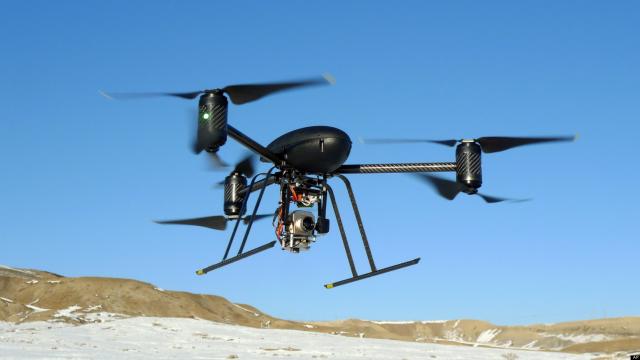
With drones seemingly more in the public’s conscience than ever, anti-drone activists have just launched their most ambitious campaign to date. Called the “April Days of Action,” the newly-formed Network to Stop Drone Surveillance and Warfare is coordinating protests in dozens of cities around the country — including Washington D.C., Atlanta, Philadelphia, Honolulu, San Francisco, Sacramento, Minneapolis, St. Louis and Des Moines — over the course of the month. (The full list of actions can be found here and new ones can be added to the list here.

While protests of all sorts are now planned for nearly every day of April, organizers originally attempted to give some structure to the month’s actions by designating specific dates for different targets: April 4 to 7 for those against drone manufacturers, like General Atomics, the San Diego-based maker of the Predator and Reaper drones; April 16 to 18 for sites where drone research and training is being conducted, especially colleges and universities that are plugged into the military industrial complex; and April 27 to 28 for drone bases around the country.

At the end of the month there will be workshops and panel discussions on drone warfare in Syracuse, N.Y., followed by a rally at Hancock Air Base, which has been targeted by activists many times before over its drone operations.

Under the enormous American flags hanging outside Rockefeller Center on 5th Avenue in New York City, dozens of activists turned out for one of the first actions of the campaign last week. By and large the crowd was made up of the usual antiwar suspects. Despite a noticeable dearth of young people, the Granny Peace Brigade kept things festive by singing their original anti-drone tunes.

Several speakers addressed the crowd, including former U.S. Army colonel and diplomat Ann Wright, who resigned from the State Department to protest the invasion of Iraq. The lack of amplification, however, made it difficult to follow what was being said.

“It’s targeted assassination,” explained Richard Greve, a member of Veterans for Peace who attended the rally. “The people that send them are judge, jury and executioner all at once. They wind up killing a lot of people nearby who are totally innocent, like women and children. To me, it’s state terrorism. It makes people have feeling of revenge against us and it’s only creating more enemies.”

In their effort to sway public opinion and build a movement, however, anti-drone activists have their work cut out for them. While the public is strongly opposed to the use of drones domestically, a new Gallup poll found that nearly two-thirds of Americans approve of their use to “launch airstrikes in other countries against suspected terrorists.”

Despite these grim results, Code Pink founder Medea Benjamin and Noor Mir argued in a recent article for AlterNet that there are many hopeful signs that the tide is beginning to turn against drones. In addition to the unprecedented series of actions this month, they detail a flurry of new activity at the city, county and state level to regulate or ban domestic drones. They also point to new initiatives by Congress and the courts as evidence that even these lumbering institutions may be waking up to their responsibility on the issue.

The faith-based community is beginning to speak out as well. For example, in a surprising development, the National Black Church Initiative, a coalition of 34,000 churches comprised of 15.7 million African Americans from 15 denominations, recently “issued a scathing statement about Obama’s drone policy, calling it ‘evil’, ‘monstrous’ and ‘immoral.’”

The challenge before anti-drone activists will be to tap into this growing anger and translate it into collective action that involves a much more diverse group than is currently mobilized on the issue.

Originally published by Waging Nonviolence.


3 WAYS TO SHOW YOUR SUPPORT

ONE-TIME DONATION

Just use the simple form below to make a single direct donation.

DONATE NOW

MONTHLY DONATION

Be a sustaining sponsor. Give a reacurring monthly donation at any level.

GET SOME MERCH!

Now you can wear your support too! From T-Shirts to tote bags.

SHOP TODAY

Sign Up

Article Tabs

The country’s new prime minister, Andy Burnham, has promised a break from the politics of the last 40 years—realizing more broadly that Labour must stand up for the 99% against big business, or the party will become irrelevant.

The tragic shooting of Lorenzo Salgado Araujo is just the latest example of ICE having a fundamental disrespect for human life — further proving why the agency should be stripped of funding and shut down, and its rank-and-file agents and leadership prosecuted.

While the U.S., EU and their allies are enabling Rojava—the strongest force against Islamic State— to fall, it is vital for internationalists to continue to support this beacon of democracy and liberation.

June 23, 2026 may be remembered as the beginning of the end of the Democratic Party establishment.

Their tactics to force construction of data centers even against significant opposition from local communities have become increasingly forceful and hostile.

The country’s new prime minister, Andy Burnham, has promised a break from the politics of the last 40 years—realizing more broadly that Labour must stand up for the 99% against big business, or the party will become irrelevant.

Much like the resistance to AI data centers, the opposition to Flock surveillance cameras has brought the left and the right together against billionaires who are trying to force America into becoming even more of a police state.

The tragic shooting of Lorenzo Salgado Araujo is just the latest example of ICE having a fundamental disrespect for human life — further proving why the agency should be stripped of funding and shut down, and its rank-and-file agents and leadership prosecuted.

While the U.S., EU and their allies are enabling Rojava—the strongest force against Islamic State— to fall, it is vital for internationalists to continue to support this beacon of democracy and liberation.

June 23, 2026 may be remembered as the beginning of the end of the Democratic Party establishment.

June 23, 2026 may be remembered as the beginning of the end of the Democratic Party establishment.

Posted 3 weeks 6 days ago

The tragic shooting of Lorenzo Salgado Araujo is just the latest example of ICE having a fundamental disrespect for human life — further proving why the agency should be stripped of funding and shut down, and its rank-and-file agents and leadership prosecuted.

Posted 2 weeks 2 days ago

While the U.S., EU and their allies are enabling Rojava—the strongest force against Islamic State— to fall, it is vital for internationalists to continue to support this beacon of democracy and liberation.

Posted 3 weeks 6 days ago

Much like the resistance to AI data centers, the opposition to Flock surveillance cameras has brought the left and the right together against billionaires who are trying to force America into becoming even more of a police state.

Posted 3 days 11 hours ago

The country’s new prime minister, Andy Burnham, has promised a break from the politics of the last 40 years—realizing more broadly that Labour must stand up for the 99% against big business, or the party will become irrelevant.

Posted 3 days 10 hours ago

June 23, 2026 may be remembered as the beginning of the end of the Democratic Party establishment.

The tragic shooting of Lorenzo Salgado Araujo is just the latest example of ICE having a fundamental disrespect for human life — further proving why the agency should be stripped of funding and shut down, and its rank-and-file agents and leadership prosecuted.

While the U.S., EU and their allies are enabling Rojava—the strongest force against Islamic State— to fall, it is vital for internationalists to continue to support this beacon of democracy and liberation.