Read

User menu

Search form

In Canada, Late Efforts to Measure Environmental Hazards of Tar Sands

In Canada, Late Efforts to Measure Environmental Hazards of Tar Sands
Fri, 10/19/2012 - by Jeffrey Jones
This article originally appeared on Reuters

The Alberta government said on Wednesday it is creating a scientific agency to monitor the environmental impacts of oil sands production as the industry seeks to expand its markets into regions that are increasingly critical of the process.

The body, to be funded by a combination of public and industry money, will eventually provide oversight for all of the Western Canadian province, but the initial focus will be on the tar sands-rich Lower Athabasca region.

The government described the new unit as providing "credible" and "arms-length" (or independent) research, though officials said on Wednesday it will answer to Environment Minister Diana McQueen and the scientific information it produces will be sent to her before it is released to the public.

"The independent part comes about when we are taking a look at the science information, and saying: based on some of this evidence, what decision should be made in complex tasks. And that's where we would certainly give the advice to the minister," said Howard Tennant, a former University of Lethbridge president who will lead the agency's management board.

The move by the Conservative government of Premier Alison Redford is the latest in a series of responses to scientific studies and a federal report that have concluded the northern Alberta region, which encompasses the oil sands, needs to be more closely monitored for contamination as development booms.

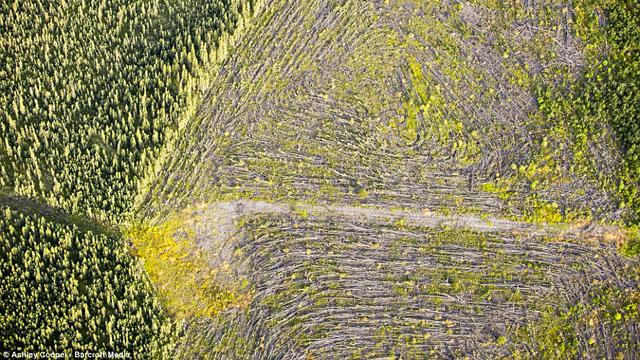
The Alberta oil sands are the world's third-largest crude source, but development requires intrusive methods to extract and process the extra-heavy oil, including open pits, steam-injection and processing plants that are carbon-intensive.

Canadian and international environmental groups have for years campaigned to limit production, and efforts have extended into opposing pipelines to export the crude, such as TransCanada Corp's proposed Keystone XL line to Texas.

The government said the new agency will initially concentrate efforts on deciding on how to monitor air, land, water and biodiversity and at what locations.

The management board will now determine how the agency will operate and how it will be funded.

The move did not mollify the industry's critics.

"This is yet another plan to develop a plan," said Mike Hudema, climate and energy campaigner for Greenpeace. "There is still no funding commitment and no clear governance model to ensure independence. The province should stop approving new projects based on flawed data and incomplete information until this gets sorted out."

The government said the region will still be monitored through a joint federal-provincial program, in operation since February, until the new agency is set up.

3 WAYS TO SHOW YOUR SUPPORT

ONE-TIME DONATION

Just use the simple form below to make a single direct donation.

DONATE NOW

MONTHLY DONATION

Be a sustaining sponsor. Give a reacurring monthly donation at any level.

GET SOME MERCH!

Now you can wear your support too! From T-Shirts to tote bags.

SHOP TODAY

Sign Up

Article Tabs

From a pro-democratic perspective, civil society and new media organisations are surging in the aftermath of the Orban regime.

The country’s new prime minister, Andy Burnham, has promised a break from the politics of the last 40 years—realizing more broadly that Labour must stand up for the 99% against big business, or the party will become irrelevant.

The tragic shooting of Lorenzo Salgado Araujo is just the latest example of ICE having a fundamental disrespect for human life — further proving why the agency should be stripped of funding and shut down, and its rank-and-file agents and leadership prosecuted.

While the U.S., EU and their allies are enabling Rojava—the strongest force against Islamic State— to fall, it is vital for internationalists to continue to support this beacon of democracy and liberation.

June 23, 2026 may be remembered as the beginning of the end of the Democratic Party establishment.

The current wave of food recalls is a direct byproduct of President Donald Trump’s administration deliberately removing the safeguards put in place aimed at protecting American consumers more than a century ago.

From a pro-democratic perspective, civil society and new media organisations are surging in the aftermath of the Orban regime.

We can still celebrate success while simultaneously putting a cap on net worth.

The country’s new prime minister, Andy Burnham, has promised a break from the politics of the last 40 years—realizing more broadly that Labour must stand up for the 99% against big business, or the party will become irrelevant.

Much like the resistance to AI data centers, the opposition to Flock surveillance cameras has brought the left and the right together against billionaires who are trying to force America into becoming even more of a police state.

We can still celebrate success while simultaneously putting a cap on net worth.

Posted 1 month 3 weeks ago

The current wave of food recalls is a direct byproduct of President Donald Trump’s administration deliberately removing the safeguards put in place aimed at protecting American consumers more than a century ago.

Posted 1 month 2 days ago

From a pro-democratic perspective, civil society and new media organisations are surging in the aftermath of the Orban regime.

Posted 1 month 4 days ago