
PESHAWAR, Pakistan — It was just over a month ago, on Feb. 16, when hundreds of devotees were gathered at the shrine of a revered Sufi saint, in Sindh province, and a deadly terror attack struck the mausoleum. At least 88 people were killed while hundreds sustained injuries.
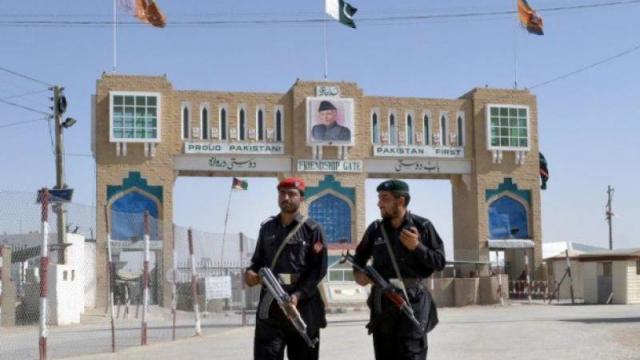
The attack on the shrine, claimed by ISIS, was the fifth deadly terror attack in Pakistan that week. Security forces reacted swiftly, pinning responsibility on militants based in Afghanistan, and fully sealing off the Pakistani border with that country. Officials shut down Torkham, Chaman and Ghulam Khan, the major crossing points used by thousands of people who traverse the countries' borders on a daily basis.
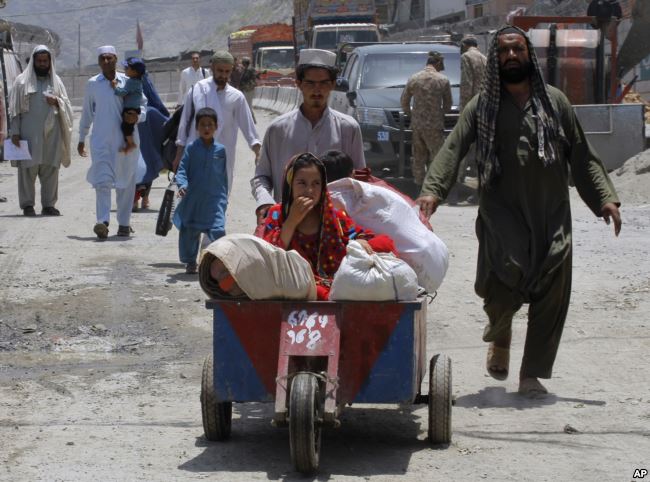
The border closure triggered fears that bilateral trade will come to a complete standstill as Pakistan officials threaten to keep the border closed for an indefinite period, until a proper border management system is devised. Aside from the negative impacts on trade, children who must cross the border each day to study in schools in Pakistan are facing huge problems as they miss exams.
Afghanistan has traditionally carried out much of its trade through Pakistan land routes and ports, though it's now forced to shift its attention to other strategies. Afghan authorities in Pakistan consider the border closure an extreme measure caused by rising angers and emotions, and fear it may devastate the mutual trade interests of the countries.
They consider it a direct violation of international law, specifically the Afghanistan Pakistan Transit Trade Agreement (APTTA) and the South Asian Association for Regional Cooperation (SAARC), and demanded that Pakistani authorities reopen the border.
But still, one month on, the border remains closed. As a result, trade is dwindling between the two countries, which is having a direct affect on the poor who depend on vital goods making their way back and forth across the border to support basic livelihoods.
“Two years ago, bilateral trade was $2.45 billion, and has now reduced to $1.3 billion annually,” said Mervais Yousafzai, Afghanistan's trade commissioner in Peshawar. He added that “victimizing trade through political decisions must be stopped in the best interest of people.”
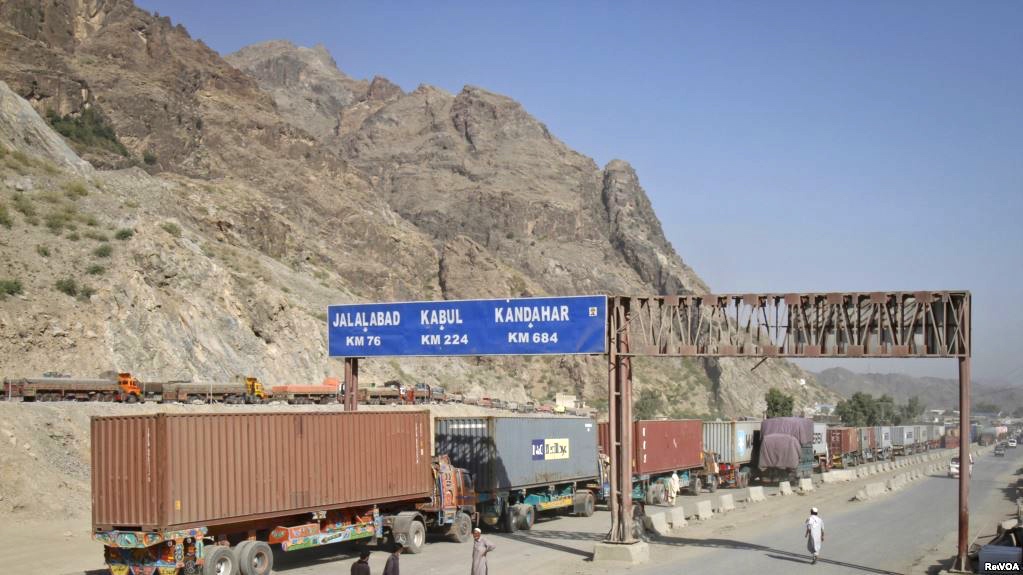
Some 7,000 vehicles carrying goods have been stranded on both sides of the border since the closure. About 2,000 vehicles were carrying perishable goods.
Pakistan and Afghanistan signed the Afghanistan Pakistan Transit Trade Agreement in 2010, which replaced the previous Transit Trade Agreement of 1965. The plan at the time was to expand the APTTA to India and other central Asian countries. However, due to the risky political situation and rising militancy across the region, it has not gone forward.
“Our trade volume is continuously decreasing with Afghanistan," said Zubair Motiwala, co-president of the Pakistan Afghanistan Joint Chamber of Commerce and Industry. He added that last year, some 75,000 containers passed through the Pakistani port of Karachi bound for Afghanistan – a number now reduced to 50,000 as Afghanistan shifts its trading priority to Iran.
Motiwala said that formal trade between Pakistan and Afghanistan is now around half of what it was just a few years ago – with most of the loss coming to Pakistan. “It would not be wrong to say that 80 percent of the loss is for Pakistan,” he added, noting that the country's export is far greater than its import.
Obaid Ur Rahman, a trader from Pakistan, said he is seeing swift market losses across the border. He fears it will be hard for Pakistani merchants to recapture that market for export, with India, Iran and other central Asian countries stepping in to fill the void. Afghan traders have already started importing flour from Uzbekistan along with other basic foodstuffs.
Some, like Imran Khan, chairman of the Pakistan Tehreek-e-Insaf (PTI) party, have gone so far as to say the border closure is sparking a new humanitarian crisis between the countries. In former times, when Pakistan would close the border, prices would spike. But this time, due to more economically sound policies of the Afghan government, such a crisis has yet to be seen.
Gulab Khan is an Afghan trader who normally would be importing cement from Pakistan. But since the border was closed, his business has signed a new deal to import cement from Iran, and the first consignment of thousands of tons have already arrived.
3 WAYS TO SHOW YOUR SUPPORT



- Log in to post comments


