Read

User menu

Search form

Croatia Just Canceled the Debts Of Its Poorest Citizens

Croatia Just Canceled the Debts Of Its Poorest Citizens
Tue, 2/3/2015 - by Rick Noack
This article originally appeared on The Washington Post

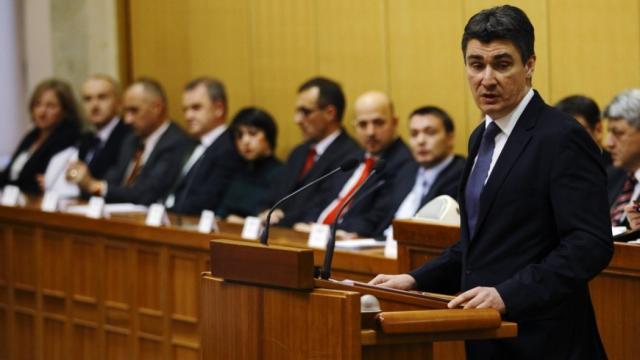
Starting Monday, thousands of Croatia's poorest citizens will benefit from an unusual gift: They will have their debts wiped out. Named "fresh start," the government scheme aims to help some of the 317,000 Croatians whose bank accounts have been blocked due to their debts.

Given that Croatia is a relatively small Mediterranean country of only 4.4 million inhabitants, the number of indebted citizens is significant and has become a major economic burden for the country. After six years of recession, growth predictions for Croatia's economy remain low for this year.

"We assess that this measure will be applicable to some 60,000 citizens," Deputy Prime Minister Milanka Opacic was quoted as saying by Reuters. "Thus they will be given a chance for a new start without a burden of debt," Opacic said earlier this month.

To be eligible, Croats need to fulfill certain criteria: Their debt must be lower than 35,000 kuna ($5,100), and their monthly income should not be higher than 1,250 kuna ($138). Those applying for the scheme are not allowed to own any property or have any savings.

Among economists, the scheme is regarded as unprecedented and exceptional. "I can't think of anything comparable," Dean Baker, co-director of the Washington-based Center for Economic and Policy Research, told The Washington Post.

Although the program is expected to cost between 210 million and 2.1 billion Croatian kuna ($31 million and $300 million), according to conflicting reports by Austrian press agency APA and Reuters, the Croatian government expects economic long-term benefits that will outweigh the short-term investment. Prime Minister Zoran Milanovic has convinced multiple cities, public and private companies, the country's major telecommunications providers, as well as nine banks to clear some of their citizens of their debt. The government will not refund the companies for their losses.

Overall, the debt of all Croats amounts to $4.11 billion – and the debt that is about to be wiped out accounts for about 1 to 7 percent of that. However, for those who are eligible the agreement will make a significant difference by enabling them to gain access to their bank accounts. By reducing debt by less than 10 percent, Croatia frees nearly 20 percent of the country's debtors from their obligations.

Some economists, among them Baker, are skeptical whether the scheme will succeed: "I am not sure that this is the best way to help low-income people. If lenders think this can happen again they will charge very high interest rates to low-income borrowers," Baker said.

ORIGINALLY PUBLISHED BY The Washington Post

3 WAYS TO SHOW YOUR SUPPORT

ONE-TIME DONATION

Just use the simple form below to make a single direct donation.

DONATE NOW

MONTHLY DONATION

Be a sustaining sponsor. Give a reacurring monthly donation at any level.

GET SOME MERCH!

Now you can wear your support too! From T-Shirts to tote bags.

SHOP TODAY

Sign Up

Article Tabs

From a pro-democratic perspective, civil society and new media organisations are surging in the aftermath of the Orban regime.

The country’s new prime minister, Andy Burnham, has promised a break from the politics of the last 40 years—realizing more broadly that Labour must stand up for the 99% against big business, or the party will become irrelevant.

The tragic shooting of Lorenzo Salgado Araujo is just the latest example of ICE having a fundamental disrespect for human life — further proving why the agency should be stripped of funding and shut down, and its rank-and-file agents and leadership prosecuted.

While the U.S., EU and their allies are enabling Rojava—the strongest force against Islamic State— to fall, it is vital for internationalists to continue to support this beacon of democracy and liberation.

June 23, 2026 may be remembered as the beginning of the end of the Democratic Party establishment.

The current wave of food recalls is a direct byproduct of President Donald Trump’s administration deliberately removing the safeguards put in place aimed at protecting American consumers more than a century ago.

From a pro-democratic perspective, civil society and new media organisations are surging in the aftermath of the Orban regime.

We can still celebrate success while simultaneously putting a cap on net worth.

The country’s new prime minister, Andy Burnham, has promised a break from the politics of the last 40 years—realizing more broadly that Labour must stand up for the 99% against big business, or the party will become irrelevant.

Much like the resistance to AI data centers, the opposition to Flock surveillance cameras has brought the left and the right together against billionaires who are trying to force America into becoming even more of a police state.

Much like the resistance to AI data centers, the opposition to Flock surveillance cameras has brought the left and the right together against billionaires who are trying to force America into becoming even more of a police state.

Posted 1 month 3 weeks ago

The country’s new prime minister, Andy Burnham, has promised a break from the politics of the last 40 years—realizing more broadly that Labour must stand up for the 99% against big business, or the party will become irrelevant.

Posted 1 month 3 weeks ago

We can still celebrate success while simultaneously putting a cap on net worth.

Posted 1 month 1 week ago

The current wave of food recalls is a direct byproduct of President Donald Trump’s administration deliberately removing the safeguards put in place aimed at protecting American consumers more than a century ago.

Posted 2 weeks 3 days ago

From a pro-democratic perspective, civil society and new media organisations are surging in the aftermath of the Orban regime.

Posted 2 weeks 6 days ago

From a pro-democratic perspective, civil society and new media organisations are surging in the aftermath of the Orban regime.

The current wave of food recalls is a direct byproduct of President Donald Trump’s administration deliberately removing the safeguards put in place aimed at protecting American consumers more than a century ago.