
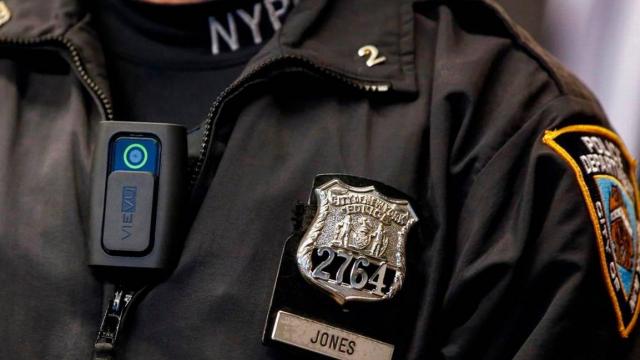
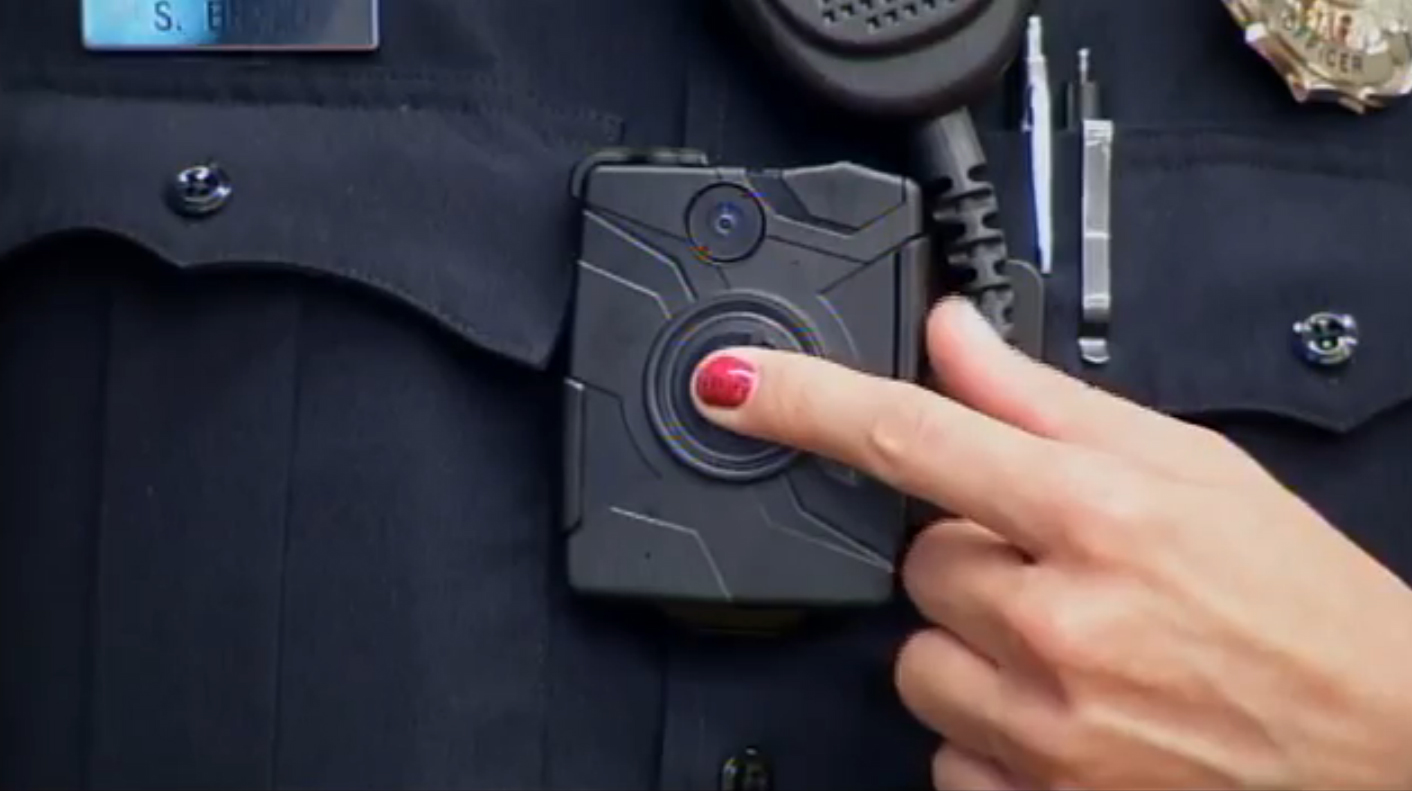
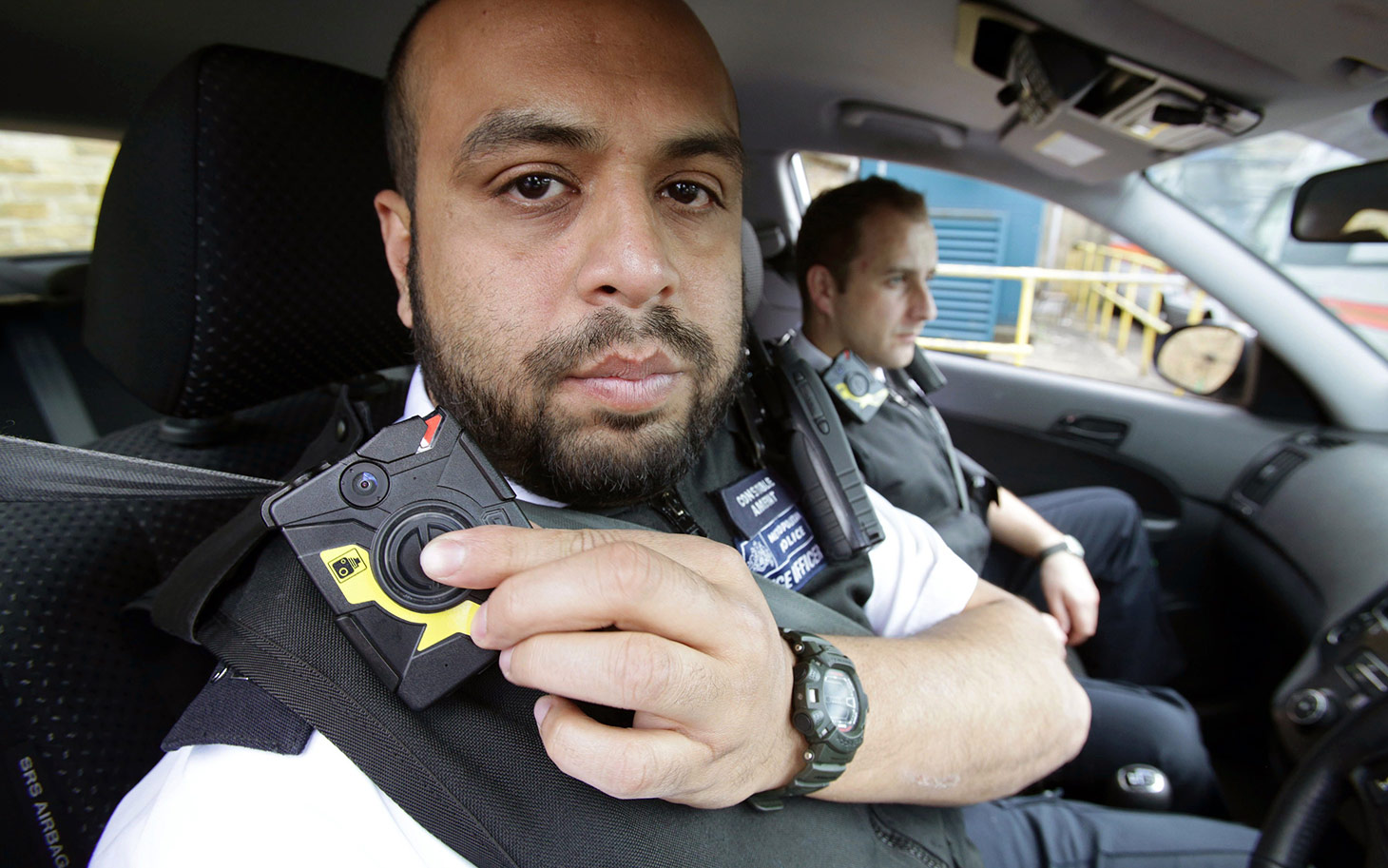
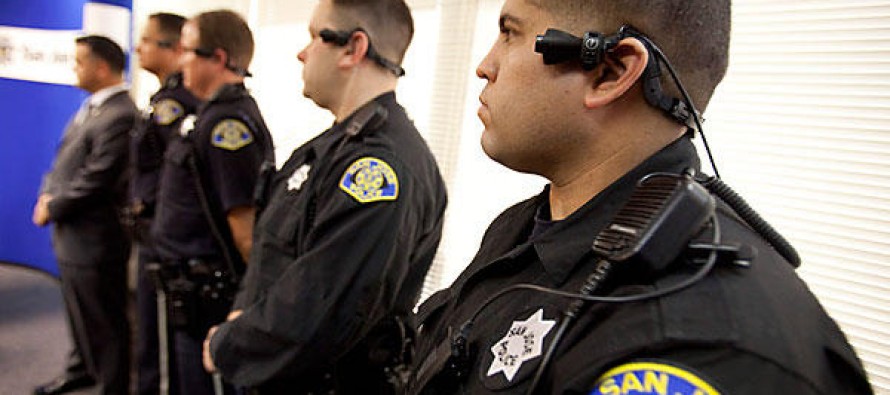
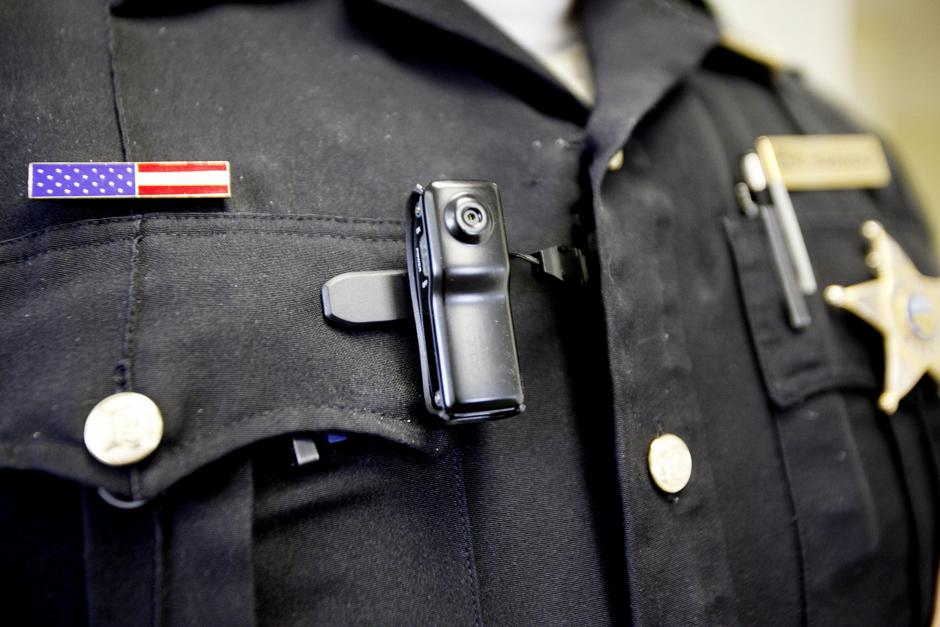
Police-worn body cameras are the newest darling of criminal justice reform. They are touted as a way to collect evidence for criminal investigations, oversee and expose abusive police practices, and exonerate officers from fabricated charges. While the nation continues to debate how effective these body cameras are for police departments, less attention has been paid to the appearance of body cameras in other public sectors, most recently in our schools.
Since Michael Brown was shot by a member of the Ferguson, Missouri, police department last summer, at least 16 cities have introduced body camera programs. In the past month alone, at least seven cities have begun studying, initiated, or expanded body camera programs. President Obama has asked Congress to allocate $75 million for technology and training in body-worn cameras, and the Department of Justice recently provided the first $20 million in grants.
As these programs began to proliferate, schools took notice. In Houston, Texas, 25 school officers have started wearing body cameras in a pilot program, and the school district plans to expand the program to all 210 members of the force.
An Iowa school district has even taken this initiative one step further, buying cameras for principals and assistant principals to wear while interacting with students and parents. While the administrator overseeing the program has said the cameras are not intended to monitor every activity, he expressed the hope that any complaint could be investigated through body camera footage, suggesting that principals would need to record early and often.
The spread of body cameras into our schools may come as surprise to some, but it shouldn’t. It is not unusual for surveillance technologies to leap from one world to another, or to be deployed for one purpose and gradually used for many more. Several examples tell the story.
Local police departments have been making liberal use of a controversial new surveillance tool originally meant for terrorism investigations. Called Stingrays, these devices can ferret out the location of a target’s cell phone in real time, often sucking up bystanders’ phone and location information in the bargain. Police and the FBI frequently do not request a warrant to use a Stingray, and when they do, the applications are often so vague and misleading that judges may not know what they are approving. Most notably, while the money to pay for Stingrays frequently comes from federal anti-terrorism funds, they are routinely used for run-of-the-mill criminal investigations.
On the federal level, fusion centers are a prime example of mission creep. Originally meant to remedy the shortcomings in information-sharing identified after 9/11, fusion centers were supposed to focus narrowly on preventing future terrorist attacks. Faced (thankfully) with a shortage of terrorist threats, however, their goals were expanded to include “all hazards” and “all crimes,” including combating thefts from bakeries. Indeed, a scathing 2012 Senate report found that the centers produced reports that were not only “shoddy, rarely timely, [and] sometimes endangering citizens’ civil liberties,” but also “more often than not unrelated to terrorism.” Even the Department of Homeland Security inadvertently reinforces fusion centers’ mission creep: the three “success stories” for 2014 touted on DHS’s web page, while combating assuredly important crimes, have nothing to do with terrorism.
This history suggests that for body cameras — and any other surveillance technology — the right question to ask is not, “are we comfortable with this particular technology, used for the particular governmental purpose currently asserted, with the particular controls currently in place?” Rather, the more accurate and far-reaching question is, “what do we think of the other uses that might be spawned once this technology is introduced?”
For body cameras, it is already evident that they will be introduced in many more contexts than simply law enforcement. If they are being placed on principals, they will eventually be placed on teachers. If they are placed on teachers, they will eventually be placed on child care providers, and then on youth ministers, and so on and so on.
The normalization of one kind of surveillance technology will also help hasten the normalization of other types. Indeed, the plans in both Iowa and Houston were justified in part on the fact that the school hallways are already lined with surveillance cameras — so why not add body cameras to the mix?
Body cameras may turn out to do exactly what their proponents are hoping: foster a more accountable police while improving behavior on both sides of the badge. But we cannot forget that when we approve a tool of surveillance for one purpose, we are simultaneously approving it for many other purposes as well, and we would do well to make that a part of the discussion.
Originally published by Brennan Center for Justice
3 WAYS TO SHOW YOUR SUPPORT



- Log in to post comments


