
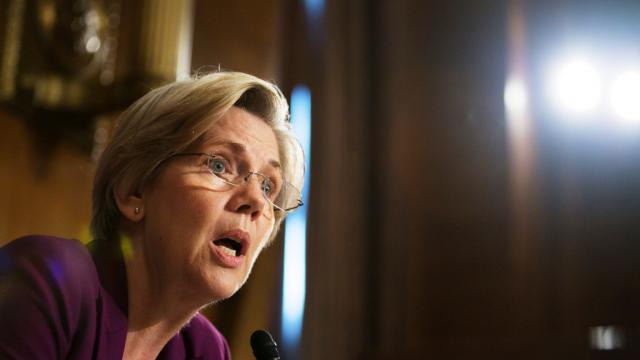
When I learned last winter that I would have a seat on the Senate Banking Committee, I was very happy because I knew it would give me the opportunity to ask tough questions and push for some accountability from Wall Street and its regulators. In the last six months, that’s exactly what I’ve tried to do.
Again and again, I’ve been making a simple point to anyone who will listen: we need to learn from the financial crisis of 2008 and, moving forward, to prevent the kinds of high-risk activities that made a few people rich but nearly destroyed our economy.
Now it’s time to launch the next push. I joined forces with Senators John McCain, Angus King, and Maria Cantwell to introduce the 21st Century Glass-Steagall Act of 2013 to reinstate and modernize core banking protections.
Banking needs to return to the basics. Sign up now to show your support for the 21st Century Glass-Steagall Act.
Banking should be boring. Savings accounts, checking accounts — the things that you and I rely on every day — should be safe from the sort of high-risk activities that broke our economy.
The way our system works, the FDIC insures our traditional banks to keep your money safe. That way when you want to withdraw money from your checking account, you know the money will be there. That’s what keeps our banking system safe and dependable.
But the government should NOT be insuring hedge funds, swaps dealing, and other risky investment banking services. When the same institutions that take huge risks are also the ones that control your savings account, the entire banking system is riskier.
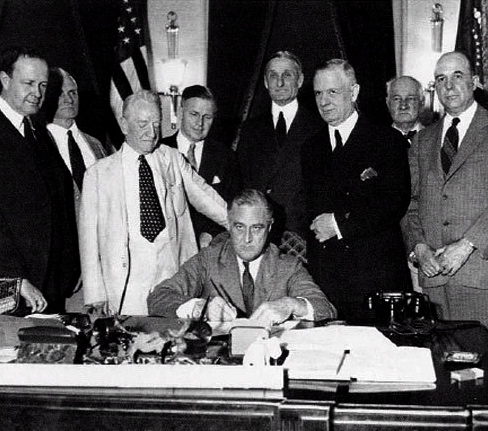
Coming out of the Great Depression, Congress passed the Glass-Steagall Act to separate risky investment banking from ordinary commercial banking. And for half a century, the banking system was stable and our middle class grew stronger. As our economy grew, the memory of the regular financial crises we experienced before Glass-Steagall faded away.
But in the 1980s, the federal regulators started reinterpreting the laws to break down the divide between regular banking and Wall Street risk-taking, and in 1999, Congress repealed Glass-Steagall altogether. Wall Street had spent 66 years and millions of dollars lobbying for repeal, and, eventually, the big banks won.
Our new 21st Century Glass-Steagall Act once again separates traditional banks from riskier financial services. And since banking has become much more complicated since the first bill was written in 1933, we’ve updated the law to include new activities and leave no room for regulatory interpretations that water down the rules.
The bill will give a five year transition period for financial institutions to split their business practices into distinct entities — shrinking their size, taking an important step toward ending “Too Big to Fail” once and for all, and minimizing the risk of future bailouts.
This is an important bill that will learn from the 2008 crisis and make sure we hold Wall Street accountable. When people like you and me work together, we can stand up to even the most powerful interests. That’s how we got the Consumer Financial Protection Bureau in 2010. That’s how we won our election in 2012.
And that’s how we’ll pass the 21st Century Glass-Steagall Act.

3 WAYS TO SHOW YOUR SUPPORT



- Log in to post comments


