
While recent Republican healthcare legislation failed to even come to a vote in Congress, a look at one microcosm state, Louisiana, shows the potential effects of the Republican plan on Medicaid recipients – notably, a decline in health for a large portion of the population, and an increase in the cost of healthcare.
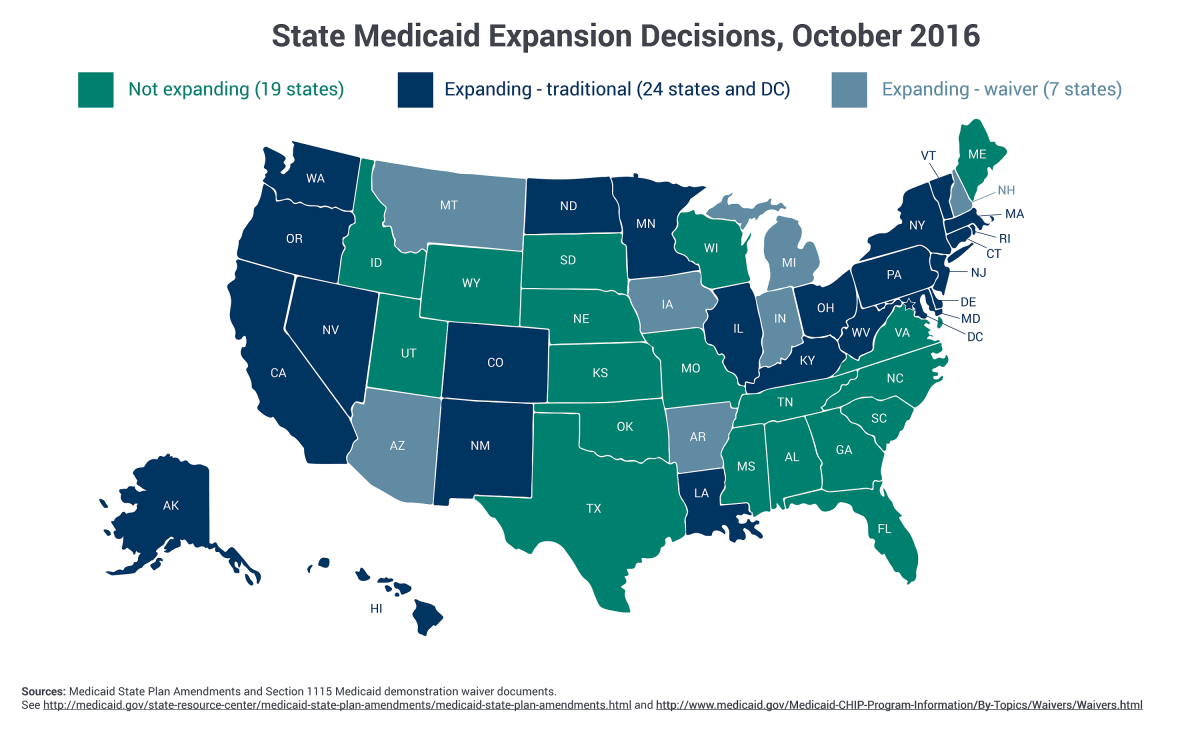
In January 2015, immediately after taking office, Louisiana Gov. John Bel Edwards issued an executive order expanding Medicaid by 21 percent, reaching 300,000 additional residents. As a result, a quarter of the state’s population is now covered under Medicaid.
Gov. Edwards accepted the provisions of the Affordable Care Act, whereby Medicaid expansion is fully funded by the federal government until 2020, at which point states will be required to pick up 10 percent of the tab. Edwards’s predecessor, Bobby Jindal, refused to sign such an order, arguing the state could not afford the costs of adding new recipients.
A recent Gallup survey showed Louisiana’s uninsured rate dropped from 22 percent in 2013 to 12.5 percent in 2016. No state saw an increase in uninsured but, by comparison, neighboring Mississippi, which did not expand Medicaid coverage, saw its uninsured drop by only about 5 percentage points.
“It’s a game changer for a lot of people,” Susan Todd, executive health director of 504HealthNet, told Occupy.com in an interview. 504HealthNet provides primary care and behavioral health services through 60 sites in South Louisiana – an estimated 60 percent of whose patients are Medicaid recipients.
With Medicaid in the state, cost doesn’t prohibit the indigent or working poor from making decisions between healthcare and paying utility bills or other necessities. Medicaid copays for pharmaceuticals are between 50 cents and $3, according to Todd.
Twenty percent of Louisiana's population is responsible for 80 percent of healthcare costs. The 20 percent is overwhelmingly the elderly, or those with advanced health problems who require hospitalization. Preventive care, covered under Medicaid, is far cheaper. (Heart disease is still the most common cause of death in America, much of it preventable and disproportionately affecting poorer people.)
“It would be devastating for the community and the state from a human capital standpoint, but also from a budget standpoint, if we lose Medicaid expansion and used block grants,” Todd said.
The fact that Medicaid expansion is fiscally more responsible contradicts Kansas Gov. Sam Brownback’s recent statement in vetoing Medicaid expansion in his state, in which he said the expansion “burdens the state budget with unrestrainable entitlement costs.” The governor’s office did not return a voicemail requesting substantiation of the statement.
Established medical science shows chronic conditions such as high blood pressure, diabetes and heart disease are driving healthcare costs higher. According to a 2009 report by the Centers for Disease Control and Prevention, the cost of treating these chronic conditions is in the tens of billions of dollars. Louisiana Department of Health stats show that more than 58,000 new patients under the expansion have received primary or preventive care.
Louisiana in its current fiscal climate would be very much at risk of fully funding Medicaid if the Affordable Care Act, or Obamacare, were overhauled, and if that overhaul included block grants for Medicaid. The state has repeatedly run a budget deficit over the last decade. When Bobby Jindal took over the reins in 2008, the state had a $1 billion surplus. That became a $1 billion deficit by the time his successor came to over in 2016.
The areas of state spending that have been most cut over the last decade are higher education and healthcare. Jindal used “rainy day” funds or other one-time sources of revenue to plug budget holes. Some of the methods used were described by Gov. John Bel Edwards as “smoke and mirrors.”
Since Edwards, a democrat, has been governor, he has called the state legislature into special session three times to address budget shortfalls. Under Louisiana's constitution, the state cannot run a deficit. The Republican-dominated legislature, and the governor’s allies who are in it, have come to last minute agreements to balance the budget each time. But the effects include the three big credit rating agencies downgrading the state's credit rating.
U.S. News and World Report ranked Louisiana dead last in its recent “Best States” ranking, using healthcare as part of its measurement. On the basis of that survey, Louisiana is a “chronically sick state.” Legislators in Washington and in state capitols would be wise to see these results as a bellwether for the nation.
3 WAYS TO SHOW YOUR SUPPORT



- Log in to post comments


