
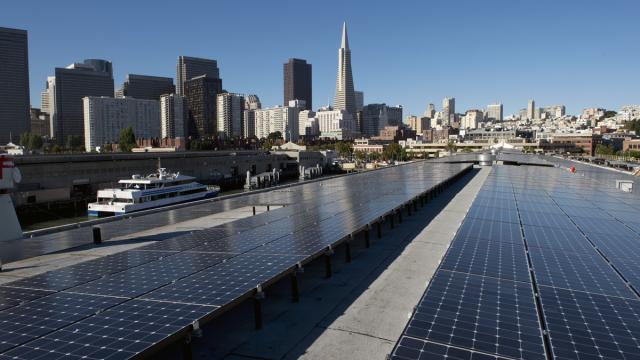
As the price of renewable energy drops, more cities are cutting the cord with fossil fuel-based electricity.
A new report released Tuesday by the environmental group CDP finds that more than 100 cities worldwide now get the majority of their power — 70 percent or more — from renewables. That's up from 42 in 2015, when countries pledged to cut greenhouse gas emissions in the Paris climate agreement.
CDP notes that more than 40 of those cities are now powered entirely by renewables, including Burlington, Vermont, which gets its electricity from a combination of wind, solar, hydro and biomass. Burlington will have more company within the next 20 years — 58 U.S. cities, including Atlanta and San Diego, having announced plans to do the same.
London-based CDP, which tracks climate-related commitments by corporations and governments, looked at 570 cities across the globe for the report. The group defines renewables as solar, wind, hydro, wave power, biomass, geothermal—or all non-nuclear and non-fossil fuel sources—and includes cities where electricity from clean energy sources is citywide, not just in municipal buildings.
Four U.S. cities made the list of those getting at least 70 percent of their electricity from renewable sources: Seattle; Eugene, Oregon; and Aspen, Colorado, along with Burlington. Five Canadian cities are also on the list: Montreal, Vancouver, Winnipeg, North Vancouver and Prince George, British Columbia.
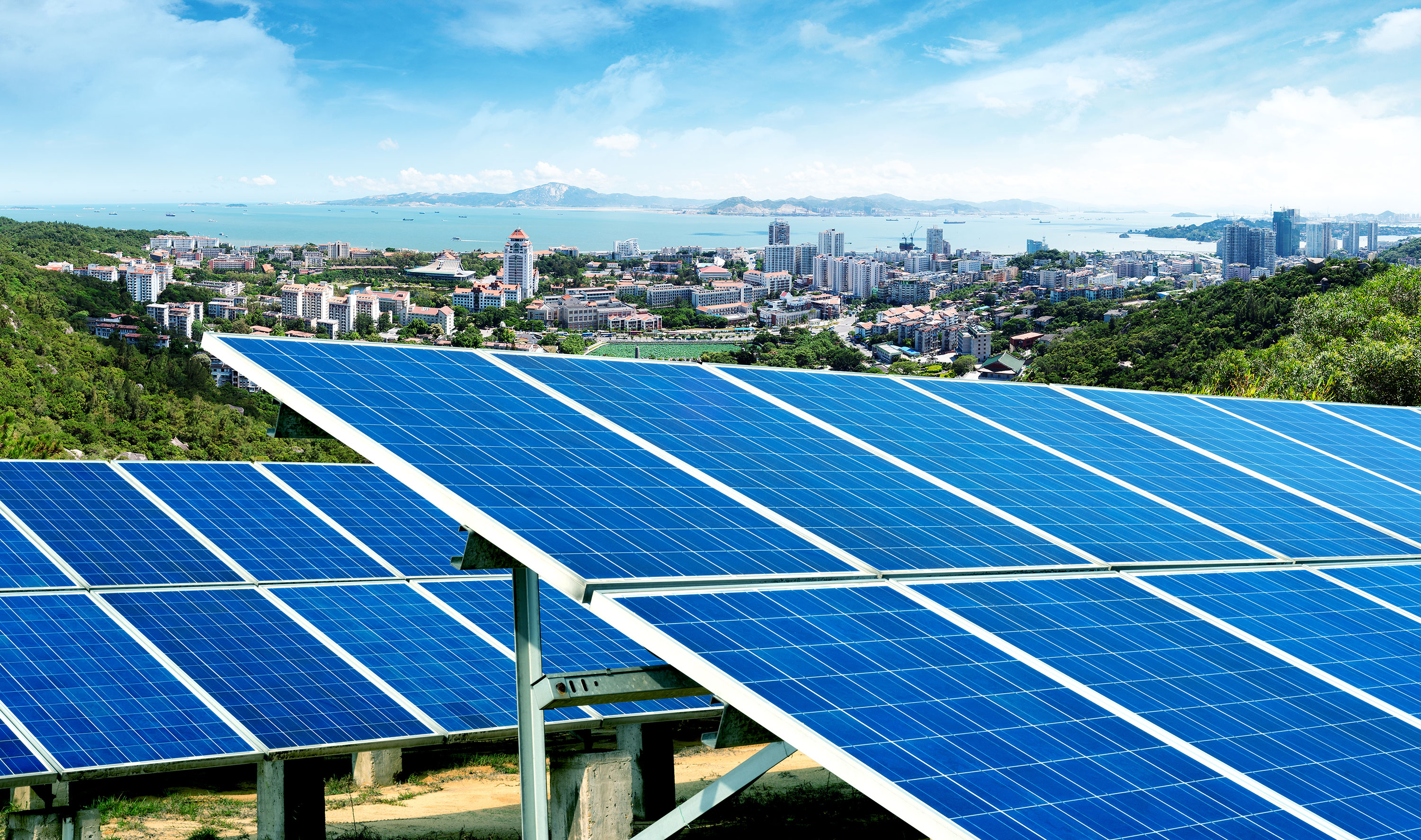
Latin American Cities Lead the Way
As of now, Latin American cities lead the renewables charge, with much of their electricity coming from hydropower. Of the cities getting at least 70 percent of their power from renewables, 57 percent are in Latin America, 20 percent are in Europe, 9 percent are in Africa and 9 percent in North America.
North America also trails in investment dollars, spending $113 million to Europe's $1.7 billion, Africa's $236 million and Latin America's $183 million, CDP reports.
"Cities are responsible for 70 percent of energy-related CO2 emissions, and there is immense potential for them to lead on building a sustainable economy," Kyra Appleby, who leads the cities project for CDP, said in a statement. "Reassuringly, our data shows much commitment and ambition. Cities not only want to shift to renewable energy but, most importantly, they can."
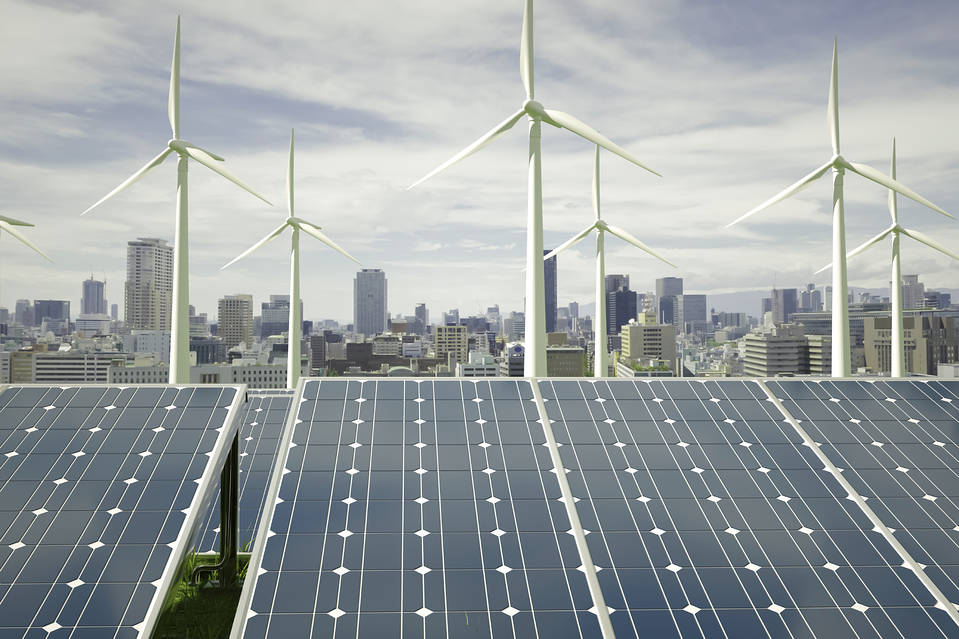
Hydro Is Most Common, Then Wind and Solar
The cities in the CDP survey used a mix of energy sources: 275 use hydropower, 189 rely on electricity from wind and 184 use solar photovoltaics. Also in the mix: biomass, used by 164 cities, and geothermal, used by 65.
Reykjavik, Iceland, gets all its electricity from geothermal and hydropower, and is attempting to convert its entire vehicle fleet—both public and private—to "fossil free" by 2040. Basel, Switzerland's third largest city, gets most of its power from hydropower, plus 10 percent from wind.
The trend will likely continue. In a report released in January, the International Renewable Energy Agency found that the cost of power generation from renewables will reach parity with fossil fuels in two years.
"By 2020, all the renewable power generation technologies that are now in commercial use are expected to fall within the fossil fuel-fired cost range, with most at the lower end or undercutting fossil fuels," that report said.
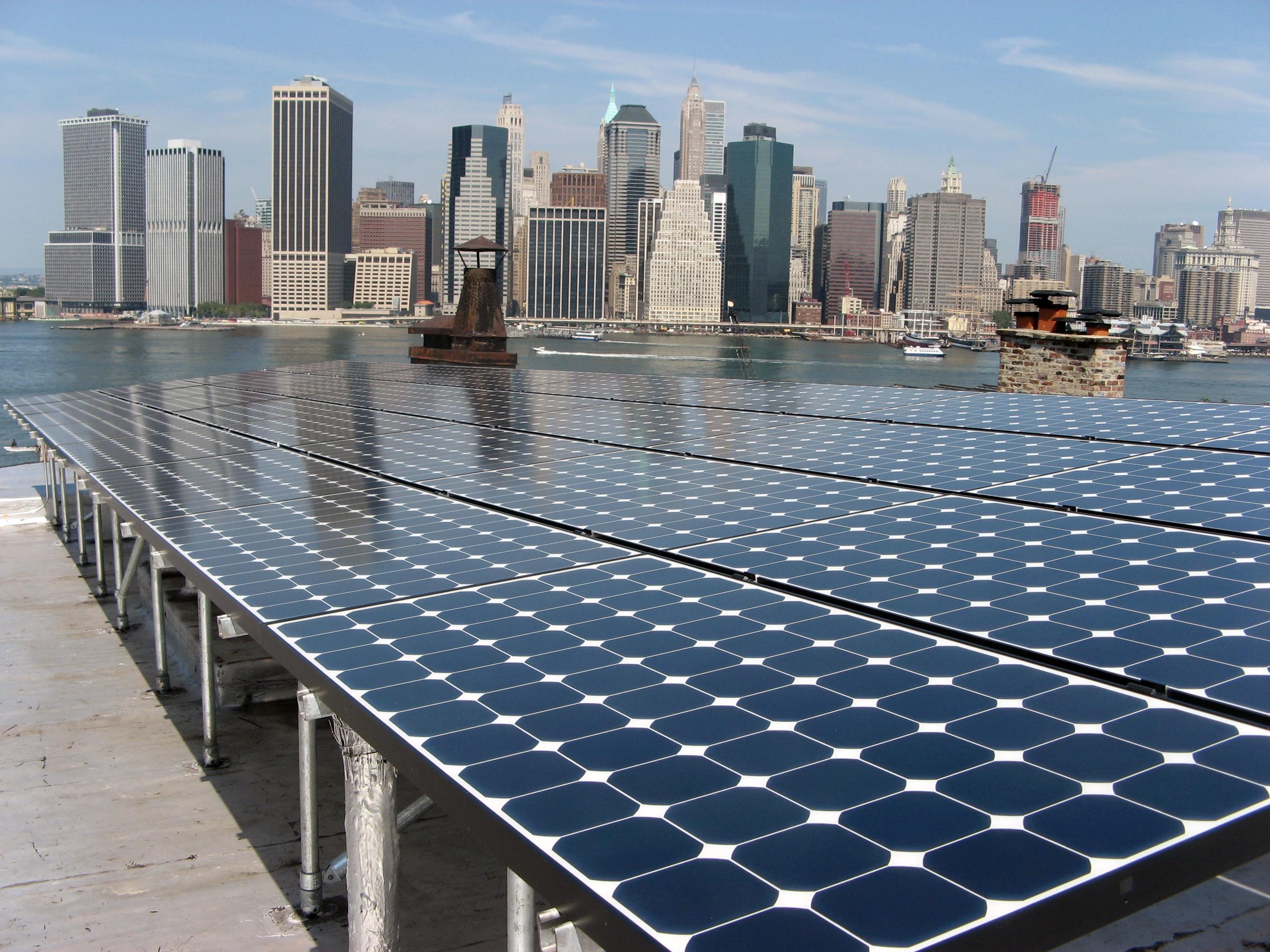
U.S. Cities Are Committing to Clean Energy
The CDP report comes after U.S. cities, through the United States Conference of Mayors, signed onto a resolution last year, pledging support for a shift to renewable energy in the wake of President Donald Trump's announcement that he would withdraw from the Paris Agreement.
A Sierra Club analysis found that if all of the conference's members—more than 1,400 U.S. cities—went 100 percent renewable, 42 percent of the overall electricity in the country would come from renewable sources.
"The broader trend is that cities are leading a global transition to 100 percent renewable energy, both here and across the globe," said Jodie Van Horn, director of the Sierra Club's "Ready for 100" program. "It's significant in the signal it's sending to the market and utilities, in what kind of energy institutional buyers are asking for."
3 WAYS TO SHOW YOUR SUPPORT



- Log in to post comments


