
The opening sequence of "Rat Film," a new documentary/essay hybrid from Theo Anthony, features a bit that I can only describe with a term used by a certain past presidential administration: shock and awe. It is night, and there is a rat, scouring the bottom of a trash can, investigating some thrown away Taco Bell. It jumps multiple times, never climbing out. In voiceover, a female, almost robotic voice makes a startling claim that in Baltimore (and perhaps other major American cities), trash cans are purposely made to be just a little higher than the average rat can jump. Just a little higher. Is this a sly way of ridding ourselves of this pest, or a sickening experiment on a “lesser” creature?
From here, the movie extrapolates on issues of segregation and population control. Indeed, we are all taking part in a racially and economically driven experiment on the function of community and society – something we never signed up for and probably would never agree to. At least, not without remuneration. At heart, "Rat Film" could be said to be about the American dream, and how the dangling carrot is designed to be unreachable while appearing just within grasp. In mind, however, "Rat Film" is a dizzying mosh pit of conflicting yet never contradictory ideas on the lengths people will go to prove themselves right, no matter how abhorrent their thesis may be. The film works in designing a vision of our country that is a living metaphor for itself: one that is most self aware, and a frightening view, to be certain.
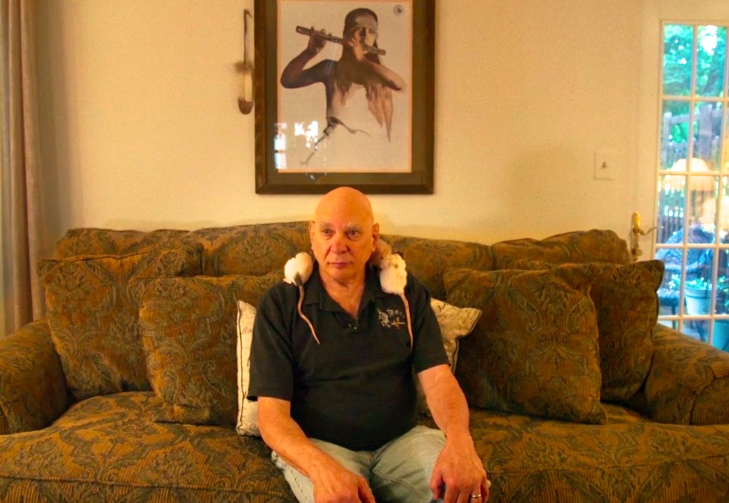
Anthony constructs his thoughts through the guise of a desktop presentation. Of course, the craft includes many a cinematic image: people celebrating nascar races, interviews with criminal investigators, and even still portraits of rat lovers. However, much like a screen-share Youtube video, there is an instructional nature to this film that goes beyond the narration. It’s almost as if we, as an audience, are being guided, hand in hand, to understand for ourselves how to piece together the information and implications into something more alive than a document. "Rat Film" very much lives and breathes, thrust into existence by the decisions of greatly misguided (or even evil) men.
Baltimore is highlighted here not just for its spectacular rat infestation and the peculiar means its citizens go about to solve the problem, but for being a hidden epicenter – in fact, a blueprint – of the discrimination-inspired economic structuring of cities. Parts of town where more rats are found typically have people of color living under or at the poverty line. Old statistical maps are shown to match exactly with more modern ones, suggesting that the more things change, the more they stay the same. Old systems of control have proven their worth, so why bother changing what’s working?
Why bother? Because it’s wrong. It’s wrong to corral human beings into castes – prisons outside of prisons, so to speak. And it’s downright despicable to conflate people with rats, an animal shown to be potentially less of a pest than commonly treated. In the end of "Rat Film," we reach an epiphany reminiscent of Mookie’s climactic moment in Do the Right Thing. It’s a beautiful and powerful conclusion to what has been a terrifyingly accurate series of observations. But alas, a more depressing and understandable outcome for our infrastructure is more likely than anything. Nothing will change so long as the building blocks remain this deeply rooted.
For fun, some citizens of Baltimore will fish in alleys for Rats, using peanut butter and lunch meat as bait before whacking the rodents with baseball bats. A specific cultural pastime, sure, but also one that, for me, is a little optimistic about the future. Anthony's ideas explode into one another like fireworks, crackling and booming. "Rat Film," through all the invisible walls it demonstrates are surrounding us, seems to conclude that people will continue living and making due. People, in general, won’t be brought down. We’ll find a way.
5 / 5
Bill Arceneaux is an independent film critic from New Orleans. Follow him on twitter @billreviews.
3 WAYS TO SHOW YOUR SUPPORT



- Log in to post comments


