
Students at 350 of the nation’s college campuses took an active part in last week's Food Day observance—and have helped enact better food buying practices at their schools as a result.
Nearly 140,000 students in 46 states participated in more than 450 campus-based Food Day events, which include lectures, documentary screenings and petition drives. Some of these events will make for lasting change: several universities are unveiling new university food purchasing policies as a result of the students’ efforts.
Real Food Challenge, the largest national student organization committed to building a just and sustainable food economy, collaborated with Center for Science in the Public Interest to coordinate the national day of action on campuses. Organization members hoped to persuade students and institutions to commit to what they call real food—food that is local and community-based, fair, ecologically sound and produced by humane farms and food producers.
“The fact that as students, we’re able to work within our institutions and then work together across the country to change our food system—which ultimately affects the whole world—shows the incredible way we, as millennials, are making our voices heard,” said Annie Steeves, a fourth-year student at the University of New Hampshire.
Twenty-two universities agreed to pledge to buy at least 20 percent real food annually by 2020. The universities’ tremendous purchasing power will help support a healthy food system that strengthens local economies, respects human rights, ensures ecological sustainability and encourages community involvement and education.
Three of the universities—Johns Hopkins University, Northeastern University and University of Massachusetts-Amherst— formally signed on at Food Day events last week. Students at one institution, Hamilton College, plan to soon win a pledge at an even higher amount of 30 percent.
“By signing the Real Food Challenge Campus Commitment on Food Day, huge institutions are committing to Food Day’s vision of healthy, sustainable, affordable and fair food for all,” Steeves said.
The universities represent more than $60 million in annual purchases pledged to real food. Each school will also inaugurate a new food policy committee on campus and adopt rigorous new transparency standards regarding product origin and vendor social responsibility.
“We can’t address some of the biggest problems we have as a society—healthcare, the economy and the environment—unless we address food,” said Anim Steel, executive director of Real Food Generation, which sponsors the challenge. “Congress may be broken, but students are crafting transformational policies and programs every day to start to address these huge issues.”
Among the Food Day campus events:
-
Students from multiple Boston-area universities—including Tufts, Northeastern, Brandeis and Boston University—built an inter-campus organizing network and held 10 Food Day events to bolster each others’ campaigns for real food.
-
At Portland State University in Oregon, students hosted a food policy panel to shed new light on campus food policy and how students can have a say.
-
Students at the University of Wisconsin, Madison hosted a Real Food Week, including a petition drive on Food Day for the Real Food Campus Commitment.
-
Students at the University of Maryland, College Park hosted a meal sourced from recovered food from the campus dining hall and a local farm to spark discussion about food waste.
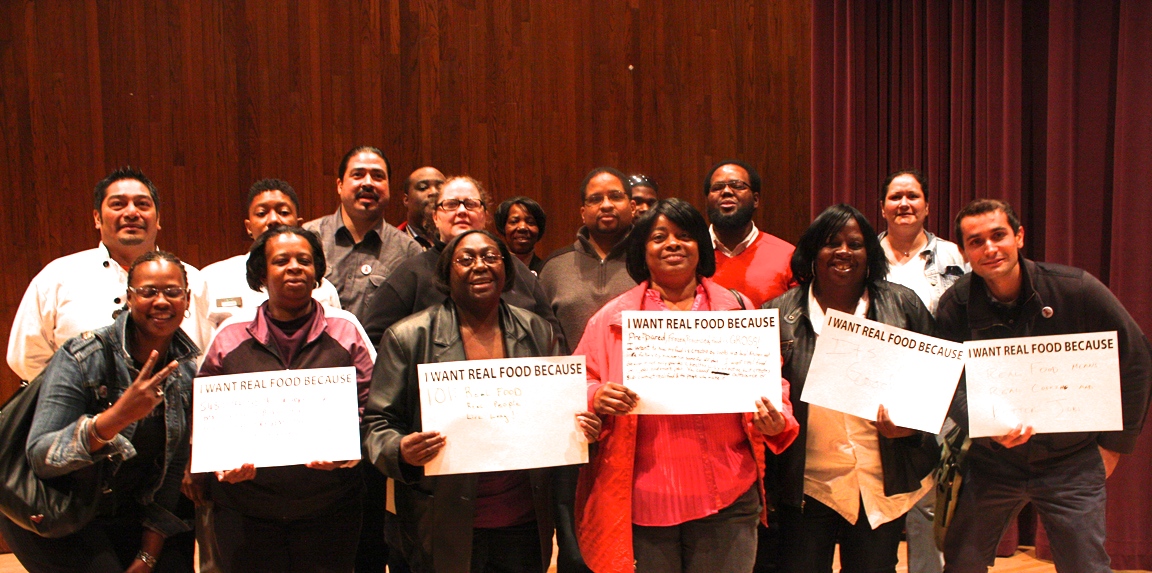
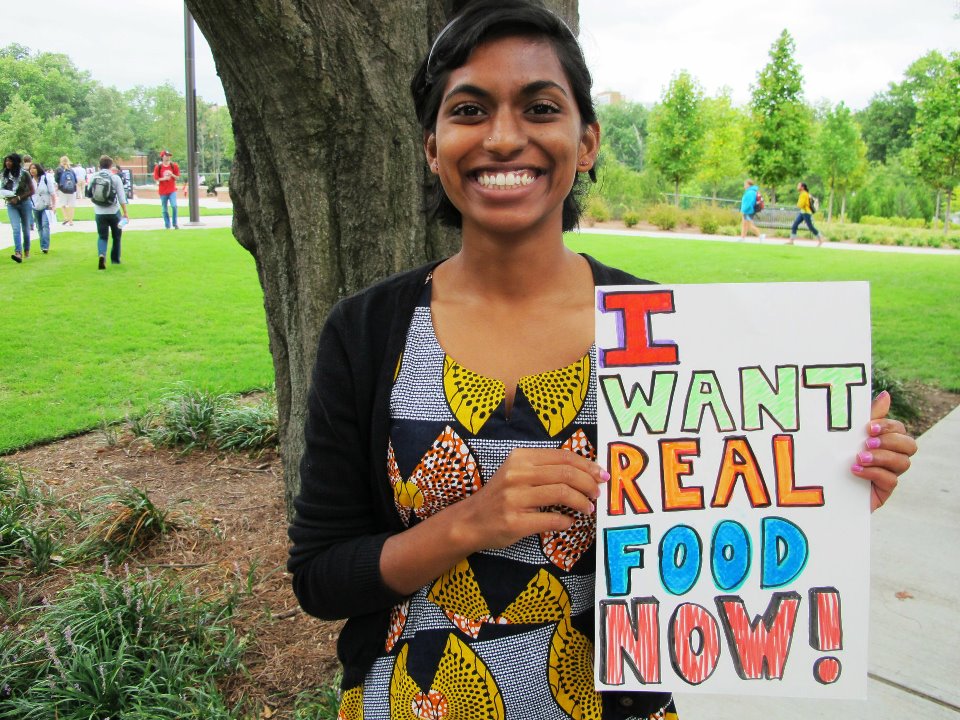
To highlight their work, students took photos and posted them on social media with the tag #TheRealFoodMovementIsHere.
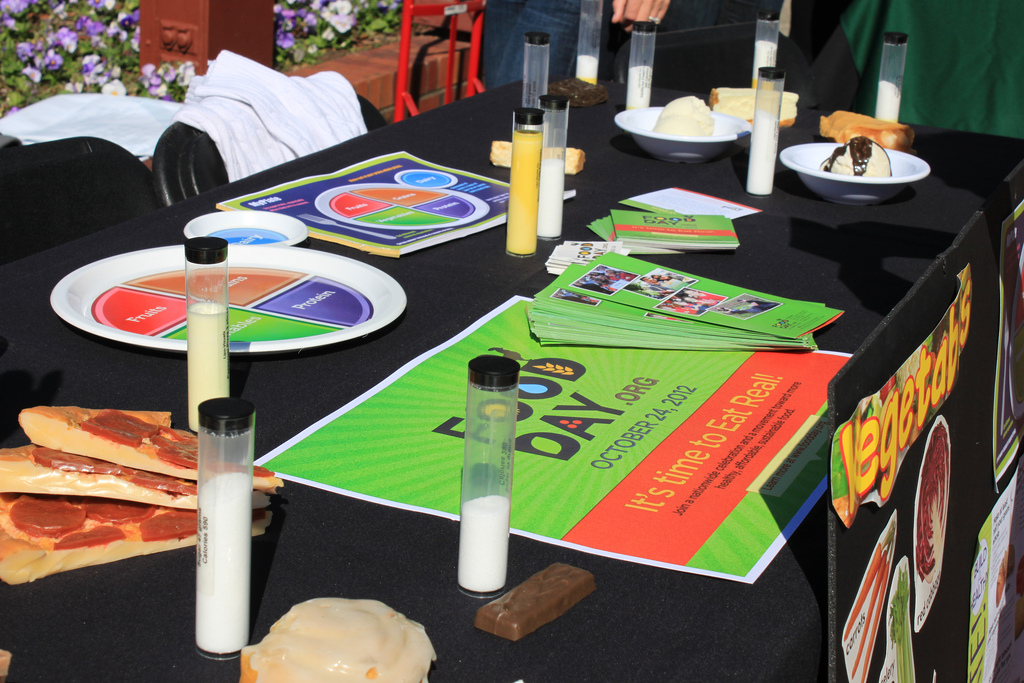
Food Day takes place each year on Oct. 24 to address issues as varied as health and nutrition, hunger, agricultural policy, animal welfare and farm worker justice. Spearheaded by the nonprofit Center for Science in the Public Interest and backed by a diverse advisory board of food leaders and organizations, the ultimate goal of Food Day is to strengthen and unify the food movement to improve the nation’s food policies.
3 WAYS TO SHOW YOUR SUPPORT


- Log in to post comments


