
Read

User menu

Search form

TSA to Remove Harmful, Invasive X-Ray Body Scanners from Airports

TSA to Remove Harmful, Invasive X-Ray Body Scanners from Airports
Wed, 1/23/2013 - by Mark Schoofs
This article originally appeared on Pro Publica

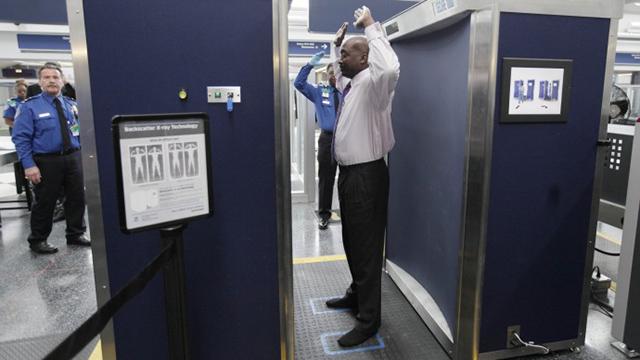
The Transportation Security Administration will remove all X-ray body scanners from airports, Bloomberg News reports. The reason: Software couldn’t be developed by a congressionally mandated deadline to automatically detect suspicious items on the body.

Instead, TSA officers viewed images of passengers’ naked bodies to see if they were carrying weapons or other contraband, a process that privacy advocates have dubbed a “virtual strip search.”

Privacy had not been the only concern dogging the scanners. A ProPublica investigation found that the TSA had glossed over the small cancer risk posed by even the low doses of radiation emitted by X-ray scanners. The stories also showed that the United States was almost alone in the world in X-raying passengers and that the Food and Drug Administration had gone against its own advisory panel, which recommended the agency set a federal safety standard for security X-rays.

In addition, ProPublica reported that, outside airports, other security agencies are exposing people to radiation in more settings and in increasing doses.

The TSA also uses another, safer kind of scanner that doesn’t emit X-rays. Instead, it sends out millimeter waves like those used in cell phones. Although there has been some doubt about the long-term safety of millimeter waves, scientists have not found a mechanism for such waves to mutate genes and cause cancer.

In October, the TSA parked many of its 250 X-ray scanners in a Texas warehouse after it removed them from most of the biggest U.S. airports, including Los Angeles, Chicago O’Hare, New York’s John F. Kennedy, Boston Logan, Charlotte Douglas and Orlando.

Back then, the TSA said it made the change to speed up checkpoints at busier airports. Because human officers have to view images, the X-ray scanners are slower than the automated millimeter wave machines.

In November, the TSA sent the maker of the scanners, Rapiscan Systems, a “show cause letter,” which is typically issued when the government is considering terminating a contract. Rep. Mike Rogers, the Republican head of the House transportation security subcommittee, cited an allegation that Rapiscan had falsified a software test, which the company denies.

X-ray scanners could still come back. The TSA is considering an X-ray machine made by another company under a contract for the next generation of body scanners.

The last X-ray scanners in use in Europe were removed from Manchester Airport in the United Kingdom in September. Israel, which is influential in the security world, has installed an X-ray body scanner for testing at Ben Gurion Airport in Tel Aviv.

3 WAYS TO SHOW YOUR SUPPORT

ONE-TIME DONATION

Just use the simple form below to make a single direct donation.

DONATE NOW

MONTHLY DONATION

Be a sustaining sponsor. Give a reacurring monthly donation at any level.

GET SOME MERCH!

Now you can wear your support too! From T-Shirts to tote bags.

SHOP TODAY

Sign Up

Article Tabs

From a pro-democratic perspective, civil society and new media organisations are surging in the aftermath of the Orban regime.

The country’s new prime minister, Andy Burnham, has promised a break from the politics of the last 40 years—realizing more broadly that Labour must stand up for the 99% against big business, or the party will become irrelevant.

The tragic shooting of Lorenzo Salgado Araujo is just the latest example of ICE having a fundamental disrespect for human life — further proving why the agency should be stripped of funding and shut down, and its rank-and-file agents and leadership prosecuted.

While the U.S., EU and their allies are enabling Rojava—the strongest force against Islamic State— to fall, it is vital for internationalists to continue to support this beacon of democracy and liberation.

June 23, 2026 may be remembered as the beginning of the end of the Democratic Party establishment.

The current wave of food recalls is a direct byproduct of President Donald Trump’s administration deliberately removing the safeguards put in place aimed at protecting American consumers more than a century ago.

From a pro-democratic perspective, civil society and new media organisations are surging in the aftermath of the Orban regime.

We can still celebrate success while simultaneously putting a cap on net worth.

The country’s new prime minister, Andy Burnham, has promised a break from the politics of the last 40 years—realizing more broadly that Labour must stand up for the 99% against big business, or the party will become irrelevant.

Much like the resistance to AI data centers, the opposition to Flock surveillance cameras has brought the left and the right together against billionaires who are trying to force America into becoming even more of a police state.

Much like the resistance to AI data centers, the opposition to Flock surveillance cameras has brought the left and the right together against billionaires who are trying to force America into becoming even more of a police state.

Posted 1 month 3 weeks ago

The country’s new prime minister, Andy Burnham, has promised a break from the politics of the last 40 years—realizing more broadly that Labour must stand up for the 99% against big business, or the party will become irrelevant.

Posted 1 month 3 weeks ago

We can still celebrate success while simultaneously putting a cap on net worth.

Posted 1 month 1 week ago

The current wave of food recalls is a direct byproduct of President Donald Trump’s administration deliberately removing the safeguards put in place aimed at protecting American consumers more than a century ago.

Posted 2 weeks 5 days ago

From a pro-democratic perspective, civil society and new media organisations are surging in the aftermath of the Orban regime.

Posted 3 weeks 11 hours ago

The current wave of food recalls is a direct byproduct of President Donald Trump’s administration deliberately removing the safeguards put in place aimed at protecting American consumers more than a century ago.

From a pro-democratic perspective, civil society and new media organisations are surging in the aftermath of the Orban regime.