
Read

User menu

Search form

Walmart's Bangladeshi Workers End 11-Day Hunger Strike And Receive Back Pay

Walmart's Bangladeshi Workers End 11-Day Hunger Strike And Receive Back Pay
Tue, 8/12/2014 - by Saad Hammadi
This article originally appeared on The Guardian

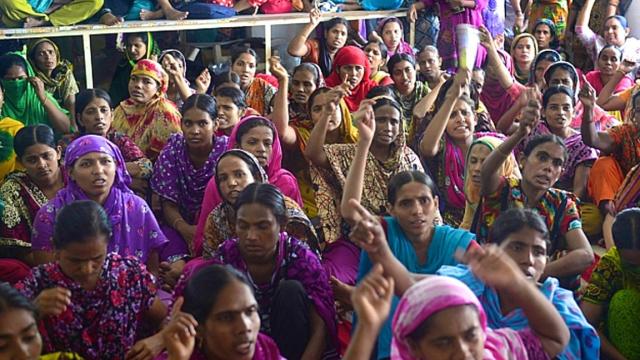
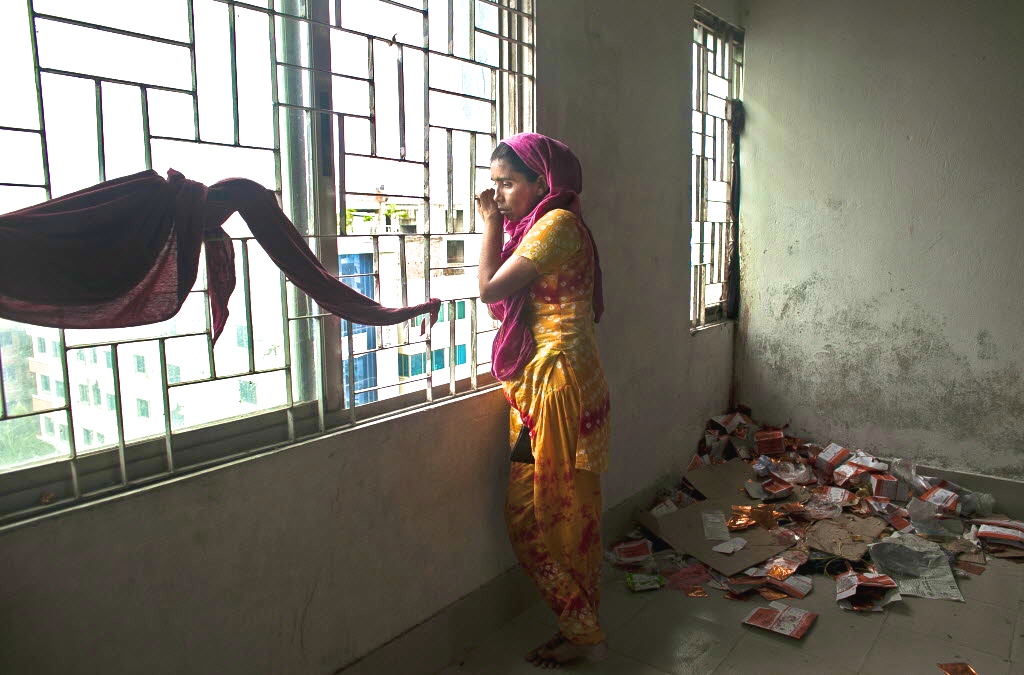
Garment workers in five Bangladeshi factories that supplied clothes for Walmart and other western retailers finally received their wages on Sunday, following an 11-day hunger strike.

The settlement came after the managing director of the Tuba Group, Delwar Hossain, was bailed on Aug. 5. Hossain has been in prisonsince February on charges of homicide and negligence leading to the death of 112 workers in a factory fire at the Tazreen Fashions factory in Dhaka in November 2012.

Workers stopped production on June 10 after the management failed to pay their wages in May, Shahidullah Azim, vice-president of the Bangladesh Garment Manufacturers and Exporters Association told the Guardian.

About 1,600 workers in the five factories, nearly 1,300 of whom are female, had been on hunger strike since July 28 demanding their back pay.

Mushrefa Mishu, president of Garment Workers’ Unity Forum, who headed the workers’ movement in the Tuba Group, said: “Withholding workers’ wages was dirty politics from the owners to have Delwar bailed out.”

Police detained at least three labor leaders including Mishu on Aug. 6 after she called for a shutdown of production in garment factories across Bangladesh until Tuba workers’ wages were settled.

Police also used batons and pepper spray on Aug. 7 to disperse the workers from the factory building in Dhaka and end the hunger strike.

The Tuba Group manufactures Fifa-endorsed clothing for European companies and supplied orders for Walmart.

The nearly 4 million workers in the Bangladeshi garment industry, 80% of whom are women, are the lifeblood of the country’s foreign revenues. Yet, in the global supply chain, where retailers look for competitive prices, workers have become victims of exploitative wages.

Most of the women working in the industry come from the remote and rural parts of the south Asian country, which has a population of 160 million. The garment industry pays a monthly minimum wage of £40 ($67), which has created a better living standard for poor women, who otherwise often work in middle-income and affluent homes as domestic helpers for wages as low as £11 a month.

“The only reason the garment industry does not have functioning trade unions and has poor wages is the poor bargaining capacity of female workers,” said Mishu. “This is happening partly because there is still a lack of leadership among our women and partly because they are not aware of their rights.”

The Bangladeshi government and industry leaders claim there has been significant improvement in safety and workers’ rights in the garment factories since the US cancelled trade preferences for the country in the wake of Rana Plaza disaster in April 2013.

The Alliance for Bangladesh Worker Safety said in July that about 300 trade unions had been registered but “the worker representative structures … continue to remain weak throughout the garment sector,” said Ian Spaulding, the alliance’s senior adviser.
Originally published by The Guardian

3 WAYS TO SHOW YOUR SUPPORT

ONE-TIME DONATION

Just use the simple form below to make a single direct donation.

DONATE NOW

MONTHLY DONATION

Be a sustaining sponsor. Give a reacurring monthly donation at any level.

GET SOME MERCH!

Now you can wear your support too! From T-Shirts to tote bags.

SHOP TODAY

Sign Up

Article Tabs

From a pro-democratic perspective, civil society and new media organisations are surging in the aftermath of the Orban regime.

The country’s new prime minister, Andy Burnham, has promised a break from the politics of the last 40 years—realizing more broadly that Labour must stand up for the 99% against big business, or the party will become irrelevant.

The tragic shooting of Lorenzo Salgado Araujo is just the latest example of ICE having a fundamental disrespect for human life — further proving why the agency should be stripped of funding and shut down, and its rank-and-file agents and leadership prosecuted.

While the U.S., EU and their allies are enabling Rojava—the strongest force against Islamic State— to fall, it is vital for internationalists to continue to support this beacon of democracy and liberation.

June 23, 2026 may be remembered as the beginning of the end of the Democratic Party establishment.

The current wave of food recalls is a direct byproduct of President Donald Trump’s administration deliberately removing the safeguards put in place aimed at protecting American consumers more than a century ago.

From a pro-democratic perspective, civil society and new media organisations are surging in the aftermath of the Orban regime.

We can still celebrate success while simultaneously putting a cap on net worth.

The country’s new prime minister, Andy Burnham, has promised a break from the politics of the last 40 years—realizing more broadly that Labour must stand up for the 99% against big business, or the party will become irrelevant.

Much like the resistance to AI data centers, the opposition to Flock surveillance cameras has brought the left and the right together against billionaires who are trying to force America into becoming even more of a police state.

Much like the resistance to AI data centers, the opposition to Flock surveillance cameras has brought the left and the right together against billionaires who are trying to force America into becoming even more of a police state.

Posted 1 month 3 weeks ago

The country’s new prime minister, Andy Burnham, has promised a break from the politics of the last 40 years—realizing more broadly that Labour must stand up for the 99% against big business, or the party will become irrelevant.

Posted 1 month 3 weeks ago

We can still celebrate success while simultaneously putting a cap on net worth.

Posted 1 month 1 week ago

The current wave of food recalls is a direct byproduct of President Donald Trump’s administration deliberately removing the safeguards put in place aimed at protecting American consumers more than a century ago.

Posted 2 weeks 5 days ago

From a pro-democratic perspective, civil society and new media organisations are surging in the aftermath of the Orban regime.

Posted 3 weeks 1 day ago

The current wave of food recalls is a direct byproduct of President Donald Trump’s administration deliberately removing the safeguards put in place aimed at protecting American consumers more than a century ago.

From a pro-democratic perspective, civil society and new media organisations are surging in the aftermath of the Orban regime.