
A generation ago, this West Coast metropolis became a “third world city.” At least in the rhetoric of certain East Coast thinkers.
A 1991 book by David Rieff cited visitors who were stunned by “seeing nothing but brown faces, hearing nothing but Spanish on the streets.” The arrival of coffee-colored Latino masses (like me and my Guatemalan-American family), together with the spread of Mandarin and Korean logograms on street signs, led Mr. Rieff to call this the “capital of the third world.”
As a native of the city, I was offended to hear it tagged with such a denigrating label. But in recent years, and for different reasons, I’ve come to believe that a metropolis of the “developing world,” to use a more polite expression, is being born here.
Its center is not in East Los Angeles, or any other Latino neighborhood; nor in our recently christened “Little Bangladesh.” The third world exists everywhere here — in the spread of inequality.
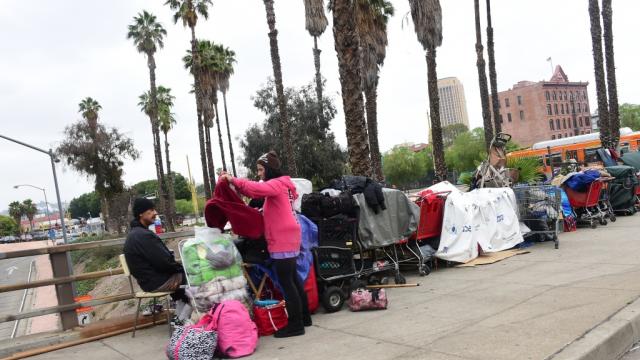
The deepening gap between rich and poor is both a sociological fact and a state of mind. The cost of housing is up dramatically, and so is homelessness.
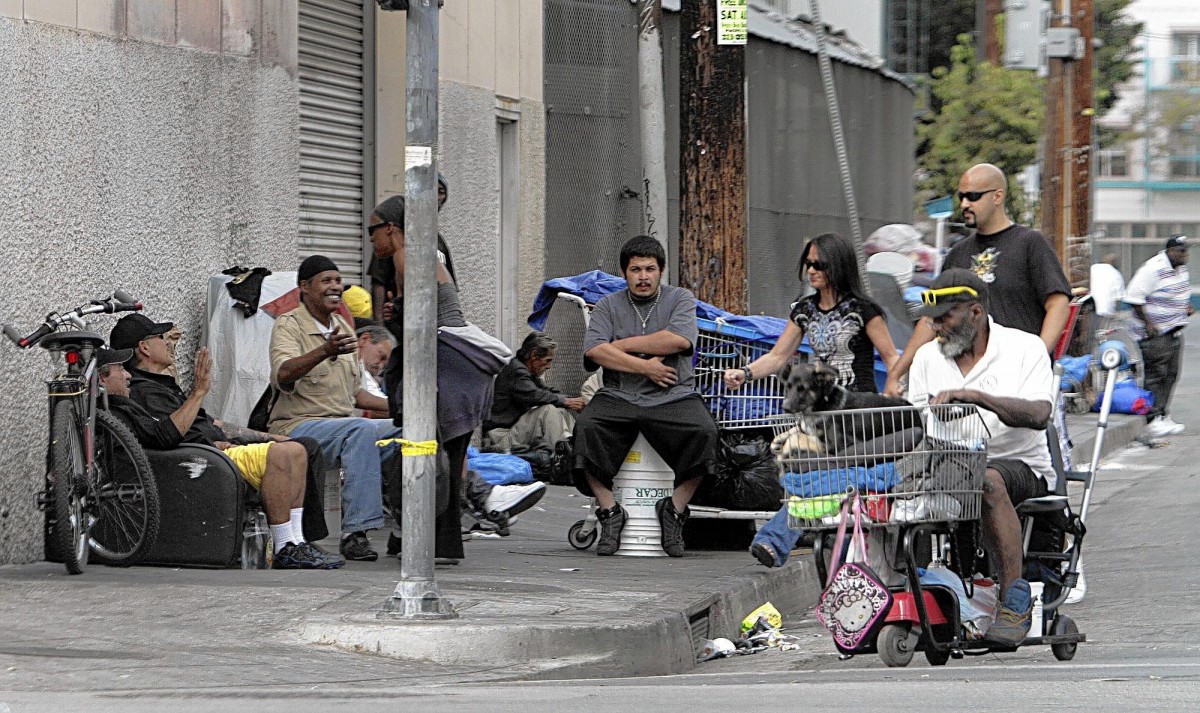
“If it feels like there are people living on the streets and under bridges everywhere you look, it’s because there are,” Bianca Barragan wrote for the website L.A. Curbed last month, after a survey by the Los Angeles Homeless Services Authority found an 85 percent increase in the number of people living in tents and cars over the past two years. In all, the census counted more than 25,000 homeless people in the city, up 12 percent over the same period.
In my hillside neighborhood in northeast Los Angeles, the value of a two-bedroom home has climbed to $750,000 or more. Buy in, and you could get a nice view of a valley with sycamore trees and a homeless camp. On social media, I hear my neighbors demanding that city officials intensify indigent-removal efforts.
“The problem is not gone,” wrote a resident on a neighborhood website in May, after city officials cleared out scores of homeless people. “Saw 6 people or more on the hillside. Tents and cooking! Looks like more work needs to be done.”
California has both the most “ultrarich” (people worth more than $30 million) and the worst poverty rate in America. Even though San Francisco recently overtook Los Angeles in ultrarich residents, ostentatious affluence and permanent poverty live side by side here.
“Look, Papá,” my 10-year-old daughter said as our old Subaru puttered past a local intersection that’s been occupied for ages by homeless veterans. “A Maserati!”
Silver, sleek, an apparition from the French Riviera, it glided past a lumbering city bus. A few days later, we saw a Tesla — the new status symbol of our eco-glitterati — driving along the Arroyo Seco Parkway, past the huts of wood, wire and blue tarpaulin that lined the roadway.
The paradox of increasing homelessness and rising prosperity has finally got Los Angeles talking about inequality. But the gap between rich and poor has been building here for 40 years. Every boom and bust simply accentuates the trend.
Bill Boyarsky, a retired city editor at The Los Angeles Times, dates the beginning to the decline of industrial Los Angeles in the 1970s: “We lost a huge number of middle-class jobs.” At the same time, the tax revolt led by the businessman and politician Howard Jarvis cut funding for public education. “We ended up limiting the ability of kids to move ahead of their parents,” said Mr. Boyarsky.
Los Angeles still has a much larger middle class than your average developing-world city. But privilege and inequality are spreading in all sorts of public places.
Rich and poor have long suffered on the freeway together: Porsches and pickups alike, gridlocked. Now we have new toll roads; on some freeways, you can literally buy your way into the fast lane.
Dodger Stadium used to be one of the city’s most democratic entertainment venues. In 1962, the most expensive seat was $5.50, about four times the price of a bleacher (or pavilion) seat. These days, field-level seats can cost up to $1,000, more than 30 times the price of a bleacher seat.
Thirty years ago, a family of four at poverty level lived on about $10,650 — about double the annual tuition at the city’s top prep schools. The equivalent federal poverty line today, $24,250, would barely cover two-thirds of this year’s tuition at schools like Harvard-Westlake or Polytechnic in Pasadena.
In the cities of the developing world, class differences this wide are fixed. Homelessness is a kind of caste, and the poorest city dwellers live in permanent squatter communities. In Buenos Aires, where I once lived, their homes are often built with discarded bricks and tiles.
Los Angeles doesn’t have neighborhoods like that yet, but homelessness has become semi-permanent in many places.
A decade ago, a man created a shelter under a bridge across the street from my in-laws in South Pasadena; a series of homeless people has occupied it ever since — most recently, a white man of about 65 nicknamed the Cowboy. He told me he worked in aerospace until an accident left him with a brain injury.
The Cowboy (he declined to tell his real name) is proud of his home improvements: a modest retaining wall, a wood-chip floor. He’s earned the trust of his property-owning neighbors. Once, he said, they passed around a petition to keep the police from kicking him out. As long as Los Angeles holds on to such compassion, it won’t be a true “third world city.”
The Cowboy asked me to visit again soon. “Like a bad habit,” he said, “I’ll keep coming back into your world.”
3 WAYS TO SHOW YOUR SUPPORT


- Log in to post comments


