

Just 4% of the world’s richest families lost money last year thanks to booming stock markets and money-spinning private-equity deals.
Research into the intensely privately guarded family offices of the super-rich found that just 10 out of 262 suffered a decline in wealth in 2016. Three-quarters [74.2%] of the families – who had an average fortune of $1.45 billion – increased their wealth. A further 22% reported no change to their wealth, according to a report by family office researchers Campden Wealth and Swiss investment bank UBS published on Tuesday.
The average return generated by family offices – which invest and manage rich people’s fortunes – came in at 7%. This compares with average interest rates of just 0.35% offered by instant-access high street bank accounts, according to the Bank of England.
Dominic Samuelson, the chief executive of Campden Wealth, said 2016 was “absolutely, no question, a marked performance” for the fortunes of the wealthy. “Irrespective of the economic challenges, great wealth is continuing to be generated across the globe,” he said.
Samuelson said family offices – which were pioneered by the Rockerfellers in the late 19th century to preserve their wealth for future generations – had rebounded from average returns of 0.3% in 2015 when financial markets were in turmoil.
He said the strong growth in 2016 was mostly due to booming equity markets (which made up an average of 27% of family office’s investments) and successful private-equity deals. “They [family offices] are long-term investors, they’ve taken slightly riskier bets and chosen to select more illiquid strategies that have delivered better returns and yields.”
Samuelson was unable to state how much money the most successful family offices made due to confidentiality clauses, but he said some had made considerable larger than average returns. The family offices in the survey, which have an average of $921m assets under management, are expected to make significant gains this year as well, with year-to-date increases running at 7%.
He said family offices were growing in popularity among the wealthy, and estimates that there are now more than 5,000 across the world. “There is now a better understanding and knowledge of what a family office is and the role it can play in helping with transition of wealth and how to grow wealth,” he said. “As well as providing support pertaining to issues of tax, estate planning and lifestyle challenges.”
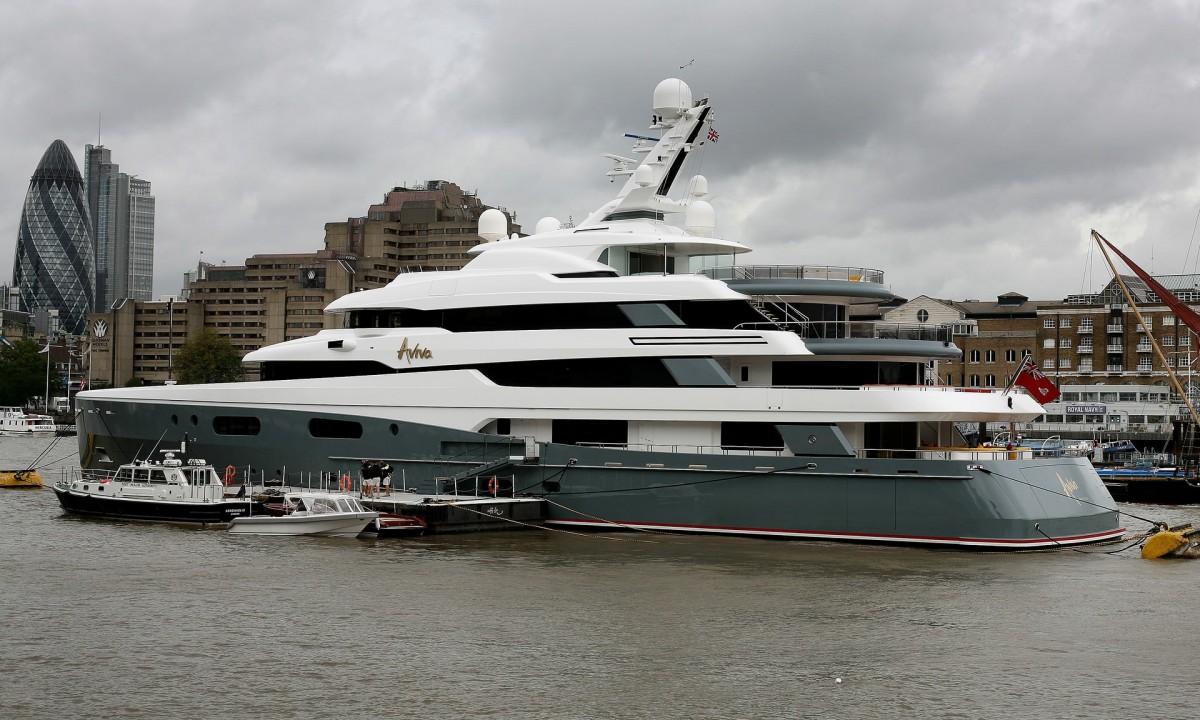
Family offices are also used to run homes and staff of the wealthy across the world and look after private jets, superyachts and other accoutrements.
“When you talk about the ultra-high net worth [defined as those with investable assets of at least $30m] it is a fairly opaque closed market. We believe there are in the region of 5,300 family offices, with north America and Europe having the most, followed by fast growth in Asia,” he said. “We have families with in excess of $5 billion-$10 billion in the study.”
Of those included in the study, 44% are run by a member of the family. The average pay of chief executives was $367,000, a 10% increase on the previous year. The boss also collected an average bonus of 45% of their base salary. Just 8% of family offices were run by women.
The family offices in the survey gave an average of $5.7m to philanthrophic causes last year, with North Americans giving the most at $8.4m and those in Asia-Pacfic region giving $600,000 on average.
3 WAYS TO SHOW YOUR SUPPORT



- Log in to post comments


