
Read

User menu

Search form

5 More Years of Warrantless Wiretapping from the U.S. Government

5 More Years of Warrantless Wiretapping from the U.S. Government
Fri, 1/11/2013 - by Josh Levy
This article originally appeared on Save the Internet

Well, Merry Christmas and a happy New Year! You got your coal.

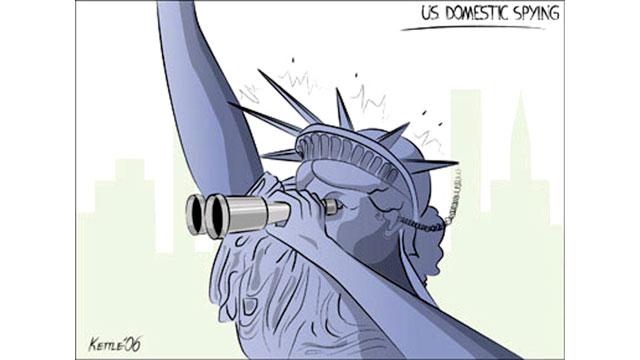
Just three days before the end of the year — and right before it reconvened to take us off the fiscal cliff — Congress pushed through a re-authorization of FISA, otherwise known as the Foreign Intelligence Surveillance Act. The bill — which President Obama subsequently signed into law — extends the National Security Agency's warrantless wiretapping program for another five years.

The original FISA Amendments Act sanctioned the Bush Administration's illegal scheme in which companies like AT&T and Verizon handed over records of domestic phone calls and Internet activity to the NSA without letting us in on the secret.

In late 2012, Sen. Ron Wyden led a small bipartisan group of senators in trying to slow down the march to re-authorization. The Obama administration was pressuring Congress to pass the bill swiftly, but Sen. Wyden and others introduced amendments designed to shine more sunlight on the program and protect the privacy rights of U.S. Internet users.

In the end, those amendments failed to gather enough support and the vote was rushed through.

Is this disappointing? Yes. Surprising? Not so much, considering Congress’ track record of uncritical support for bills purporting to enhance national security.

You may remember the Cyber Intelligence Sharing and Protection Act (CISPA), which promised to improve national security in exchange for removing privacy protections. CISPA inspired a big online protest but still passed in the House. Similar measures stalled in the Senate, thanks in part to a wave of grassroots opposition.

CISPA would have done a lot of the same things as the recent FISA re-authorization, and made it legal for companies like Facebook and Google to share our online searches, private messages and emails with the government.

CISPA, or something like it, will be back in 2013. The national security establishment insists that it needs to hoover up all of our online info to protect us from terrorism and other threats.

Whether or not there’s a legitimate concern at stake, we can't allow our online freedoms to be compromised in the name of state security. We'll have to regroup in 2017, when FISA comes up for its next re-authorization. In the meantime, we must be prepared to fight for our online rights when new cybersecurity legislation inevitably pops up later this year.

3 WAYS TO SHOW YOUR SUPPORT

ONE-TIME DONATION

Just use the simple form below to make a single direct donation.

DONATE NOW

MONTHLY DONATION

Be a sustaining sponsor. Give a reacurring monthly donation at any level.

GET SOME MERCH!

Now you can wear your support too! From T-Shirts to tote bags.

SHOP TODAY

Sign Up

Article Tabs

From a pro-democratic perspective, civil society and new media organisations are surging in the aftermath of the Orban regime.

The country’s new prime minister, Andy Burnham, has promised a break from the politics of the last 40 years—realizing more broadly that Labour must stand up for the 99% against big business, or the party will become irrelevant.

The tragic shooting of Lorenzo Salgado Araujo is just the latest example of ICE having a fundamental disrespect for human life — further proving why the agency should be stripped of funding and shut down, and its rank-and-file agents and leadership prosecuted.

While the U.S., EU and their allies are enabling Rojava—the strongest force against Islamic State— to fall, it is vital for internationalists to continue to support this beacon of democracy and liberation.

June 23, 2026 may be remembered as the beginning of the end of the Democratic Party establishment.

The current wave of food recalls is a direct byproduct of President Donald Trump’s administration deliberately removing the safeguards put in place aimed at protecting American consumers more than a century ago.

From a pro-democratic perspective, civil society and new media organisations are surging in the aftermath of the Orban regime.

We can still celebrate success while simultaneously putting a cap on net worth.

The country’s new prime minister, Andy Burnham, has promised a break from the politics of the last 40 years—realizing more broadly that Labour must stand up for the 99% against big business, or the party will become irrelevant.

Much like the resistance to AI data centers, the opposition to Flock surveillance cameras has brought the left and the right together against billionaires who are trying to force America into becoming even more of a police state.

Much like the resistance to AI data centers, the opposition to Flock surveillance cameras has brought the left and the right together against billionaires who are trying to force America into becoming even more of a police state.

Posted 1 month 2 weeks ago

The country’s new prime minister, Andy Burnham, has promised a break from the politics of the last 40 years—realizing more broadly that Labour must stand up for the 99% against big business, or the party will become irrelevant.

Posted 1 month 2 weeks ago

We can still celebrate success while simultaneously putting a cap on net worth.

Posted 1 month 5 days ago

The current wave of food recalls is a direct byproduct of President Donald Trump’s administration deliberately removing the safeguards put in place aimed at protecting American consumers more than a century ago.

Posted 1 week 4 days ago

From a pro-democratic perspective, civil society and new media organisations are surging in the aftermath of the Orban regime.

Posted 2 weeks 2 hours ago

From a pro-democratic perspective, civil society and new media organisations are surging in the aftermath of the Orban regime.