
In a quiet cafe in Cairo’s hip Zamalek quarter, Ahmad Abd Allah sits on a sofa hunched over a laptop. A shisha pipe in hand, the 34-year-old types quickly, peering intensely at the computer screen. His mobile buzzes and he picks it up distractedly, his eyebrows furrowed as he types a message before taking another puff on the pipe.
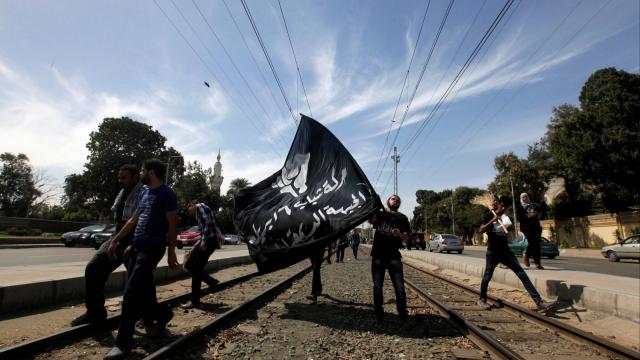
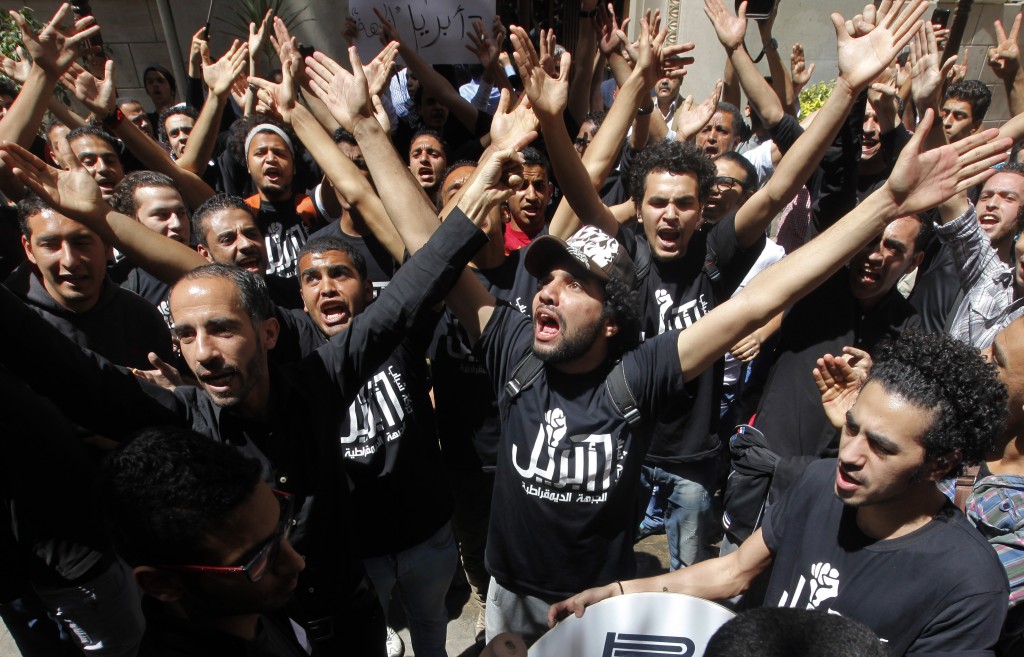
“We’re having a protest tonight,” he explains, adding that around 5,000 youth are expected to attend the demonstration despite the threat of arrest and imprisonment under Egypt's new anti-protest law.
Allah is a member of the April 6 Youth Movement that was instrumental in ousting dictator Hosni Mubarak three years ago. Now, the rush of those heady days has faded to disappointment.
On June 8, former army chief Abdel Fattah al-Sisi was inaugurated as Egypt's president, a position he won by a landslide in a vote that many viewed as a sham – and others saw as a victory of stability over freedom.
The resurgence of the military in Egypt has also made Allah and his fellow youth activists outlaws. In the run-up to the late May election, an Egyptian court banned the April 6 movement on charges of espionage and defaming the government – what Allah says are trumped up excuses to silence the opposition. “It’s crazy," he said.
The most recent wave of crackdowns against groups like April 6 began after the ouster of Mubarak's successor, Mohamed Morsi, last July when the Muslim Brotherhood leader and Egypt's first democratically elected president was deposed by al-Sisi's armed forces and arrested following mass protests against his rule.
The military-backed interim government banned the Brotherhood before designating the party a terrorist organization in December, leading to thousands of arrests and detentions including the incarceration of four Al Jazeera journalists who are now on trial on charges of aiding the group.
Prohibitions against April 6, the Brotherhood and other groups have disillusioned Egyptian youth who face rising unemployment and deepening poverty, and who are eager to gain a voice in national political life. Around 60 percent of the country is under 30 years old, according to the Carnegie Middle East Center in Beirut.
Now, the military government crackdown appears to be doing the opposite – moving the country back into a culture of fear that marked the Mubarak years.
"Fear is something historically in the minds of people. On January 25, we conquered the fear together — not just as a movement, but as a nation," said Allah. "The government is now trying to rebuild the fear."
Frustration over the lack of change helped suppress voter turnout in the election. The government even kept polls open for three days to garner as many votes as possible in hopes of granting al-Sisi legitimacy.
To Allah, it doesn’t matter how long the polls were open. Al-Sisi has been widely blamed by many of the youth for his role in the crackdowns — actions analysts say would have needed his approval.
"Sisi is the most powerful political decision maker," said Fawaz Gerges, a professor at the Middle East Center at the London School of Economics. "The crackdown would not have taken place without his consent."
The Brotherhood and April 6 boycotted the "farcical" election.
"There is no hope that anything good will come from this man," added Allah. "The youth are willing to sacrifice their lives for freedom."
"They are making laws whatever and whenever. Before the protest law, they were already detaining people at protests."
Further Arrests
In December, activist and blogger Ahmed Douma was arrested alongside two other April 6 co-founders, Ahmed Maher and Mohammed Adel.
Since then, his wife Nourhan Hefzy has been campaigning for his release with protests like a peaceful sit-in outside the El-Thadiya presidential palace in Cairo.
In a noisy café in downtown Cairo, Hefzy shuffles from empty table to empty table to find a seat where she can hold a conversation away from prying ears.
"With the large number of people who have been arrested because of the demonstration law, we decided to form a campaign to bring down the law," she said. "The constitution says that the authorities should be notified of a demonstration. But the law says you have to get permission and that they have the ability to arrest people without giving an explanation of why they were stopped.”
Still, despite the crackdowns, some Egyptians believe stability is more important than freedom of expression. They are happy to see a former military man take the reins after the chaos of revolution.
"Sisi will do good things because he rescued the country first from those people, the Brotherhood, which was using the country," said Mohamed Ali, a 67-year-old café worker. "I think things are good now because we have stability. It will be even more stable with Sisi."
The London School of Economics professor Gerges warned, however, that stability comes with a price.
"I don't think there will be a softening of the crackdown," Gerges said. "In Sisi's first few months, he's going to assert his leadership, at least on the Brotherhood, and strike with an iron fist. His goal is political stability and economic growth."
Manu Abdo in Egypt contributing reporting for this piece.
3 WAYS TO SHOW YOUR SUPPORT



- Log in to post comments


