

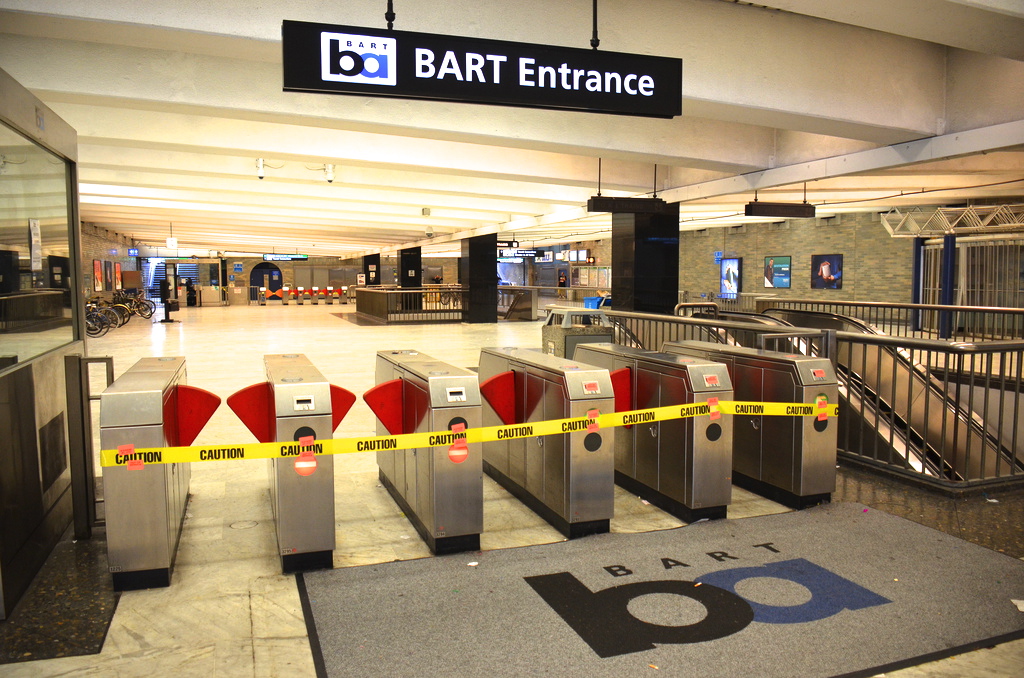
SAN BRUNO, California — Management at the Bay Area Rapid Transit (BART) and the two unions representing workers still remain miles apart on reaching an agreement, but workers resumed train service on Friday afternoon after hundreds of thousands of residents were forced to find alternative travel plans during the previous four days.
The agreement to extend the workers’ present contract through August 4 is being seen as more of a Band-Aid than a viable long term solution. The extension gives BART and workers with the Service Employees International Union Local 1021, and Amalgamated Transit Union Local 1555, one month to iron out some form of agreement or the Bay Area could see a new round of transit closures.
"The parties remain far apart on the money issues," said Alicia Trost, a BART spokeswoman. "We hope that with the trains running and some of the pressure off, it will create an atmosphere where an agreement can be reached."
The strike has left political leaders juggling the interests of residents, workers and transit management, as tensions last week forced officials to walk a fine line between supporting workers’ rights and the needs of residents struggling to find ways to get to work. The BART strike in many ways polarized the Bay Area community, with residents taking strong positions either in favor of or against the transit workers.
One of those who voiced his opinion was Will Thomas. It was early Thursday morning as Thomas waited for his ride into San Francisco with four others. He usually takes BART into the city, but with the unions on strike demanding better working conditions and raises in line with inflation, Thomas had to look elsewhere for a ride.
“I found a few people in the area who also work in the city and we connected via social media and here we are,” he said. Although Thomas wasn’t angry, his frustration was apparent. He said he understood that for workers the situation is more than simply about money.
“I don’t like it and I hope they come to an agreement soon so we can get the trains going again, but at the same time all the anti-worker sentiment that I have been reading is not helping to paint a real picture of what is happening,” he added.
Workers picketing at a number of BART stations around the Bay Area expressed a sense of alienation from the media, which have tended to present their demands on an unfair footing versus the position of BART. At the West Oakland stop, dozens of workers took turns last week holding signs and attempting to explain to people why they were on strike. But according to Omar, a 33-year-old BART union employee, many residents had little time or interest to listen to them.
In fact, Omar told Occupy.com that the sense of hate and anger he and his fellow workers experienced on the picket was "shocking."
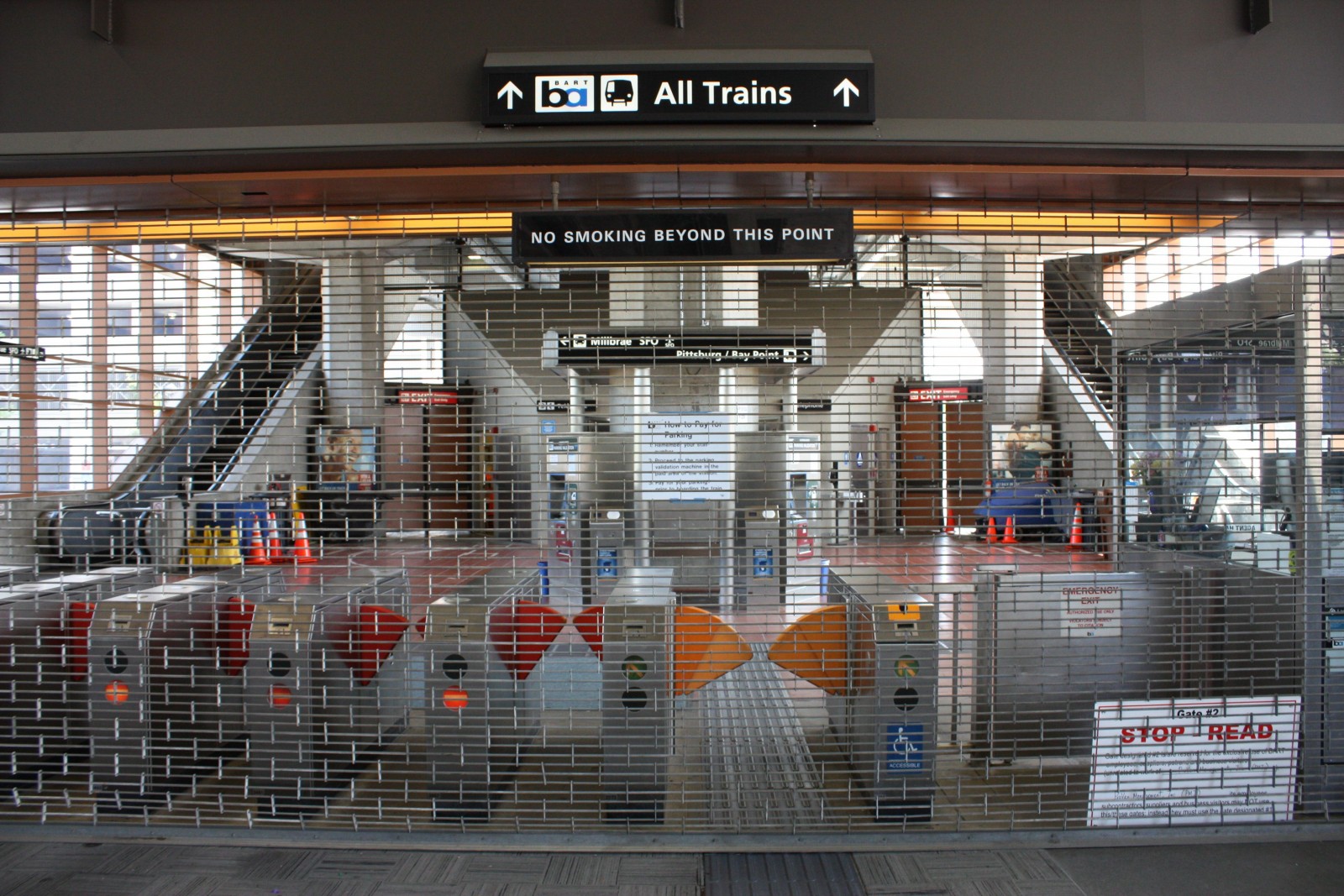
“We have our signs and we are trying to just be honest with people about why we are on strike,” he said. “It isn’t as if this all of a sudden happened and we decided to shut down. It is what happens when those in power refused to compromise and treated us like servants. But I understand the frustration people have.”
Negotiations between BART management and the two unions representing BART workers — the ATU and SEIU — had been ongoing since Sunday, June 30, but with little success. On Friday, after the opposing sides used the July 4 holiday to continue to push for compromise and a resolution to the impasse, they agreed to a one-month contract extension and workers returned BART to service.
The unions are demanding a pay increase of around 5 percent, in line with inflation in recent years, and to maintain their current health insurance rates as well as extending health services to their families. BART continued to rebuke those efforts, offering a salary increase of around 2 percent.
Lead union negotiator Josie Mooney on Tuesday told the San Francisco Chronicle that the unions were “upbeat” about the progress that was made. But Mooney didn’t comment on Wednesday evening’s negotiations, saying simply that “we’re working very hard with the (state) mediators.”
BART responded with a finger-pointing attack on workers, communicating through a press release to the public that trains would not be functioning on July 4, thereby preventing families from using the public transport system to visit each other.
"We are sorry that the actions of (the Amalgamated Transit Union) and (the Service Employees International Union) have caused such a tremendous disruption to the people of the Bay Area," the notice said.
But Thomas, who carpooled to his office in the Financial District of San Francisco for the past four workdays, said the conflict was bigger than BART and suggested the strike could be put into the context of other global movements for social justice.
“San Francisco is an expensive city to live in. So are areas around the city and these workers are often commuting to work just like us, so we all need to show some empathy,” he argued.
Others, however, expressed less compassionate views. Brian Hartija, a San Mateo resident who works in Oakland, said it took him nearly two hours to commute to work by car each day last week — and he put the blame squarely on the workers.
“What they are doing to people is inhumane and wrong. We need our public transportation because it is too expensive for people to drive to work in the Bay,” Hartija told Occupy.com on Wednesday evening, as he picked up a few colleagues at the Millbrae CalTrain – the train system that runs from San Francisco to San Jose and has been unaffected by the strike.
Like many Bay Area residents, Hartija is looking at the immediate picture and calls on workers to accept the smaller pay increase and return to work. “This is affecting thousands of people. Who do they think they are?”
However, workers are remaining stalwart in their demands for a better contract, saying the strike is about a broader sense of social and economic justice.
“We aren’t asking for a lot, we are asking for what is justifiably our right as workers of BART," added Omar. "This is about our families and our future just as much as it is about BART. We care deeply for the people affected by the strike, but it is bigger than simply a commute to work. This is our lives.
“The U.S. is a great place to live and work, but we have to be aware the struggle facing all citizens and not just ourselves,” he said.
3 WAYS TO SHOW YOUR SUPPORT



- Log in to post comments


