
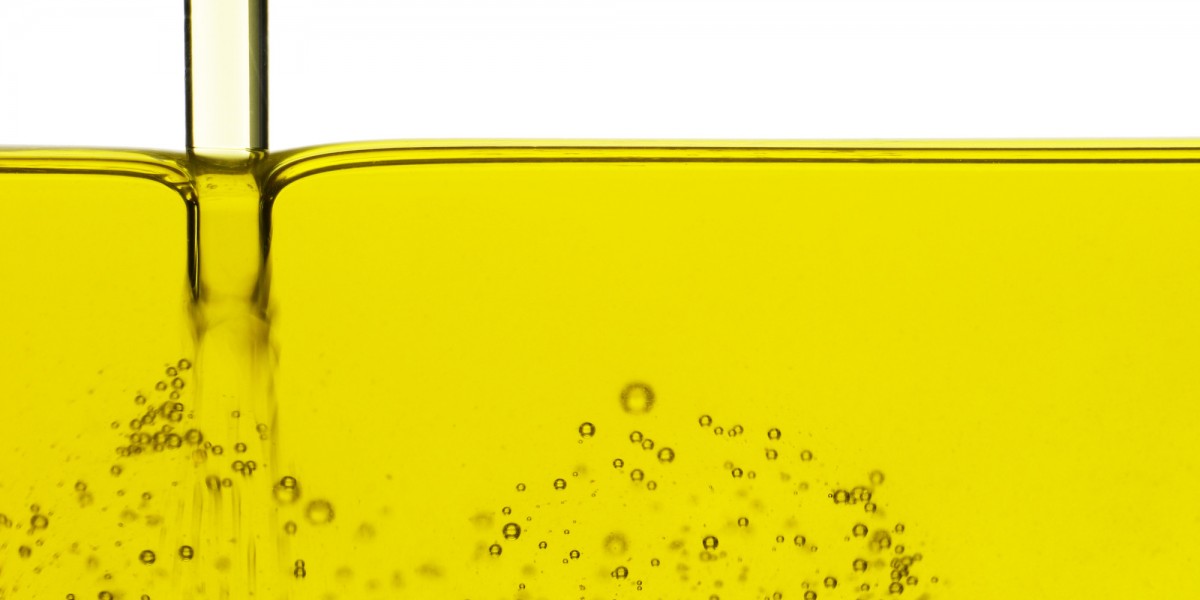
Recycling more waste cooking oil into fuel could help tackle the climate change crisis. Yet British politicians are stifling this industry. On the eve of Saturday's mass London protest, organized under the banner "It’s time to act against Climate Change", we turn to explore the potential of recycled biofuel.
The Political Barriers Against "Small Oil"
“Several years ago there was a flourishing biodiesel industry [across the U.K.] getting up on its feet with government backing,” says Jason Askey-Wood, director of Uptown Oil, a south London-based biodiesel company.
This cottage industry recycled cooking oil for road fuels and heating and electric generation. It was expanding with road tax duty $0.31 cheaper than fossil fuels, and producers were also given a certificate that they could sell to big oil companies which would then be used as an offset. By E.U. law, oil firms are mandated to blend a percentage of biodiesel into their fuel. The U.K. has one of the lowest levels in Europe, at 4.7%.
The government decided to match tax duty with fossil fuels, and instead gave the producers two certificates. “But as anyone could work out, if you double the certificates they come down half the price,” says Askey-Wood, and this decimated the cottage industry.
“If anyone tried to set up a biodiesel business now, I’d probably say you were mad, with the tax duty, the legislation and the other hurdles the government put in front of the industry.”
Biodiesel Can be Green
Making biodiesel from virgin crops threatens the climate. Across the world, swathes of rainforest are cut down to plant mono-crops to harvest for fuels. But Uptown Oil recycles waste product into a fuel, re-using oil in England.
Uptown Oil is nestled under three railway arches. Its office gently rumbles when the trains pass above. The company sells 100% GMO-free rapeseed oil to restaurants, pubs and eateries, collecting the waste in containers that are also recycled.
Managing director Nigel Jewison showed me around the processing plant, with its silver vats, pipes and processes resembling a micro-brewery or dairy. The first step is for the used cooking oil to settle in tanks. After this, it is heated, titrated and turned it into biodiesel B100. The process also makes glycerol, which Uptown sells to soap manufacturers.
The company produces around 30,000 litres of B100 per week. Jewison explains that every litre of biodiesel burnt, rather than standard diesel, saves 2.2kg of greenhouse gases. Biodiesel still produces emissions, but far less than fossil fuels – and it doesn't add fossilized carbon into the atmosphere.
To quantify the 2.2kg savings in carbon atoms that aren't added to the air, Jewison says filling an Olympic swimming pool with CO2 would contain 2,000kg of greenhouse gases. At its current production per year, Uptown Oil reduces enough greenhouse gas to fill more than 1,000 Olympic pools.
An Unusual Lifeline
Uptown Oil’s customers include taxis, council utility vehicles and leisure centers. But their primary client, since the hike in the fuel duty, is somewhat surprising.
“Pricewaterhouse Coopers use up to 4,000 litres of our fuel per day for tri-generators [to] produce heating, air conditioning and electricity. These generate 25% to 50% of their headquarters' needs. Their goal is to make them 100%,” Askey-Wood explains.
Pricewaterhouse Coopers is better known to many for its tax evasion than for promoting green energy. Yet the company's buildings have the best environmental impact certification of any office building in the country – in large part thanks to its use of biodiesel.
A Future Road Fuel?
Any diesel-powered vehicle can run on biodiesel (the engines were originally designed to run on peanut oil). For older vehicles, drivers only need to clean the filters after filling the tank a few times. In Europe today, vehicle manufacturers are increasingly computerizing vehicles, chipping them so that they require adjustments in order to take B100.
Askey-Wood said this could be changed if governments send a signal that they advocate biodiesel. The shift in engines, he says, relates to another recently created political barrier.
“[London’s Mayor] Boris Johnson has banned taxis older than 15 years, reducing the number that could run on biodiesel without alteration," he says, "supposedly because they are ‘too polluting.’”
But Johnson’s logic couldn't be further from reality, adds Askey-Wood. If the vehicles ran on biodiesel, not only would they have far lower greenhouse gas emissions, but they'd also emit over 55% less carcinogenic soot.
According to E.U. figures, 400,000 people there died in 2013 due to air pollution and smog caused in great part by road vehicles. But beyond tackling smog and climate change, green biodiesel could also solve another problem: "Fatbergs," the clumps of grease that accumulate in sewer systems, which are growing so large they often clog up London and other cities' wastewater systems.
Blue-sky Thinking
Askey-Woods estimates that London, a city of 12 million, could produce around 50 million liters per year of recycled biodiesel. To reach this scale, he says British government must increase the mandatory percentage of biodiesel in road fuels and invest in more processing factories.
In addition, “there should be a separate standard made from used cooking oil from rapeseed, which, once it proves that it meets the standards, should be tax exempt,” he says.
More bluntly, explains Nigel Jewison: “I think that it should be subsidized and the government should give us money for making it." The U.K. government is giving precisely this kind of financial support to fracking – such as when INEOS was loaned $350 million to build an ethane cracker for processing fracked gas.
Now, growing numbers are wondering why the U.K. is pumping money into climate change causing fuels – while eco-smart alternatives like biodiesel go down the drain.
3 WAYS TO SHOW YOUR SUPPORT



- Log in to post comments


