

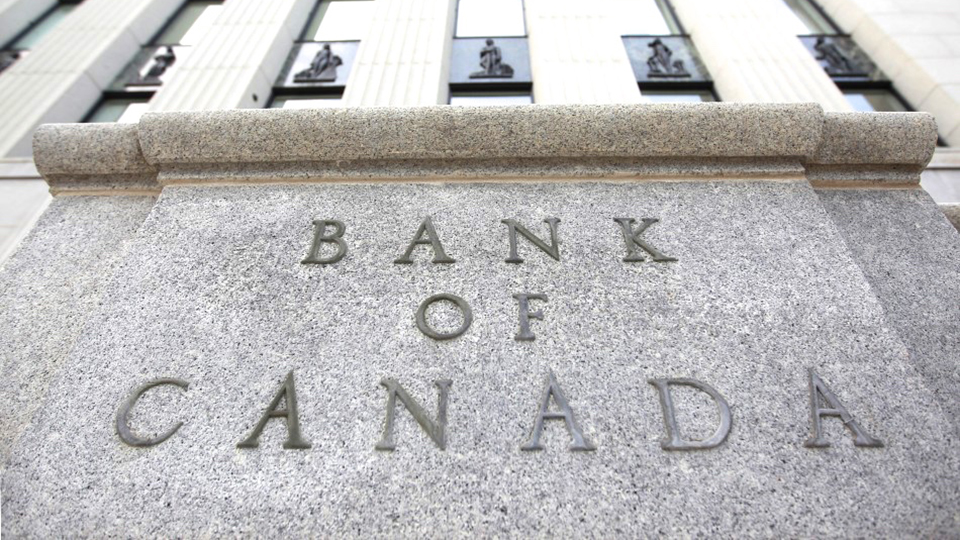
The Bank of Canada was nationalized in 1938 and is wholly owned by the Canadian people. Between 1938 and 1974, the federal government borrowed at low or no interest from the bank.
But all that changed. In 1974, Canada turned to monetarism, a paradigm holding that expansion of the money supply is inflationary, and a partner to neoliberal economic policy. This shift compelled the federal government to borrow from private foreign banks to finance Canada’s pension plan and a whole host of public projects from transportation to health care, airports, seaports and more.
In the 40 years since, Canada’s privatization of finance has led to an unprecedented level of public debt. It has commodified and effectively privatized the “human capital expenditures” originally articulated in the Bank of Canada’s charter.
In 2011, the Committee for Monetary and Economic Reform (COMER) and two private citizens sued the Canadian government. The plaintiffs alleged that the Bank of Canada “is the only central bank among the G-8 countries that is a ‘public’ bank created by statute and accountable to the legislative and executive branches of Government.” They also argued that the bank’s secretive dealings and particular accounting practices further undermine the ability of the government to meet its constitutional obligations to provide economic security to the Canadian people.
While the case, Committee for Monetary and Economic Reform v. Canada (2014 FC 380), isn't the fatal blow to private banking that many wishful observers declare it to be, it is an important marker in the war between the paradigms of public and private banking.
As one might expect in a case like this, judges will hear numerous procedural objections before COMER et al can make their substantive argument. In an important appeals decision last year, a federal court said the plaintiffs would need to amend their claim. That ruling left their case alive but shaken, allowing the plaintiffs to move forward with “public standing,” a status with important implications for bringing these kinds of “social policy” claims to the court.
Upholding that decision – which cut against both the plaintiffs and the government, but allowed the case to proceed – the Federal Court of Appeal again allowed the case to move forward on Jan. 26. The government has until March 29 to appeal to the Supreme Court in Ottawa. According to populist Rocco Galati, “to date no such indication has been conveyed,” but the Crown might well still appeal, figuring that the harm it has inflicted so far will culminate in a third round technical knock-out.
The news of last month’s decision was confusing at first because some people erroneously reported the court had decided in the case that the plaintiffs had done something bigger than survive a procedural motion. Headlines like “Canadians sued the Bank of Canada and Won” didn't help. Another source declared: “The Federal Court of Canada has ruled against private central banking.”
Those declarations were dangerously incorrect. What COMER et al “won” was that the claim they are raising is justiciable: suitable for determination by a court. That’s important, but it’s not a mandate to turn the Bank of Canada back into a public bank. For that to happen, a court must decide that the government has no discretion about how the Bank lends or facilitates the lending of money. The government maintains, because of the Bank Act, that the bank “may” lend like a public bank – not that it must. There is a good chance that courts will rule those powers to be “permissive” rather than mandatory, and that this is really a policy question rather than a legal one.
But the plaintiffs have a scrappy, creative and audacious case. COMER et al contend the damage caused by the switch to monetarism – the economic hardship of debt and the insecurity of living in a neoliberal economy – violate the Canadian constitution’s right to life, liberty, and security; equal protection under the law; and equal opportunity, economic development, and public services. To come at the court with both public standing and a constitutional claim concerning economic rights is as close to revolutionary as you can get in a federal court system.
Public standing is different than private standing, and Canadian courts have been told by the Supreme Court to “take a liberal and generous approach” in determining whether citizens can bring lawsuits concerning social issues. Public standing allows a plaintiff to assert a “genuine interest” in a policy question even if they are not personally affected by the policy. This is a demand to materialize constitutional promises, and to do so through the restoration of a national public bank.
That’s asking a lot. But whatever the outcome, we all benefit from watching and learning from the emerging legal arguments. If those arguments don’t win this time around, they still help shape a jurisprudence of the commons. 1974 wasn’t too long ago to recall the assumptions of low-interest lending for the public good, and the monetarism that replaced those assumptions made false promises. Whatever the agonizing slowness of the courts, the legal conversation shapes our collective response to our material situation.
Matt Stannard is Policy Director at Commonomics USA and a researcher for the Public Banking Institute.
3 WAYS TO SHOW YOUR SUPPORT



- Log in to post comments


