
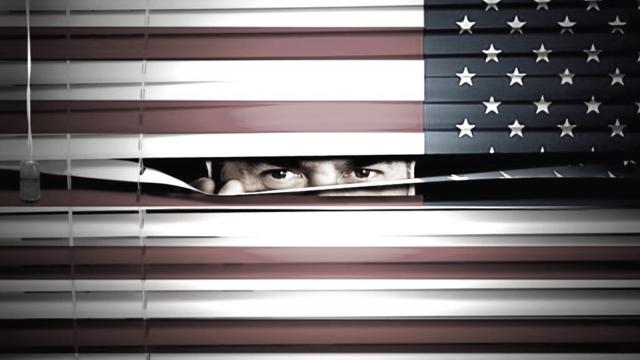
This spring, Congress will consider whether to extend three provisions of the notoriously controversial PATRIOT Act set to expire in June. When it debates whether to allow mass surveillance, it will do so in the dark, with Members unaware of many crucial facts.
How vast are government surveillance programs? Have they actually helped protect national security, or just the job security of the officials who have repeatedly lied to protect their powers and budgets? Is mass surveillance even constitutionally permissible in the first place, given our Founders’ multiple attempts to restrain executive power run amok?
Eager to reset the debate and anchor it in long overdue transparency, a bipartisan block of representatives have introduced a bill to restore civil liberties, privacy, and freedom of thought. The Surveillance State Repeal Act, HR 1466, would do this by repealing the twin pillars of the NSA dragnet: the PATRIOT Act (not only the three expiring provisions) and the 2008 FISA amendments.
On multiple occasions, executive officials have lied under oath to congressional oversight committees about the scope of domestic surveillance. Yet the very same officials still appear in oversight hearings as if they maintained any credibility. It took whistleblowers resigning their careers to prove that senior government officials’ blithe assurances to Congress were in fact self-serving lies.
Some members of Congress paid attention: the authors of the PATRIOT Act moved to curtail their own legislative opus, and have encouraged their colleagues not to reauthorize the expiring provisions unless they are first curtailed.
HR 1466 (the SSRA) represents a profound challenge by members of Congress from across the political spectrum fed up with the national security establishment and its continuing assault on our Constitution.
By repealing the twin pillars of the surveillance dragnet, the SSRA would essentially shift the burden of proof, forcing intelligence agencies like the NSA and FBI to justify the expansion of their powers from a constitutional baseline, rather then the illegitimate status quo.
Most policymakers forget the 9/11 commission’s most crucial finding: the intelligence community's failures that enabled the 9/11 attacks were not failures of limited data collection, but rather failures of data sharing and analysis.
Over the last 15 years, Congress has allowed the agencies to expand their collection capacities, solving an imaginary problem while creating a host of real threats to U.S. national security far worse than any act of rogue violence: the specter of state omniscience, immune from oversight and accountability, and thus vulnerable to politicization. This was among the fears of which President Eisenhower warned us in his last speech as President.
Meanwhile, the SSRA would preserve what the PATRIOT Act’s authors have said they meant to authorize: targeted investigations of particular people suspected by authorities to present potential threats.
HR 1466 would also advance transparency, both by protecting conscientious whistleblowers from the corrupt retaliation of agencies and careerists, and by giving judges on the secret FISA court access to technical expertise they have been denied.
Finally, the bill would directly address disturbing government duplicity, prohibiting agencies from hacking encryption hardware and software, and from using an executive order authorizing foreign surveillance as a basis to monitor Americans.
Mass surveillance has never been popular in America. Hundreds of cities and multiple states have raised their voices seeking a restoration of constitutional limits on an increasingly imperial federal executive.
Nor is mass surveillance constitutional. A 1979 case contorted by agency lawyers into providing a legal basis for surveillance stands for nothing of the sort: Smith v Maryland was a case addressing targeted surveillance of a particular person, based on reasonable suspicion, limited to a particular time. Intelligence agencies today monitor every American, without any basis for suspicion, all the time.
Members of Congress who remember their oaths of office should support the SSRA to force a long overdue transparent debate. And Americans who value privacy, checks and balances, or freedom of thought should take a moment to educate Members of Congress who might not.
3 WAYS TO SHOW YOUR SUPPORT



- Log in to post comments


