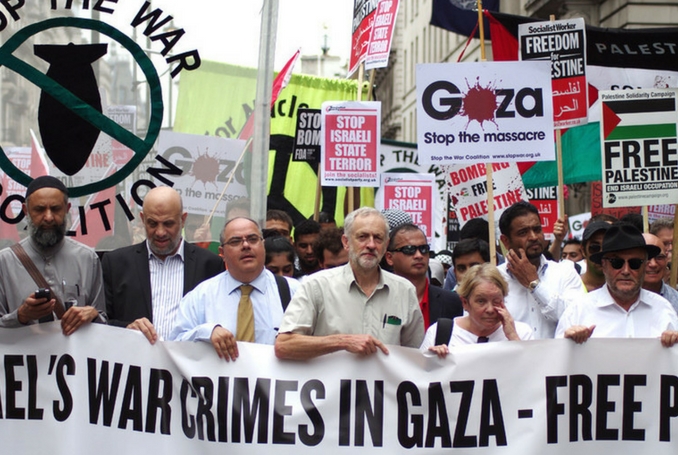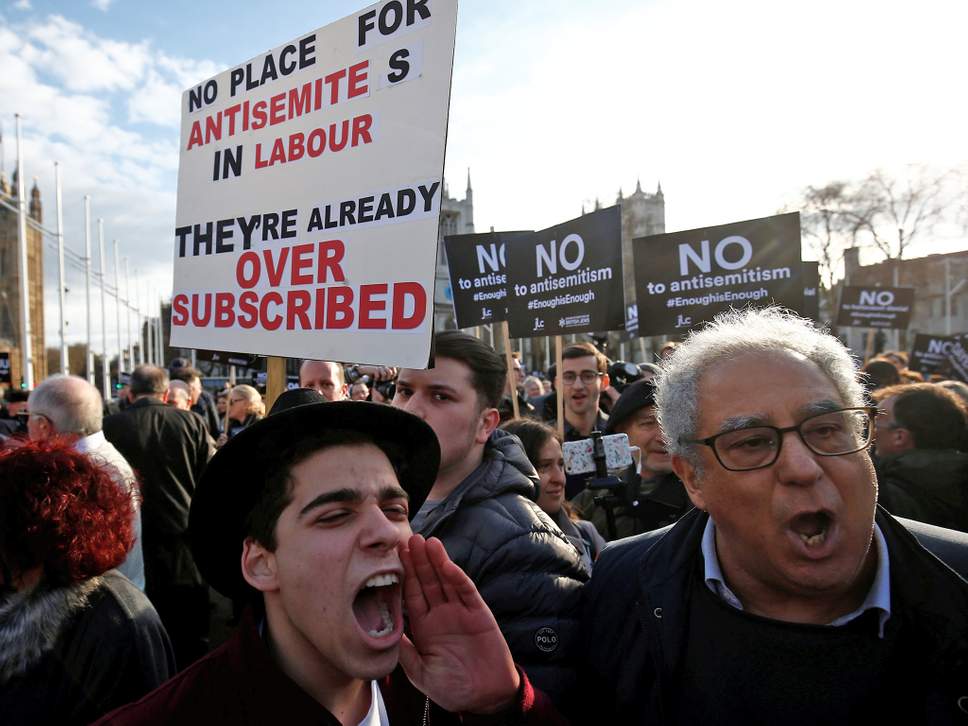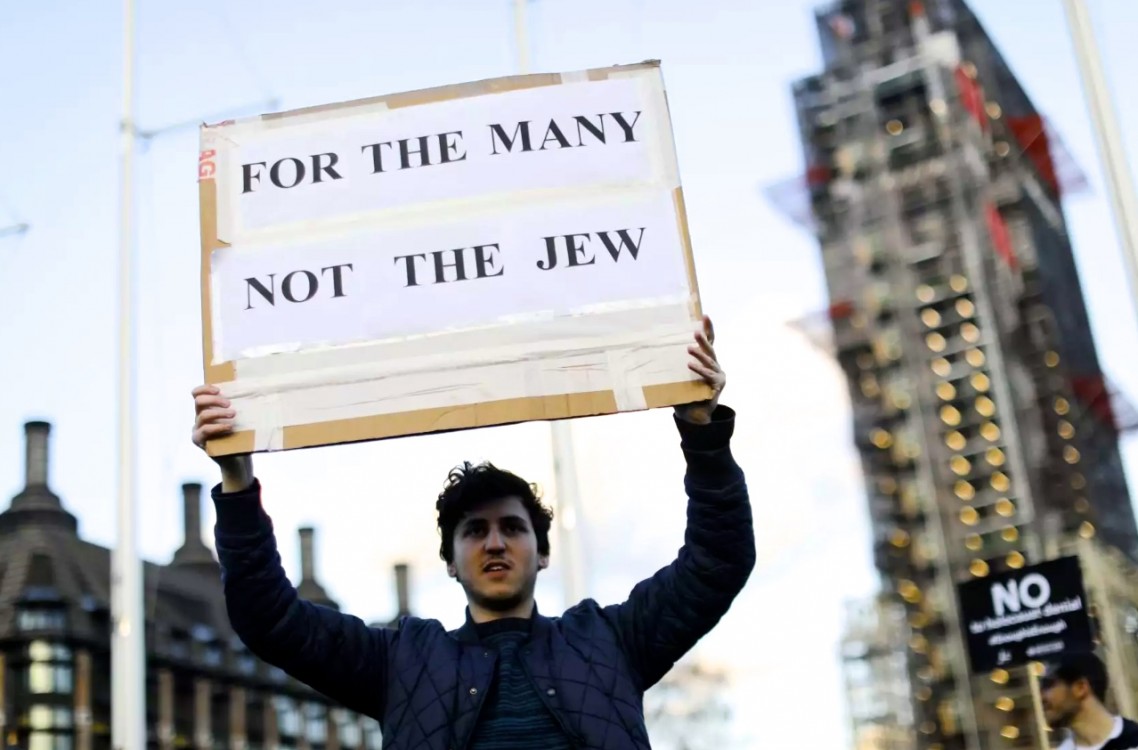
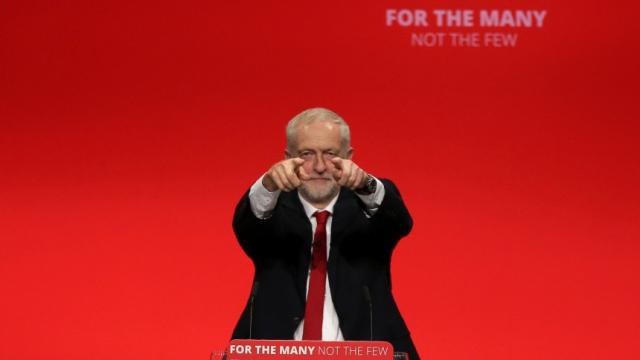
Back in 2016, a row emerged within Britain's Labour Party over accusations of anti-semitism in the Israeli-Palestinian conflict. Labour MP Naz Shah was suspended over Twitter posts suggesting that Israelis should be deported to America. She was then defended on the radio by former London Mayor Ken Livingstone, who was afterwards himself suspended from the party over comments about Hitler being a Zionist. In response to the furor, an enquiry requested by Labour leader Jeremy Corbyn concluded that there was no significant anti-semitism issue within the party.
Fast forward to 2018 and the debate has only intensified. Fresh controversy arose last week when Palestinian fundamentalist organization Hamas pledged its allegiance to Corbyn. In a Twitter post, the group said: “We support Jeremy Corbyn’s supportive position to the Palestinians.” Earlier in the month, a 2014 photograph emerged of Corbyn laying a wreath at a cemetery in Tunisia to honor Palestinian casualties. Corbyn was photographed next to the grave of Salah Khalaf, who was accused of founding the “Black September” terrorist movement.
Responding to criticism over the wreath laying, Corbyn wrote on Twitter: “What deserves unequivocal condemnation is the killing of over 160 Palestinian protesters in Gaza by Israeli forces since March, including dozens of children.” He also told newspapers: “I was present at the wreath laying but I don’t think I was actually involved in it.” Jewish Labour MP Luciana Berger responded: “Being ‘present’ is the same as being involved. When I attend a memorial, my presence alone, whether I lay a wreath or not, demonstrates my association and support. There can also never be a ‘fitting memorial’ for terrorists. Where is the apology?”
Corbyn has promised to accept the International Holocaust Remembrance Alliance (IHRA) definition of anti-semitism within the Labour Party, but is pushing for edits to legitimize criticism of Israel. One of the most controversial edits says that “evidence of antisemitic intent” must be proven before criticism of Israel is banned, and insists that voicing disapproval of the concept of a state of Israel is not a “racist endeavor.” Conservative Prime Minister Theresa May claimed that her party has adopted the full definition without edits, but critics say it is not clearly espoused in Tory party policy.
Despite the unpopularity of the current Conservative government, many Labour supporters are concerned that Corbyn’s handling of the situation could cost him his potential role as Prime Minister at the next general election. A recent survey by One Poll found that 47 percent of voters feel there is a serious issue with anti-semitism within the party.
However, writing in The Guardian earlier this month, Corbyn said: “Driving antisemitism out of the party for good, and rebuilding that trust, are our priorities. One part of that is working to ensure that all Labour party members show a higher degree of empathy with the perspective of the Jewish community, a community which endured a campaign of extermination across Europe just 75 years ago.”
Corbyn admitted that the party had in the past been “too slow in processing disciplinary cases of antisemitic abuse, mostly online, by party members,” and promised to launch “an education and training programme throughout the party” to "root out antisemites.” Critics have accused the Labour leader of diverting attention from Brexit with his vehement pro-Palestine campaign, at a time when he could be winning in the opinion polls while the Conservatives tinker at the margins.
Anti-Corbyn sentiment from within the Labour Party itself is rife. Appearing at this year’s Edinburgh Book Festival, former Labour PM Gordon Brown said of Labour’s anti-semitism row: “This cannot keep going on as a running sore and it's not because it's an embarrassment, it is because it is simply wrong.” He told crowds that he believed Corbyn “had to change” in order to succeed in the next general election. Backing this same sentiment, Jewish Labour MP Margaret Hodge caused a ruckus in a recent interview with Sky News when she likened her treatment under investigation by Corbyn to life in Nazi Germany.
By contrast, the U.K. Ambassador to Palestine, Manuel Hassassian, said in a statement last week: “As Palestinians, we urge [Corbyn] not to give in to the forces which would like to silence legitimate criticism of Israel's racist policies and actions against our people and bury the crimes of Israel's past.” Discussing the Labour leader’s reticence in adopting the IHRA definition, Hassassian continued: “Labour rightly judged that this example could be used as a tool to challenge criticism of nationalist tendencies and violations of human rights in Israel and legitimize its prolonged occupation of the Palestinians rather than protecting Jews worldwide.”
Corbyn has never been one for arguing his corner in the way of a traditional politician. He tends to play his cards close to his chest rather than rely on soundbites and media-friendly spin. But in the case of escalating criticism over his handling of anti-semitism allegations, many are asking whether it's time for him to adopt a more robust policy of self-defense if he doesn't wish to scupper Labour’s chances of winning the next general election.