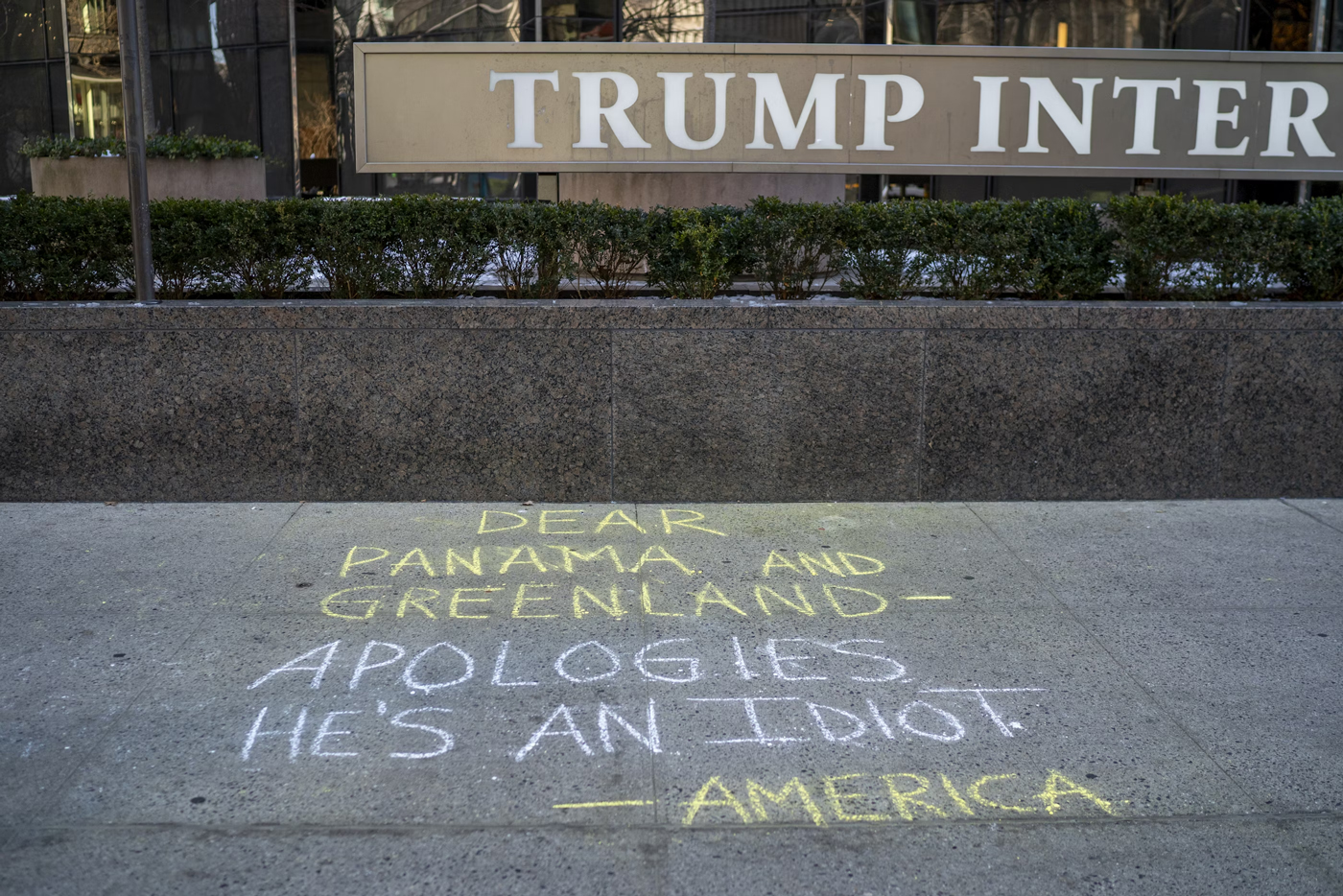
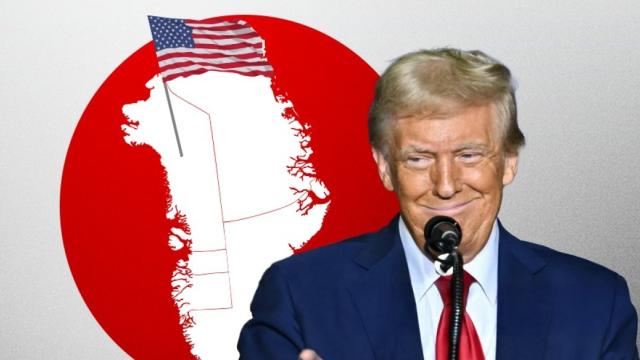
President Donald Trump has stated his ambitions to annex Greenland and Canada. Behind the scenes, billionaires backing him with big money have serious plans to build a techno-futuristic, regulation-free city on Greenland to serve as a stepping stone to Mars.
This all sounds dystopian. It's not fiction. Billionaires with corporate interests from Silicon Valley to the military, from mining and oil extraction to cryptocurrencies, are backing a new wave of US expansionism. Meanwhile, average temperatures across the Arctic region are rising four times the global average.
With melting permafrost and ice sheets, corporations are looking for new areas further north to plunder. Melting sea ice opens up new potential shipping routes. With sinister irony, climate change denier Trump – and his excessively rich supporters – are looking to make even more money from the climate catastrophe. China, Russia and the European Union are also looking northwards for business and military expansion.
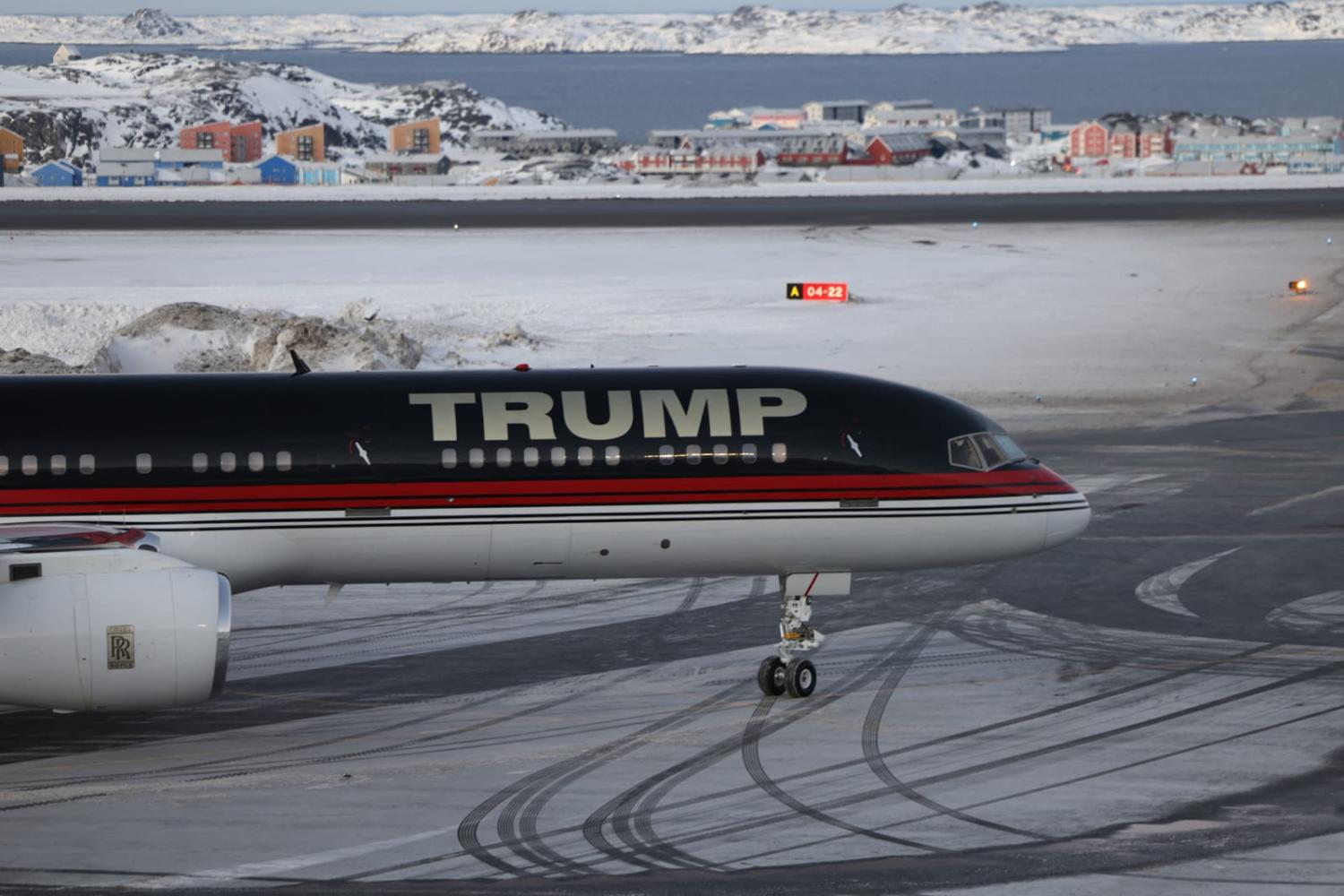
Arctic opening
“The very thing that makes the Arctic a linchpin and bellwether of global environmental and geopolitical change is that the region's physical environment is far from stable, and that the changes in that environment will not be steady or linear,” wrote academics Christian Le Mière and Jeffrey Mazo in Arctic Opening: Insecurity and Opening (2013).
The authors claimed that the far north, once isolated and peripheral, will become ever more focal in global politics. A decade on, it seems no exaggeration. In partnership with Russia, China wants to build a Polar Silk Road – a shipping route across the once frozen sea – to cross the north of Eurasia.
A passage across the American continent is also a serious project. Russia is greatly expanding its military in the north, as are other powerful nations, including in the European Union.
Due to the harsh climatic conditions, the Arctic was once the last place capitalists wanted or were able to plunder. Yet this is the phase of global expansion in which we live. The US Geological Survey estimated in 2008 that the Arctic contains about 13 percent of the world's undiscovered oil and 30% of the world's natural gas.
Yet even burning already known reserves would destroy the world through climate breakdown. According to a report by the Arctic Economic Council 2024, a body linked to Davos and the World Economic Forum promoting “green capitalism,” “the overwhelming majority of the raw materials considered critical by various countries are located in the Arctic region.”
In a major victory for the indigenous Sami people living in the Arctic region, and for environmentalists, Norway has halted its ongoing plans to extract mineral resources from beneath the Arctic seabed.
For the US, the unplundered riches in Greenland and Canada are one of the motivations behind Trump's desire to annex the countries. Cobalt, for example, is a mineral that occurs in abundance in both Canada and Greenland, and is used in everything from batteries for electric vehicles to jet engines and stealth technologies.
Lithium, graphite and rare earth minerals are also found beneath Canada's surface.
Beneath Greenland, once frozen lands thaw, there is an expected mineral abundance, as 25 of the minerals the European Union considers critical are found in moderate to high levels there, according to Denmark's Geological Survey in 2023.
It is estimated Greenland has nearly as many known deposits of rare earth elements as the entire US, for example.
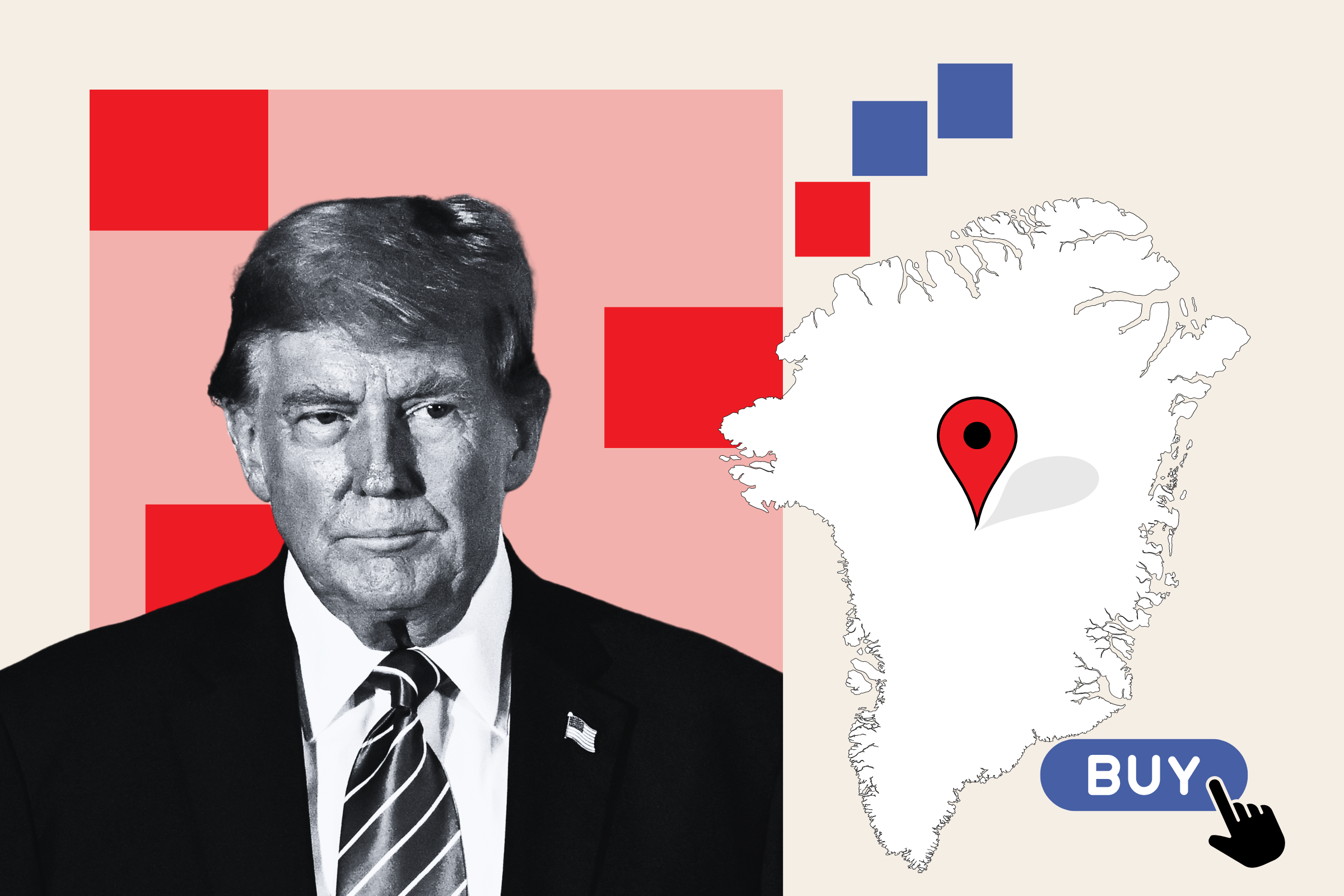
Impacts of mining: From Greenland to green sacrifice zone?
Whether or not extraction is carried out with a green façade — whether it takes place within the framework of the rules of nation states or through colonial expansion — all of this threatens the fragile Arctic and the indigenous peoples living there.
Industrial encroachment into the Arctic, far smaller than what is planned, has already caused sacrifice zones across the region — from the collapsing Sami town of Kiruna in Sweden,
to poisoned wastelands near Norilsk in Siberia.
Trump meanwhile continued in June to open up once-protected regions in Alaska to oil and mining extractors.
Sara Olsvig, chair of the Inuit Circumpolar Council (ICC), which represents indigenous voices across the Arctic, including Greenland, resisted Trump's calls for Greenland to be annexed and made it clear in January that Greenlanders do not want to exchange the US for Denmark as a coloniser.
This view is widely held across Greenland, which is moving slowly towards independence from Denmark. As part of Denmark with a degree of self-government, Greenland has some ecological protection from mining, including a ban on uranium mining.
Local communities also have a strong say in determining land use – all things that could be eliminated by US annexation.
The billionaires who support Trump and their corporate interests show how serious the calls for Greenland annexation are. In total, Trump has received more than $550 million from tech moguls with interests in mining or data centres in Greenland, mining moguls, the owners of cryptocurrencies and big oil bosses.
In addition to the extraction of oil and minerals, Greenland is also attractive to the tech industry, specifically AI and cryptocurrencies, since its cold climate makes it possible to house data centres that require a lot of cooling.
The harsh environment has also attracted techno-futurists like Praxis, a $525 million-backed company that wants to build a city where investors write their own laws and regulations.
Praxis connects many of those pushing to colonise Greenland. Another interconnecting company is the mining outfit KoBold Metal. Among the supporters of Praxis is Ken Howery, the CEO of Paypal, who has been appointed US ambassador to Denmark.
Other key players linked to Praxis include Joe Lonsdale, whose company Palantir offers AI and weapons manufacturing, among other services. KoBold Metals directly links tech bros like Meta’s Mark Zuckerberg, OpenAI’s Sam Altman and Amazon’s Jeff Bezos to mining interests in Greenland; some of its key investors were also linked to members of Trump's DOGE, who supposedly were reducing US government overspending.
All of this is detailed in an April Guardian investigation.
The corporate nexus behind Trump – and the plans for Greenland – involves a new generation of super-rich tech oligarchs, including Elon Musk, even if he is now publiclly estranged from the president.
These new players, who in many cases are moving more deeply into the military industrial complex, are joined by the usual suspects of corporate oligarchs who have traditionally bankrolled US presidents, such as the oil industry and defense sector. In short, there is a lot of money behind these extraordinary plans to expand the US borders for the first time in over a century.
The question is not so much whether Trump will try to realise these plans, but how far his administration will get in trying to make it happen. One thing also seems clear: If Trump has his way, any ecological or social protections Greenlanders currently enjoy will disappear as the land is sacrificed in the pursuit of profit.
Stay tuned for Part II in this series about the new geopolitical era of mining for minerals.