

Warren Buffett said in 2012: “There’s class warfare all right, but it’s my class, the rich class, that’s making war, and we’re winning.”
America’s billionaire class — increasingly dominated by tech CEOs — is becoming even more desperate in their push to move their war on the working class to the end stage. One need look no further for evidence of this than their brutal tactics to force AI data centers on the populace by any means necessary.
Data centers are critical infrastructure for the integration of AI into every facet of the economy, and tech billionaires have been working overtime to sell it to the rest of us. Billionaire Andreesen Horowitz co-founder Marc Andreesen (whose head is shaped almost exactly like an egg) believes AI will simultaneously perform every job in the world while also spurring a hiring boom. Billionaire Tesla and SpaceX CEO Elon Musk has heralded the arrival of AI as something that will eventually make jobs and even the concept of money obsolete. Billionaire Meta CEO Mark Zuckerberg has even said that AI will eventually replace the need for human beings to have friends.
Insatiably greedy billionaires and those they hire may believe this, but they’re effectively alone in their thinking. A Pew Research study from early 2025 found that the vast majority of American adults are far more concerned about the threat of AI than excited, while most AI experts hold the opposite view. To be clear, it’s important to understate that almost no one asked for AI to be crammed into every website and app — often to the detriment of product quality. Software engineer Mumin Wani wrote last month that most AI features are actively making products worse.
“Most of these features weren't built because users needed them. They were built because someone in a meeting said ‘we need AI.’ And users can tell,” Wani wrote on LinkedIn.
While it’s easy to see how writers, photographers and artists have a special disdain for AI, even people who work in the tech industry hate it. Reuters reported last year that experienced software developers found themselves slowed down by AI, which increased the average time to complete a task by 19 percent. Digital analytics expert Pablo Moratinos explained in a recent thread on X that people who use AI in their workplaces actually find themselves doing even more work, for longer hours, at the same rate of pay.
“AI isn't giving you more free time. In many cases, it's giving you more capacity to do work… and that ends up in more work,” Moratinos wrote. “The pattern is usually this: a task that used to take you 2 hours now takes you 30 minutes, but instead of wrapping up for the day, you squeeze in 3 more tasks. The savings don't disappear: they're reinvested in more deliverables.”
Consumers also hate AI: A 2024 study published in the Journal of Hospitality Marketing & Management found that when a product description mentioned AI, consumers immediately became more distrustful. AI is also making us dumber: a 2025 study by the Massachusetts Iinstitute of Technology found that people between the ages of 18 and 39 who used OpenAI’s ChatGPT to write essays had the lowest levels of brain engagement and “consistently underperformed at neural, linguistic and behavioral levels” compared to those who didn’t. In essence, the only people who actually want AI forced on all of us are the billionaires profiting from it.
This is why their tactics to force construction of data centers even against significant opposition from local communities have become increasingly forceful and hostile.
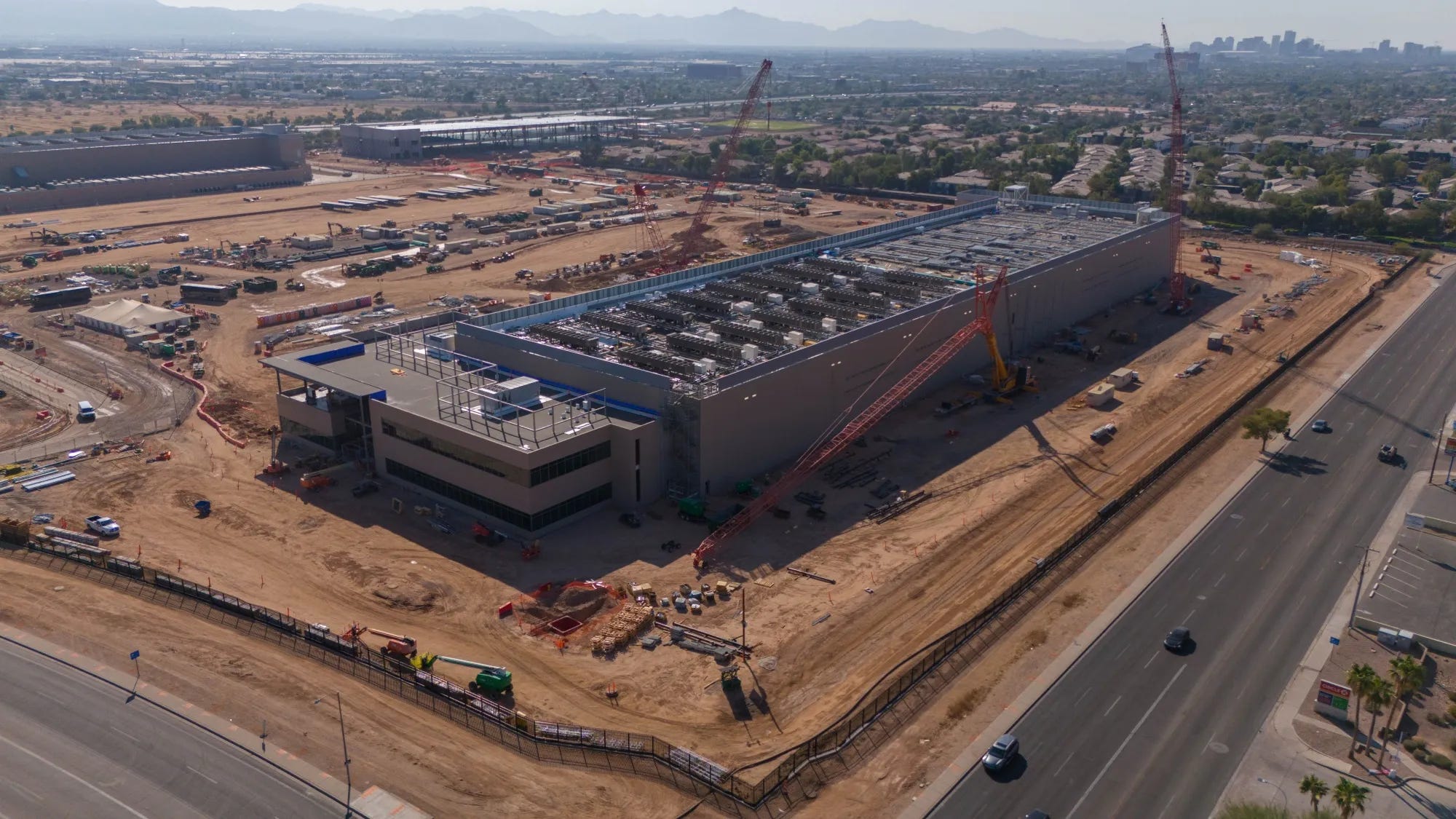
Data Centers: Toxic for Both the Environment and for Democracy
Much like they’ve done with AI, billionaires have sought to force data centers on American communities regardless of how people may feel about them. Gallup found in May that a whopping 71 percent of Americans are opposed to having a data center built near them, with 48 percent of those in that group saying they were “strongly opposed.” This may be because the more information that comes out about how harmful data centers are to communities, the less people like them.
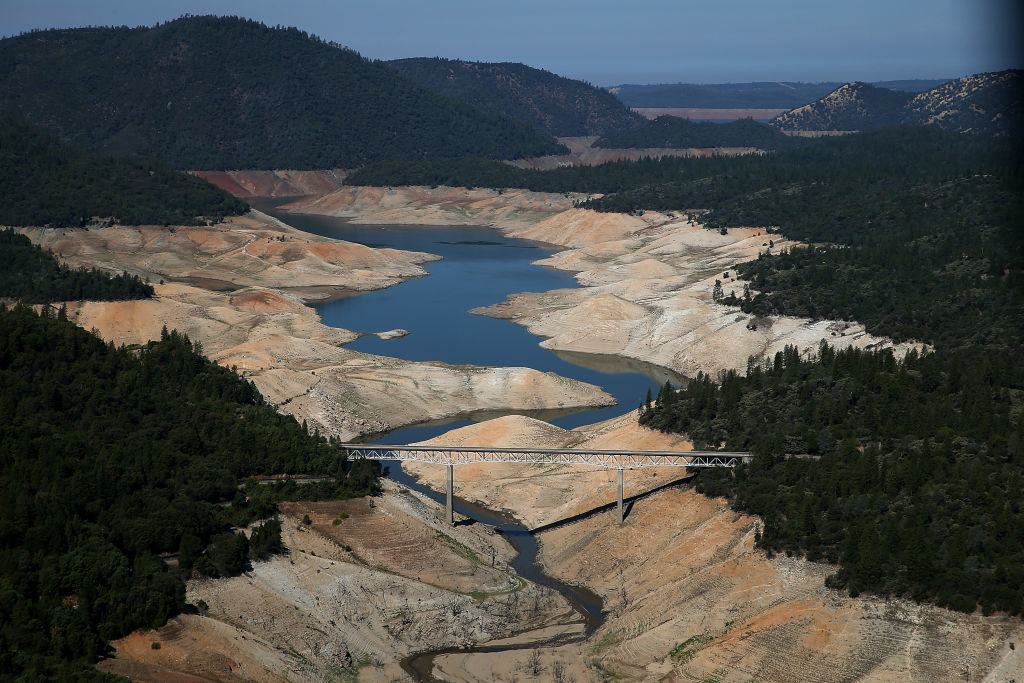
According to economist Torsten Slok, there are roughly 5,500 data centers in the U.S. as of May 2026. The Environmental Energy and Study Institute (EESI) calculated that data centers collectively use around 450 million gallons of water per day to cool servers. That’s enough water to fill 682 Olympic-sized swimming pools, and could supply around 4,500 average American households for an entire year. EESI wrote in 2025 that data center developers are always looking for ways to increase access to freshwater supplies, including tapping into surface-level and underground aquifers. And data centers’ thirst can lead to scarcity for ordinary Americans.
Politico reported earlier this month that a data center operated by QTS (a Blackstone subsidiary) in Fayetteville, Georgia drained roughly 30 million gallons of water through two unreported connections, amounting to roughly $150,000 in initially unpaid water bills. The data center’s water use went unnoticed until residents complained to the local utility that their water pressure was unusually low. Fayette County Water System Vanessa Tigert said the connection process “got mixed up” and the oversight likely happened because her office is chronically understaffed.
Americans aren’t only worried about their water supply. In some locations, Americans are at risk of losing their electricity altogether. In Lake Tahoe, Nevada, the town’s nearly 50,000 residents were told in May that their local utility company, NV Energy, would stop providing power to Liberty Utilities — a small California-based company, which services Lake Tahoe — by May of 2027 in order to divert all of their resources to servicing data centers. Now the town has a year to find a new electricity supplier.
Data center companies’ predatory behavior is also on display In Coweta County, Georgia, where homeowner Ansley Brown is battling to stop Georgia Power from seizing her family farm via eminent domain to make way for a new electricity infrastructure that would go toward powering data centers. Brown accused Georgia Power of intentionally devaluing the value of the property in order to pay her family less than fair market value, including threatening condemnation of the property itself.
Elsewhere in Georgia, a data center in Mansfield owned by Mark Zuckerberg’s company Meta (the parent company of Facebook, Instagram, and Whatsapp) has created numerous headaches for local residents. Beverly and Jeff Morris, who live roughly 400 yards away from the Mansfield data center, were featured in a video by progressive group More Perfect Union about life next to a two million square-foot data center.
The Morrises demonstrated that their water pressure had slowed to a drip, forcing them to have jugs of water at the ready to use for cooking, cleaning, and bathing. Sediment from the data center made its way into their pipes, forcing them to have to replace their water pipes along with the appliances that the pipes were feeding. Additionally, their electricity bill has jumped from $250 a month to $400 a month since Zuckerberg’s data center became operational.
Because so many data centers are being built in rural areas, land that was previously used for farmland is now being zoned for development. This raises concerns about the stability of the food supply in the future given that farms are now having to compete with tech companies for access to local water supplies.
“We’re really worried about how much water data centers use and what that is going to do to underground aquifers,” Taylor Hubbard of the Virginia Grain Producers Association told FarmProgress in February.
Data center developers sell the projects to local and county governments as a guaranteed source of property tax revenue. However, states still bear a significant financial burden: North Carolina Governor Josh Stein (D) said sales tax exemptions for data centers total roughly $57 million per year in his state. And that cost balloons significantly over a period of years.
A study conducted by the Commonwealth of Pennsylvania found that data center tax incentives could cost taxpayers roughly $2 billion by 2031. Another study conducted by Wisconsin’s state government found that tax incentives for data center construction were costing the state around $1.5 billion in lost revenue, and that ongoing incentives post-construction could lead to a loss of approximately $369 million in tax revenue each year.
The jobs promised by data centers are also paltry. When evaluating the economic impact of a proposed data center in Conway, Arkansas, University of Central Arkansas economics professor Jeremy Horpedahl estimated the local economy would only see “a few hundred” jobs, as opposed to the several thousand jobs expected for a new factory roughly the same size as the proposed data center.
Even data center companies themselves are admitting that the job impact is negligible at best. John Johnson, who is CEO of data center operator Patmos Hosting, told the Wall Street Journal last year that data centers “have rightly earned a dismal reputation of creating the lowest number of jobs per square foot in their facilities.” This is primarily because most data centers are highly automated and only require between 50 to 200 permanent employees for maintenance and engineering purposes.
Rural America Is Ground Zero for the Fight Against Tech Billionaires
The widespread bipartisan opposition to data centers means that even in the rural red states where tech companies are focusing their construction efforts, local residents are fighting back, and notching up victories across the country.
Canadian investor Kevin O’Leary, known primarily for the show Shark Tank, is a major backer of a planned data center in Box Elder County, Utah that would be twice the size of Manhattan upon completion, spanning 40,000 acres. Despite overwhelming opposition from local residents, county commissioners approved the project earlier this month. When far-right commentator Tucker Carlson asked O’Leary how he could rely on taxpayer money to fund the construction of a privately owned data center, O’Leary responded: “Welcome to America.”
Residents are still fighting despite the Box Elder County Commission’s vote of approval. After O’Leary went on Fox News and accused two Utahns opposed to the project of being paid by the Chinese government, the two women made a video mocking him. They’re now also drawing attention to the fact that Utah House Speaker Mike Schultz (R) bought 640 acres of land adjacent to the data center site months before it was announced. Schultz has called the accusation “nonsense,” but has since gone on the record calling for environmental impact studies to be conducted over the proposed data center, saying it was “not a good thing.”
The data center fight is kicking into high gear around the country. Residents of Cave City, Kentucky recently pushed their local city council to adopt a one-year moratorium on “accepting, processing or reviewing any applications, permits or requests related to the establishment, construction or expansion of data centers within city limits,” according to the Bowling Green Daily News. In Texas, the Hill County Commissioners’ Court recently voted 3-2 to pass a one-year moratorium on all data center and power plant construction in unincorporated areas after a flood of local opposition.
“I’m not trying to break the law, I’m not trying to thumb my nose at the governor or the Legislature, but my constituents, my people, are literally begging for help right now, and I have no other mechanism but this,” Hill County Commissioner Shane Brassell, who is a Republican, told Politico.
In Wisconsin, the rural town of Cassville voted unanimously to ban data centers outright after an anonymous developer pitched a $1 billion data center. Residents were unmoved by promises of 50 new jobs and an estimated $5 million in annual property tax revenue. The project was shrouded in secrecy, with town leaders kept in the dark about where exactly the data center would be built, what company would be using it, or its impact on the local landscape and water supply. Cassville was apparently on the short list due to its proximity to the Cardinal-Hickory Creek transmission line that became operational in September of 2024.
Politicians who support these projects are also being put on notice. In April, all four incumbent city council members running for reelection in Festus, Missouri were voted out of office after approving a $6 billion data center. The small town of 12,000 people saw a surge in voter turnout after the deal was approved, and opponents of the data center are now gathering petitions to recall the mayor and the remaining members of the city council who voted for the project.
In 2025, local pushback like the aforementioned examples led to 25 planned data centers being delayed or scuttled outright, which was almost four times as many cancellations as 2024. And this year, roughly half of all planned data center projects have been either cancelled or put on hold. Bloomberg reported that a lot of the delay is due to a shortage of raw materials from China, though local opposition certainly plays a significant role as well.
The fact that ordinary Americans in small towns across America are forcing Silicon Valley billionaires into retreat mode shows the power of mobilizing even just a few hundred people at the local level. When an organized populace moves as one, both the billionaire class and the politicians they own don’t have a prayer.
Carl Gibson is a journalist whose work has been published in CNN, USA Today, the Guardian, the Washington Post, the Houston Chronicle, the Louisville Courier-Journal, Barron’s, Business Insider, the Independent, and NPR, among others. Follow him on Bluesky @crgibs.bsky.social.