
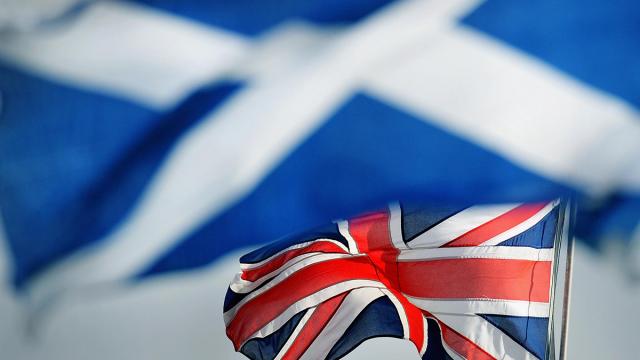
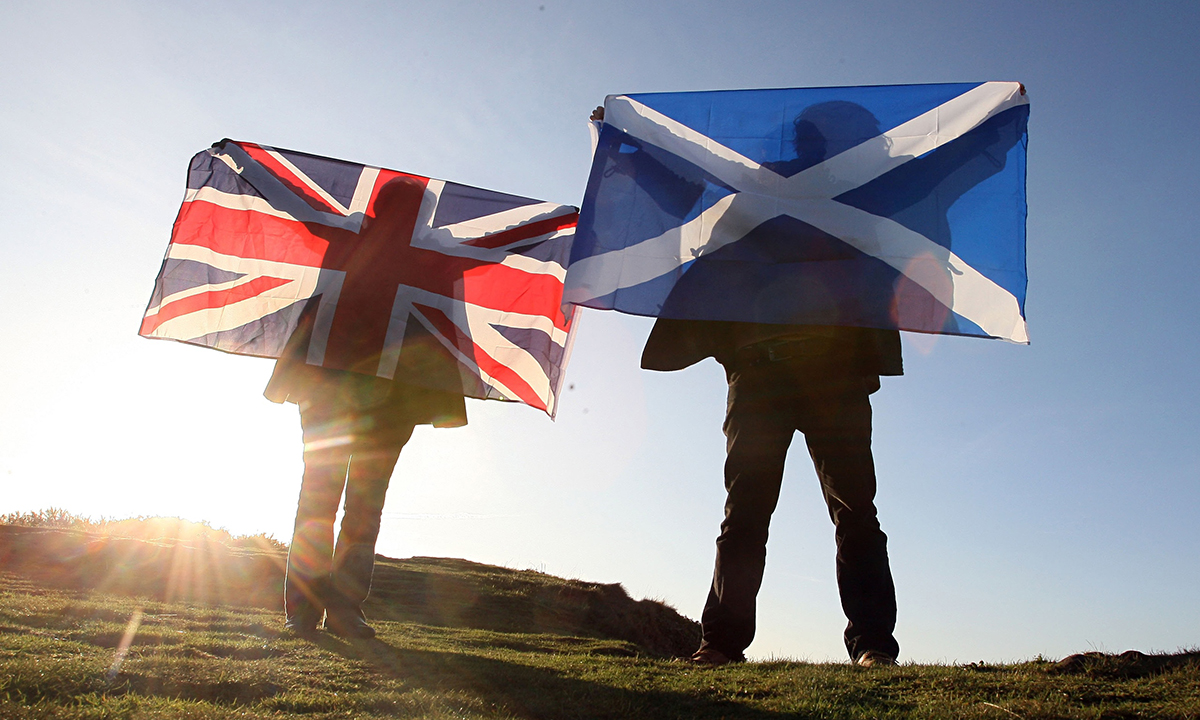
Britain’s recent election shows it's no longer a united kingdom and that Scottish independence is increasingly likely. Meanwhile, London’s new Conservative government is set to tear down the welfare state and public services, meaning an already deeply unequal society will only fracture further.
On the surface, the U.K. election results were an unexpected victory for the Right. But scratch a bit deeper and another, more complex story emerges, one whose tremors could rupture Britain’s political landscape. Under the first-past-the-post electoral system, the Conservatives only limped to victory, gaining the most seats with English and Wales voters – even though only 25% of eligible voters opted for them.
The Conservative’s total of 331 seats is only five above the minimum level for maintain a functioning government, the lowest winning margin in three decades. If a handful of back-bench MPs rebel, pass away, join other parties or are imprisoned – all not uncommon occurrences – the new government will collapse.
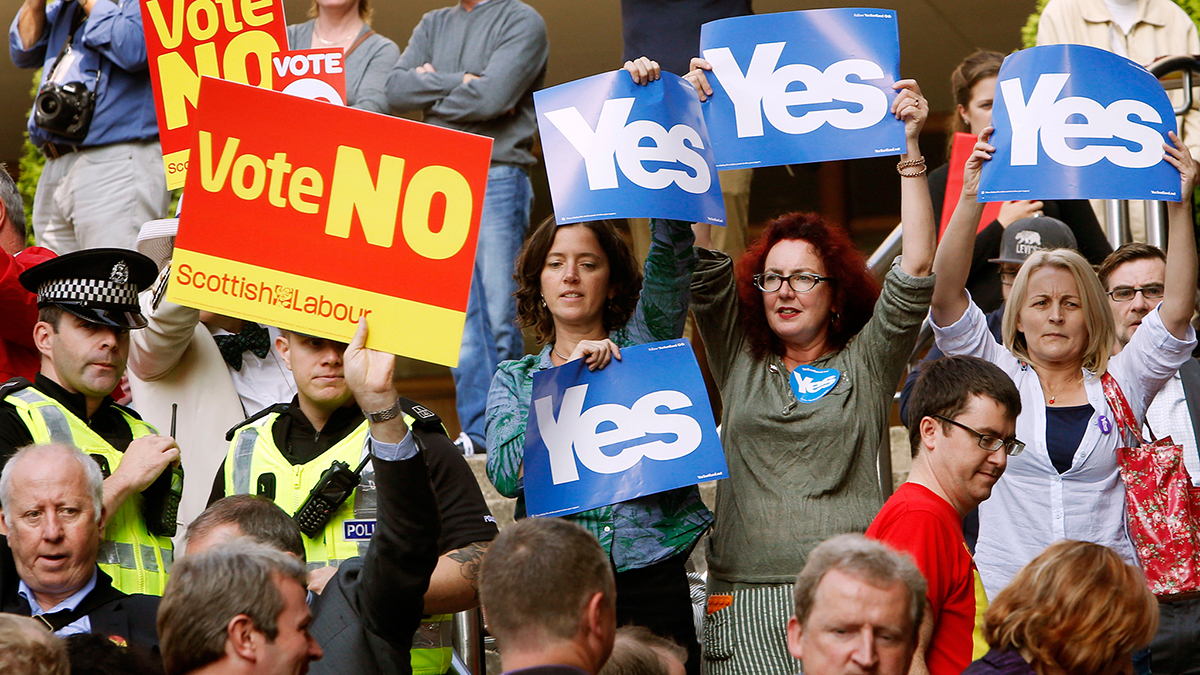
In Scotland, by contrast, the surge of the Scottish National Party (SNP) was far more conclusive. It jumped from six to 56 seats, taking all but three available seats above the border. Voter turnout was also markedly higher in Scotland compared to the rest of the U.K. – revealing how politically engaged the nation remains nearly a year after its 2014 referendum vote.
Britain’s London-centric corporate media explains Scotland’s vote as a rise in nationalism, but this ignores reality. The SNP presented a real alternative against the dominant Westminster parties; the SNP platform rejected austerity, British militarism, further banking deregulation and nuclear weapons. Scotland now has more nuclear submarines than MPs in Westminster that support them. The Scots turned away from once dominate Labour by the thousands.
Author and social commentator Irvine Welsh suggests the neoliberal project initiated by Margaret Thatcher deserves the credit for Scotland’s progressive drive to independence.
He says Conservatives' relentless attack on welfare and public service has torn down the institutions that once bonded Britain – but that the neoliberal project was also contingent on Tony Blair’s Labour Party continuing the rightward shift. In contrast, Welsh suggests the Scottish independence movement opened a space where progressive voices could imagine a future beyond the dogma that "there is no alternative."
The SNP’s 2015 election platform was against austerity and not about independence. But immediately after the election, Prime Minister David Cameron again fired up the nationalist debate by attempting to rule out another independence vote.
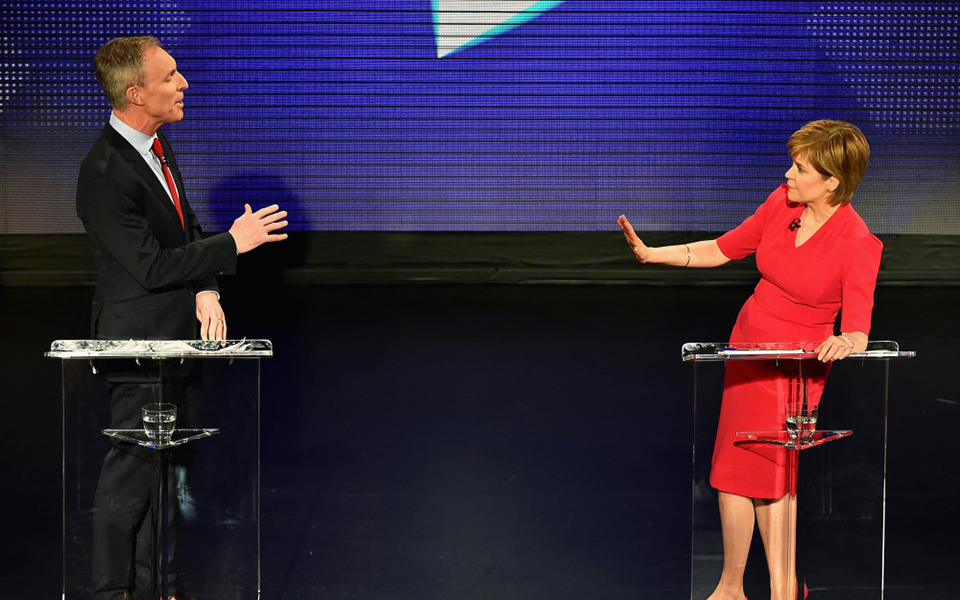
Scottish First Minister and SNP leader Nicola Sturgeon rejected his assertion, saying it's up to the people of Scotland alone to decide when and whether to remain in the union. The SNP says several criteria could trigger an independence vote – one being a sizable political change (i.e., Conservatives’ further austerity cuts, abandonment of the EU charter on human rights, or plans to hold an in/out E.U. referendum), of a party with a referendum on its manifesto winning the 2016 Holyrood Scottish parliamentary elections.
The timing of the referendum remains a matter of debate within the independence campaign. Scotland’s non-corporate news platform Common Space interviewed a range of prominent voices from the Yes side. Their opinions ranged from wanting a referendum immediately, to escaping Conservative Britain, to wanting a vote within the next decade with more time to lay the groundwork for the campaign to guarantee success.
The SNP’s electoral success has further amplified the pressure on the Conservative government to follow through on the so far broken promises it made for further powers for Scotland.
Scotland’s drift away from control of Westminster only amplifies calls for new powers in other parts of the isles, which also feel unrepresented by Westminster. For instance, a petition calling for the North of England to join Scotland has already gained 38,000 votes, a figure that's rising every day.
There has also been an outpouring of anti-austerity protests, public meetings and movement building. Over 3,000 people went to Westminster two days after the results, with video evidence showing how police violently attacked the peaceful crowd – the latest example of state violence in the U.K.
The Conservatives' slender majority will enable them to push cuts that will fracture an already deeply divided country – where food banks are keeping people fed, a housing crisis is endemic, and poverty is widespread. Given the economic hardship for so many, many are asking: how did the Conservatives manage to poll nearly 25% of the potential U.K.-wide electorate?
Part of the answer clearly lies in Labour Party's nationwide demise – namely, its failure to present a viable plan that differed from the current course of austerity. Labour lost a massive amount of its popularity for waging an illegal war in Iraq and for its "light touch" regulations on the City of London.
Yet, the Conservative’s narrow victory still came as a shock, going against the grain of opinion polls that predicted a Labour-Conservative tie. In a candid response about how they misjudged the electorate, Stephan Shakespeare, Director of opinion pollsters YouGov, explainedthat many English and Welsh voters tactically voted to stop an SNP-Labour coalition. This was a direct response to anti-Scottish scaremongering fueled by London’s corporate media, replicating the "Project Fear" that pushed against Scotland's Yes vote for independence.
The Conservatives also owe their victory to their corporate donors. Writing after the election, investigative journalist Nafeez Ahmed pinpointed how the 1%'s funding of Conservative parties ensured their victory.
Looking to the future, Scotland has shown how a bottom-up participatory movement can escape Westminster’s neoliberal pull. As for the rest of the U.K., rampant deregulation and free market dogma will only further destroy the fabric of society until a powerful movement advocates a progressive alternative – and learns to win at the polls.
3 WAYS TO SHOW YOUR SUPPORT



- Log in to post comments


