

A pay cap across the U.K. public sector – which has been in place since 2012, allowing no more than 1 percent annual pay rises for all workers – was challenged last week when firefighters received a 2 percent pay rise. They are now being offered a 3 percent pay rise next year, but they are pushing for more, sparking renewed outcry from public sector workers over the cap.
The government appears divided over its decision, with Prime Minister Theresa May insisting that the cap won't be lifted. This stands at odds with what many of her senior ministers have announced, fueling speculation that the exception made for the firefighters was a placatory gesture intended to improve May’s image after the deadly fire that engulfed Grenfell Tower in London a month ago.
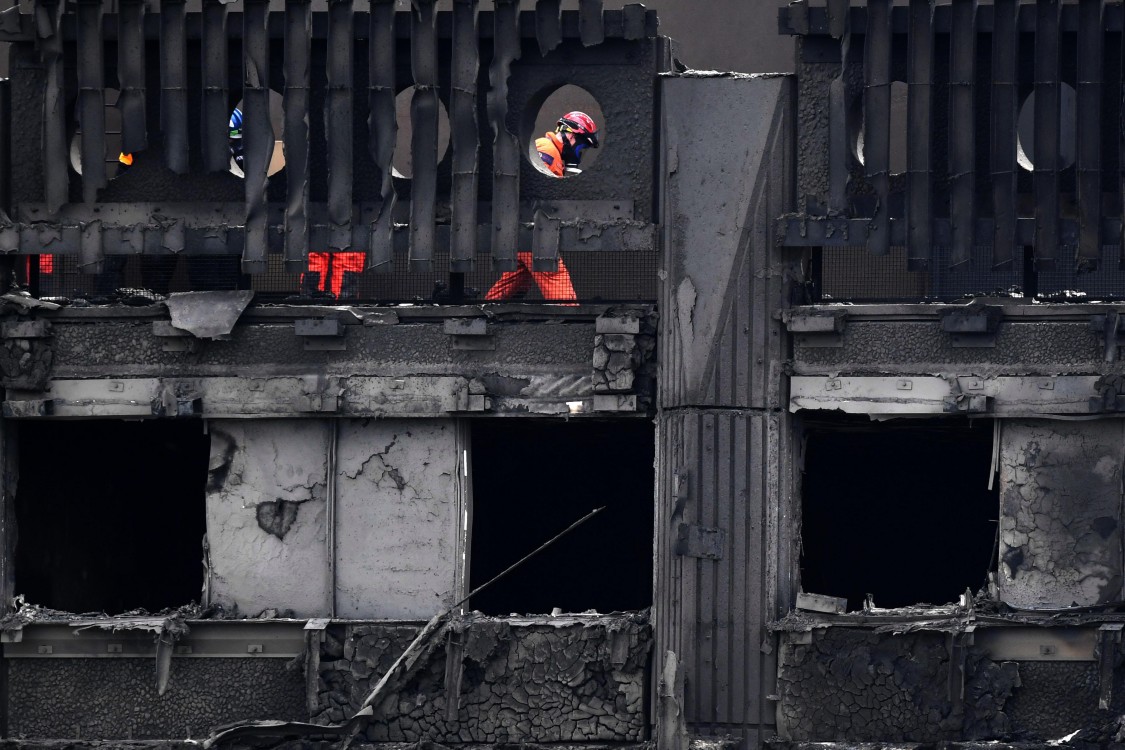
The fire resulted in an officially reported death toll of 87, with the government insisting that a final figure will be released “at the end of the year.” Many believe that the actual number of victims is being deliberately suppressed. Meanwhile, the Metropolitan Police may choose to press manslaughter charges against the landlord, the Kensington and Chelsea Tenant Management Organization, citing an insufficient number of exit points in the building and tests that revealed its cladding and insulation showed an unacceptable level of fire resistance. The Grenfell Action Group had expressed concerns about a fire safety risk in the building for some time before the fire occurred.
“We submit a pay claim annually, and as such our pay claim for 2017 was submitted before the Grenfell tragedy, so it isn't linked to that event,” Fire Brigades Union vice president Ian Murray told Occupy.com. “But Grenfell highlighted and brought home the reality of the work [firefighters] do, the dangers they face and the risks they take regarding their own safety when it comes to attempting to rescue those whose lives are in danger.”
Like other public sector workers, firefighters have seen their pay fall “significantly behind inflation,” said Murray. Not only this, but “there has already been a significant widening of the role, skills and expertise in our profession in all roles, [and] other new skills and wider roles emerging that firefighters attend such as Emergency Medical Response (EMR) and Marauding Terrorist Fire Arms (MTFA) incidents."
Murray said he's glad the firefighters’ pay rise has provoked further discussion of the pay cap across the whole public sector.
“If our 'brand' can assist in the bigger picture of public sector pay increases, then we welcome it,” he said. “If the latest pay offer put to firefighters has sparked or influenced the debate to end the pay cap for other public sector workers, than that can only be good news for the millions of working people that could benefit from it. We would hope that if we do reach agreement on a pay deal with our employers that breaches the public sector pay cap, then that could be the catalyst for the whole of the public sector being given fair pay for the work they carry out tirelessly on behalf of others.”
According to Dave Prentis, general secretary of the public sector union UNISON, the time for such a move is overdue. “Public service employees and their families have faced years of real hardship. They’re tired of struggling to get by on low wages, but the message from government is clear: they don’t value them enough to lift the pay cap,” Prentis said.
Prentis said he believes the government has been putting pressure on wage negotiators to “show restraint” despite insisting that they plan to ease austerity cuts. He is adamant that his union won't stop its fight to earn wage rises in line with inflation, despite the prime minister’s reticence. “The priority for UNISON is breaking the cap, and we will continue to campaign for this," he added.
Another labor leader, Kevin Courtney, general secretary of the National Union of Teachers, agreed that the current promise doesn't go far enough. “The government’s insistence that the limit on public sector pay will remain at 1 percent is unacceptable and in no way reflects the hard jobs that people are doing day in day out,” Courtney told Occupy.com.
“So far, teacher pay has [actually] fallen by some 15 percent in real terms since 2010. Yet just last year the School Teachers’ Review Body advised government that a pay increase ‘significantly higher’ than 1 percent would be required before 2020," he said. Courtney expressed concern about teacher shortages and the possibility that they may increase if the cap isn't lifted. “Without [a pay rise], teacher recruitment and retention – already in a critical state – will worsen.”
In the medical profession, the need for a pay increase feels no less urgent.
“There is clearly growing support for doctors, nurses and allied health professionals’ message to the government that the pay cap is unfair, unacceptable and must be lifted,” insisted Dr. Chaand Nagpaul, council chair of the British Medical Association. “Doctors’ pay has sharply declined, falling by 22 percent since 2005. A BMA survey has found that two-thirds of hospital doctors, and almost half of GPs, report vacancies in their departments and practices.”

Like Courtney, Nagpaul is concerned that an already underfunded and ailing National Health Service is suffering even more thanks to these staff shortages.
“With the NHS at breaking point, politicians cannot continue to duck this issue,” he continued. “Investing in the NHS workforce and providing fair terms and conditions must be a priority for this government, otherwise the NHS simply won’t be able to attract and keep the frontline staff needed to deliver safe, high-quality patient care.”
Jane Ellis, a Band 3 Activities Coordinator on an acute mental health ward, said, “Firefighters do a dangerous and necessary job that few of us would be willing or able to do – I know I certainly couldn't run into a burning building!”
However, she said she remains keen to see the pay cap lifted across the entire public sector, not just for life-risking firefighters. “I love my job but I don't feel I am paid fairly. I risk assault on a daily basis and I regularly work overtime without pay. I could have a far less stressful job for the same wage. I'm not surprised people are leaving the healthcare profession," she added.
Ellis said she feels insulted that her work, like that of other public sector workers, is so undervalued by the government. “The pay cap seems to say the prime minister does not recognize [what] public sector workers bring to society. If MPs get a pay rise above the 1 percent cap, I will be especially disgusted. My only hope is that May continues her track record of going back on her word.”
Ian Ripsher is a civil servant working for Her Majesty’s Revenue and Customs in project finance. “I think it’s symptomatic of this government’s attitude to the public sector and how it views work done by people other than for profit; they don’t see it as having value,” Ripsher said.
Ripsher said he is particularly cynical about the motives of the front bench ministers calling for the cap to be lifted. “The growing number of cabinet ministers who are now calling for the cap to be lifted are acting purely politically, jockeying for position to replace May eventually. They’re only coming out as they are because they can see how public attitudes have changed in the treatment of public sector workers – notably health, police and firefighters – in the wake of the recent terrorist incidents and the Grenfell Tower tragedy.”
The Labour Party has promised to lift the cap immediately if they win the next general election. But it looks increasingly unlikely that the Conservative/Democratic Unionist Party agreement, which was entered into after last month’s snap election, will make it as easy to overthrow the government as many originally suspected. Meanwhile, public sector workers remain in limbo, waiting to see if they can expect a fair wage or if they will continue to be treated as less important than their private sector counterparts.
Transport Secretary Chris Grayling has insisted that the pay cap won't be addressed until the autumn budget, despite a number of his colleagues calling for a faster decision.
3 WAYS TO SHOW YOUR SUPPORT



- Log in to post comments


