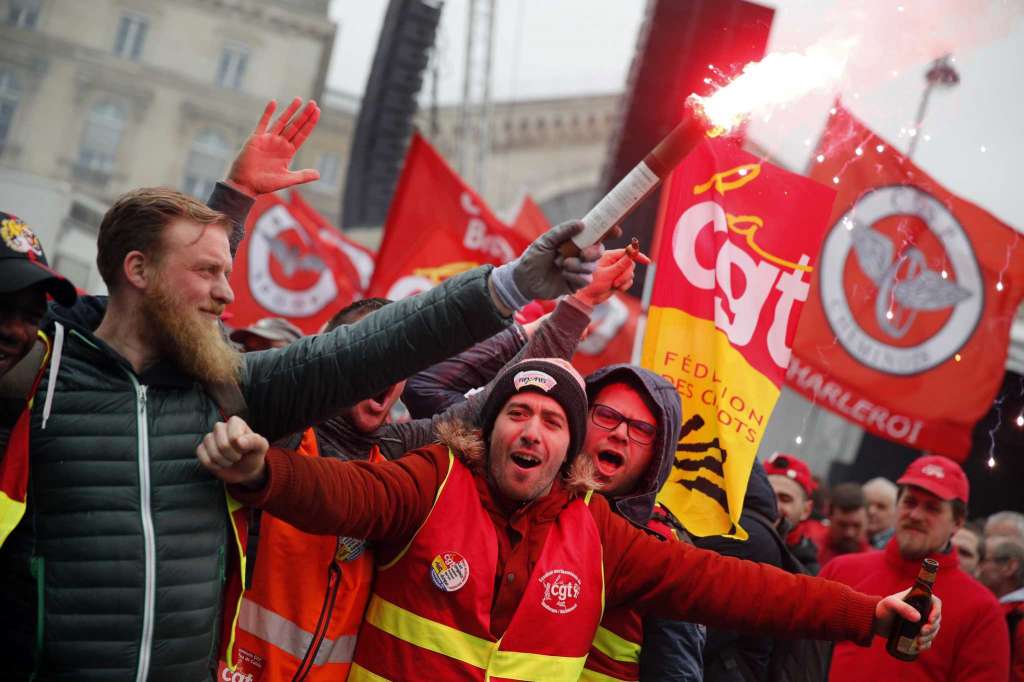
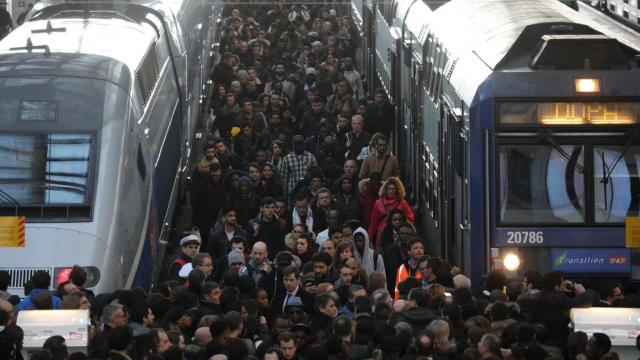
Since the French Revolution, the people of France have been famous for their anti-authoritarian and pro-worker action. In the latest example, railway workers are leading the way with a rolling 36-day strike scheduled through all of April, May and June. The railway movement is already starting to cast ripples through other sectors.
The strikes are a result of French President Emmanuel Macron’s new labor laws. The main trigger was the declaration that new workers on railways would not benefit from their precursors’ longstanding right to retire on a public pension at 50, with a guaranteed job for life up to that point. Many consider the law part of a larger attack on workers’ and students’ rights as France drives toward greater privatization and social discrimination in the workplace.
In response to the law, last Saturday, April 14, protesters violently clashed with police in southern France, where 63 people were arrested and nine police officers were injured. Macron says that his reforms are based on a desire to make France more economically competitive with other countries.
But he has been a controversial figure since his election last year, standing on an ostensibly center-left platform that many say has proven to be far more central than left. Running in the first-round elections against far-left candidate Jean-Luc Mélenchon showed their values in sharp relief, and served to further Macron's reputation as more of a business than philanthropically-minded president.
Macron’s proposed reforms will negatively affect job security and wage increases across the board. His reforms to the railway network are a response to the €46 billion ($56.5 billion) debt being carried by the Société Nationale Des Chemins de Fer (SNCF), or Society of Railway Workers. Macron said he wants to deal with the firm's financial status before it goes to tender next year.
Sylvain, a French national who is currently a resident in the UK but often returns to France to see his family, said of the strikes:
“My parents live in a small town in France, and even before these strikes I had already noticed that each time I went to see them it was more and more expensive and took a longer time. Privatization will kill our cherished countryside and small towns, already deeply touched by unemployment and poverty.”
Sylvain observed that it's not only the railway workers, but “students, teachers, hospital workers, supermarket staff, garbage collectors, postmen,” and others who are gradually joining the protest. “The discontent is growing and Macron doesn’t seem keen to engage in any dialogue about it. In particular, the recent violent dismantlement of alternative farmers’ squats in Brittany gives me the feeling of a very authoritarian government.”
However, Sylvain is confident the people won't back down. “When the French feel they've been fooled, they don’t go home and have a cup of tea. They go in the street and fight.”
Macron’s suggested policy for rail workers isn't the only recent controversial proposal leading to strikes and protests. French students are currently allowed to enroll in any university course of their choice, provided they pass their Baccalaureat exams (similar to a high school diploma). Under Macron’s proposed reforms, universities would be at liberty to apply much more rigorous standards. The move is being criticized as potentially triggering unfair discrimination against students from some backgrounds.
“On Monday, April 9, the president of the University of Nanterre decided on an administrative closure and canceled all courses,” said a spokesperson from France’s General Confederation of Labour (CGT). “He then asked for the intervention of the police without any respect for university franchises. The decision of university presidencies to bring police forces to their campus, with the sole purpose of preventing the social protest of students and staff, is contrary to academic ethics, to the culture of debate and to critical analysis.”
Potential protesters were also cleared from the University of Sorbonne last Friday, with the expulsion of 200 students from the premises. Sébastien was one of those kicked off. “Some people went outside and made their feelings clear to the police. I was a bit afraid but I decided I would stay with my friends,” he said. He confirmed news reports that the action ended without significant trouble, adding: “In the end nobody was arrested, as far as I know, but the atmosphere was definitely tense. I worry for what might be yet to come. It’s not good news for underprivileged university applicants if this goes ahead.”
Speaking on national television last week, Macron was resolute in his goal to continue with the reforms despite widespread unrest across France. "I am going to see this through to the end," he confidently told network TF1. Whether or not he can stand up to the enduring unrest of the French people remains to be seen.