
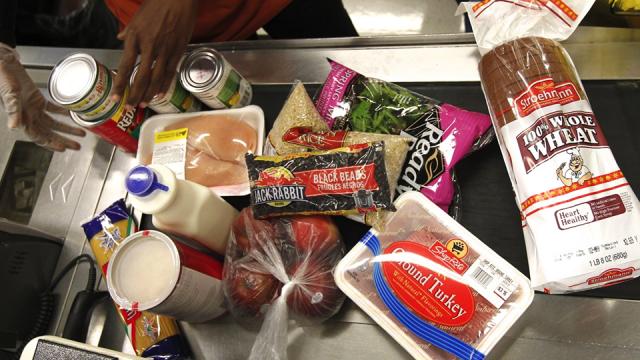
When I first heard a friend of mine from college was on food stamps, I was shocked. We were both recent graduates of a top liberal arts college, and I could not fathom that someone from my school was in such a "desperate" situation. Not long after, I was on food stamps as well.
The past year since I left graduate school has pretty much been: job application, job application, job application, interview, rejection, another job application, temp work, job application, another temp job, more job applications. For nearly eight months, I was unable to secure opportunities that weren't sporadic or temporary, making it difficult to pay rent and buy food.
I remember the night I decided to apply for food stamps: I put my hand into my change jar – the one I used to casually toss coins into so I wouldn't have to carry them around in my pockets – and I felt the bottom of the jar. I was taking my final quarters, dimes and nickels to a fast food restaurant, hoping I had enough for a burger and fries.
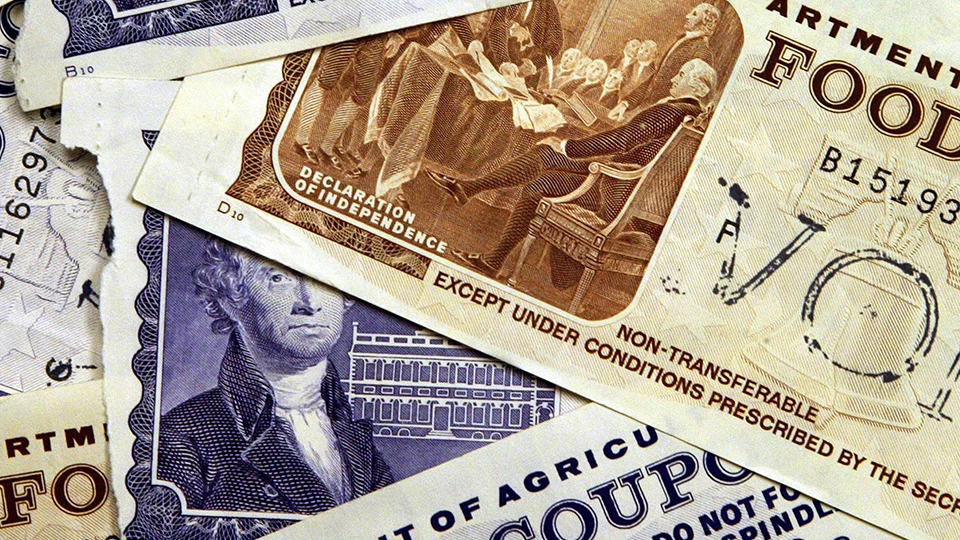
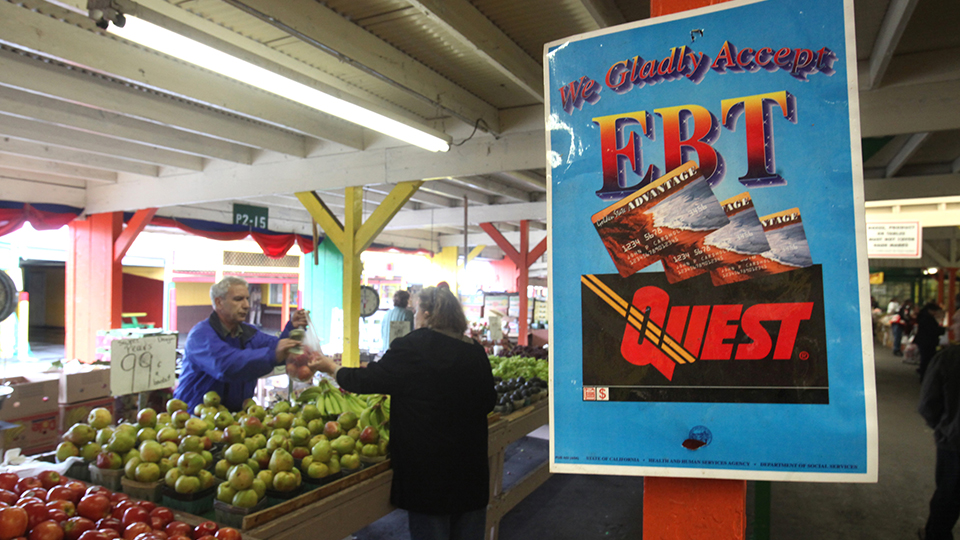
With Congress now back in session, House Republicans – with Eric Cantor leading the charge – are pushing hard for more than $40 billion in cuts to food stamps (officially dubbed Supplemental Nutrition Assistance Program or "Snap"). If they get what they want, 4 to 6 million Americans could lose benefits.
Social welfare programs are always a political flash-point. When President Clinton's administration passed "welfare reform" in the '90s, the left strongly criticized him for gutting the social safety net, and high-ranking officials in the department of health and human services resigned, including two assistant secretaries. During the 2012 election, then GOP presidential candidate Newt Gingrich referred to President Obama as "the food stamp president".
Many pointed out that, without explicitly mentioning race, Gingrich was trying to leverage existing racial prejudice by accusing a black president of allowing poor people who lack "personal responsibility" – that is, in right wing terms, black people – to swell the U.S. welfare rolls.
The rhetoric advocating cuts to programs like SNAP – and, in fact, the broader discourse over anti-poverty and social assistance programs – carry racial overtones and a stigma about the kinds of people who use these programs: "lazy," "freeloading" "welfare queens" who drive Cadillacs and have plasma TVs.
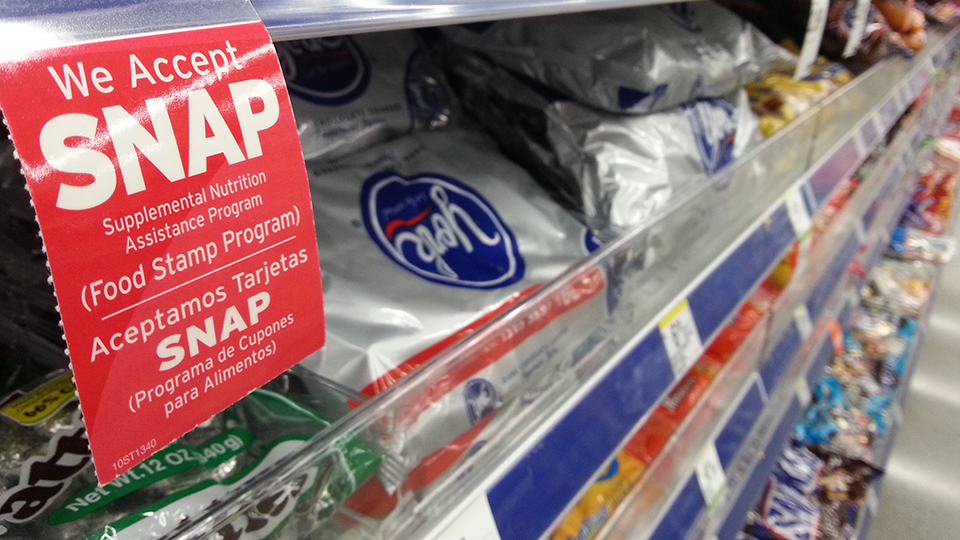
Lately, young white people on SNAP are criticized for what they buy. Apparently, there are "hipsters" on food stamps who purchase organic, grass-fed hamburger or other items deemed too "bourgie" for someone on welfare.
The most shocking thing for me this past year was not the harshness of the current economy or the level of competition for jobs I coveted, but when I realized that I, too, used to view myself as different from and better than people on food stamps. I have long been an advocate for a strong safety net, but I never thought I would be "one of those people" on it. Too often, we talk about people in poverty in the abstract, rather than as Americans with ordinary problems.
The reality, particularly in the current economy, is that many hardworking people from a variety of backgrounds find themselves in a position where they could, and should, use government assistance. As a report summaries of Snap participation rates from the US department of agriculture (which administers the program) points out:
"When eligible individuals do not participate, they lose out on nutrition assistance that could stretch their food dollars at the grocery store, and their communities lose out on the economic benefits provided by new Snap dollars flowing into local markets."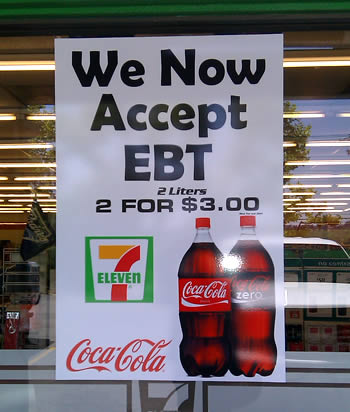
The point is that any individual who qualifies for Snap should use it regardless of race, background, education, gender identity, or misplaced sense of pride. The more this view is socially accepted, the more we can have an honest conversation about the safety net without prejudice and stereotypes.
Were I given the opportunity to speak to Eric Cantor, Newt Gingrich, or other critics perpetuating myths about Snap, I would share my personal story. Food stamps kept me from going hungry, and gave me the support necessary to eventually secure an internship at The Guardian.
People on food stamps are people; with friends and family, difficulties and aspirations. People also have pride. When we perpetuate myths about social assistance, we discourage those who are eligible from enrolling. America shouldn't let people go hungry. Assistance programs should be about giving people a hand up, not about putting them down.
3 WAYS TO SHOW YOUR SUPPORT


- Log in to post comments


