
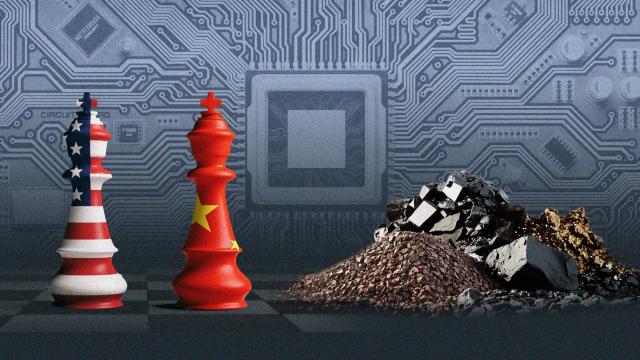
This century, minerals will have the same power to drive wars, social and ecological conflicts as oil did last century. This was predicted in an internal Canadian Defence Department document from 2022.
Three years on, it seems no exaggeration.
Minerals touted as essential for the “Green Transition” are central in ongoing wars from Ukraine to Myanmar, and to Trump's ambitions to take over Canada and Greenland.
These minerals are also crucial for military and digital technologies. The U.S., UK, Australia, Canada and the European Union (EU) among others, now have strategies to control the extraction and supply of minerals.
The different minerals each lists as critical are similar; they largely include lithium, essential for electric vehicle batteries; cobalt, also used in those batteries and stealth fighter jets; and tungsten, used for wind turbine blades and armour-piercing projectiles.
The 17 “rare earth elements” are also on these lists. The name is misleading; these minerals are widely dispersed but scattered in low concentrations and difficult to extract. Perhaps “trace earth elements” is more accurate.
Three of these 17 elements are neodymium, used in the permanent magnets of wind turbines and again fighter jets; terbium, used to make TV screens, also with military and medical applications; and scandium, with uses in planes and spacecraft, ultra-light sports equipment and guns.
Global demand for so-called “transition minerals” is expected to rise enormously over the coming years, which leads to questions about what levels of extraction is possible, and necessary. What's unquestionable is that these minerals are reshaping geopolitics today.
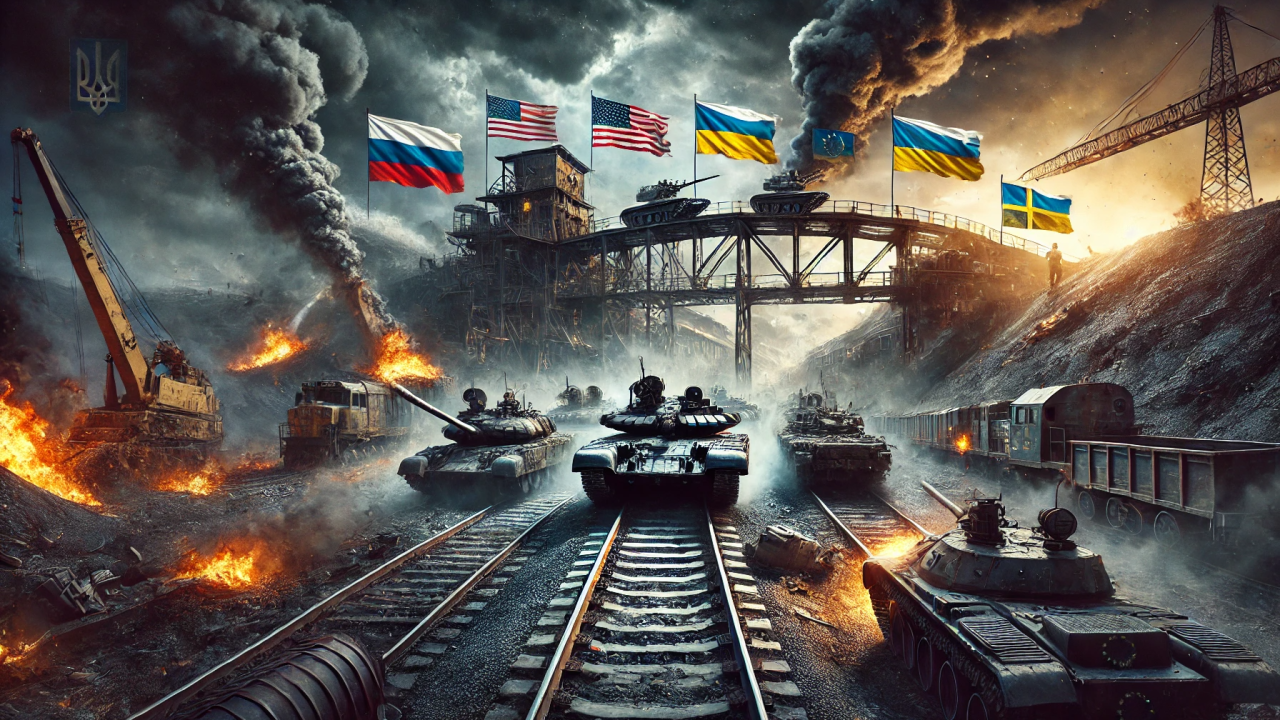
Critical mineral wars
China is dominating the extraction and processing of many critical minerals and rare earth elements after years of state subsidies and foresight. Replicating the power of oil-rich nations, China can impact the price on these elements by limiting their supply, as it is doing with lithium and graphite – essential to the production of electric vehicles.
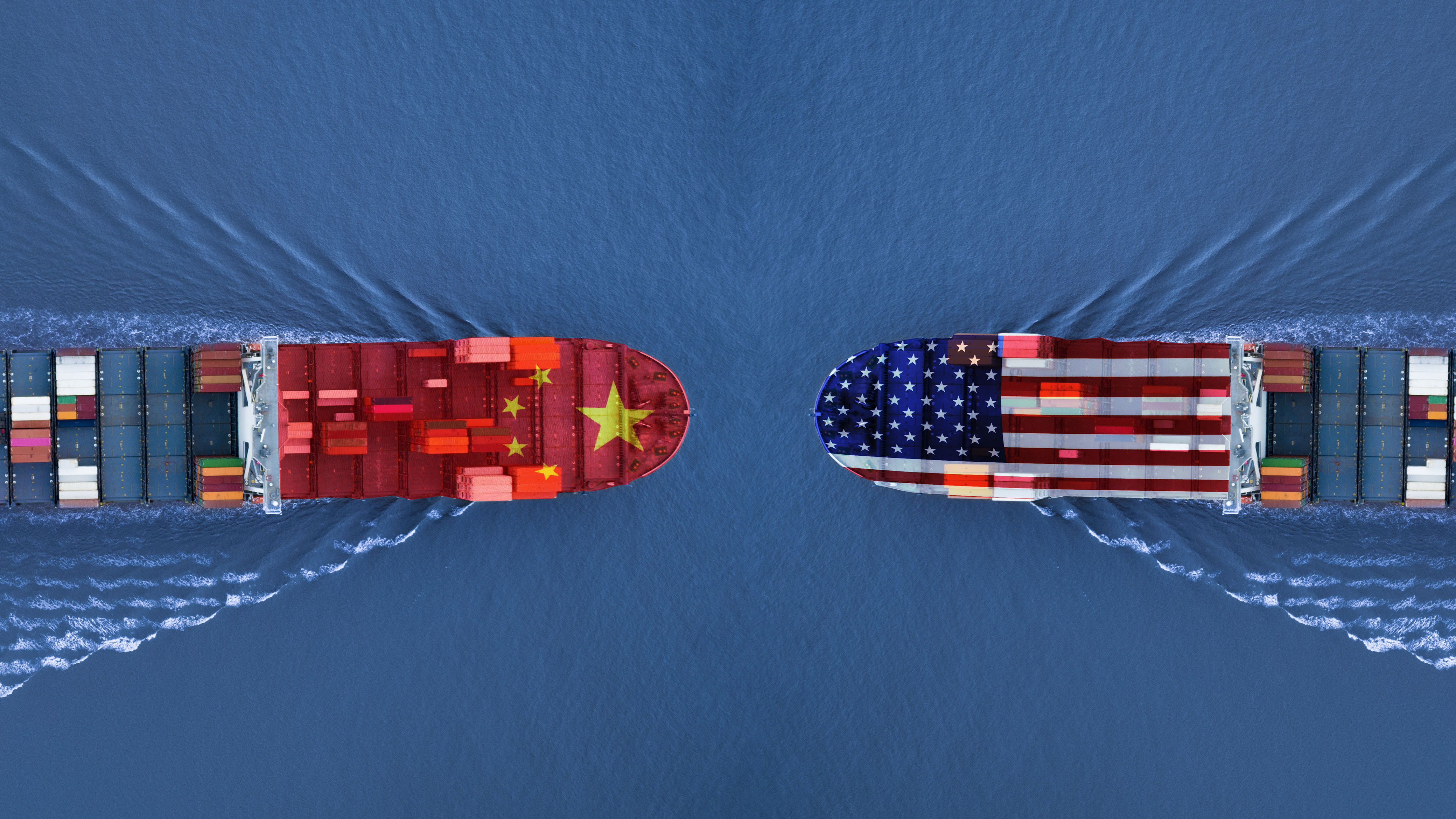
China also uses its dominance as leverage in trade wars. For instance, when the U.S. under Trump implemented his self-harming tariffs upon the rest of the world earlier this year, China retaliated by limiting the availability of many rare earth minerals, including yttrium, a mineral essential for producing everything from digital screens to jet engines and precision radar.
China's trade dominance now gives it an advantage in building evermore sophisticated military technology. And as long as the global economy is driven by neverending consumption and growth, China will dominate the supply of minerals for decades to come.
At the same time, the extraction of these minerals threatens Indigenous peoples and their lands, from Chile to northern Europe, who face the prospect of being turned into Green Sacrifice Zones — places with ecosystems destroyed, as happened due to oil and other forms of resource extraction, including mining.
New materials: old imperialism
Take the Democratic Republic of Congo, for instance, where “mining operations are causing deforestation, water pollution and land degradation, harming ecosystems and local communities, and sparking conflicts for the resources,” writes Emily Iona Stewart, a lead on NGO Global Witness's transition minerals campaign.
“Many of the workers in mining operations, particularly in countries like DRC [Democratic Republic of Congo], are subjected to dangerous working conditions, exploitative labour practices and even child labour.”
The DRC has long been known for producing “blood diamonds,” showing how a mined resource can be a curse to a country, as its extraction makes profits for foreign-owned corporate-controlled supply chains while bringing ruin to the land and the people — in the case of DRC, war, child labour and ecological destruction.
The latest expansion of mining in the DRC is for cobalt, crucial for manufacturing electric vehicles, which has led many to describe cobalt as the “blood diamond of electric vehicles.” It is also a crucial component in smartphones, so this extraction is nothing new.
And Congo is not alone. Regions of the world with known quantities of minerals are driving wars, just as happens with oil-rich locations. In the Kachin province of Myanmar, there is ongoing fighting between the military junta and independent forces.
The country is now the world's largest producer of rare earth elements, predominantly based in this province, with supply chains controlled by China. Ukraine is another ongoing war where the Russian occupation has captured many mineral rich areas.
In attempted peace negotiations with Ukraine, Trump has demanded mineral access in return for U.S. aid or military support. Extracting minerals is also a central driving factor in Trump's threats for the U.S. to take over Canada and Greenland (which will be examined in a forthcoming piece).
A great deal of the demand for these minerals is for war machines and technology. Wars are being fought to control these minerals, which replicates how wars have often been fought for oil.
But it takes a lot of oil to fight wars. And with transition minerals in high demand for militaries, this will only escalate the vicious and violent global cycle — not least as the faster military jets and other machines made by these new minerals will run on oil, not renewables.
Dig baby dig
When it comes to mineral policies, Trump has drastically changed U.S. strategy. Yet even before him, the country was focused on increasing its control and access to extract and process minerals.
Through Biden’s flagship Inflation Reduction Act, American investment in green technology increased — for instance by increasing lithium battery production, although this support focused more on manufacturing, and less on mineral extraction and processing.
Under Biden's presidency, the U.S. attempted to collaborate on minerals strategy with traditional allies, such as the EU. This included the State Department-led Minerals Security Partnership, which continues to finance mining projects with over a dozen large nations, EU included.
Biden's administration also had discussions about – although never ratified – an EU-US Critical Minerals Agreement.
In short, under Biden, the U.S. and EU were moving in a similar direction on minerals. In 2024, the EU enacted its Critical Raw Minerals Act, which will fast-track the planning application process. This has led to fears that it will bulldoze over lands with social and ecological impacts, especially to the Indigenous Sami people living in Europe's far north, where many mines are planned.
Using the Green Transition as a justification for expanding mining has led critics to charge that the EU is fostering a new green wave of colonisation, including in this peer-reviewed paper led by Professor Diana Almeida from Utrecht University. Similar claims were made against the U.S. under Biden's presidency.
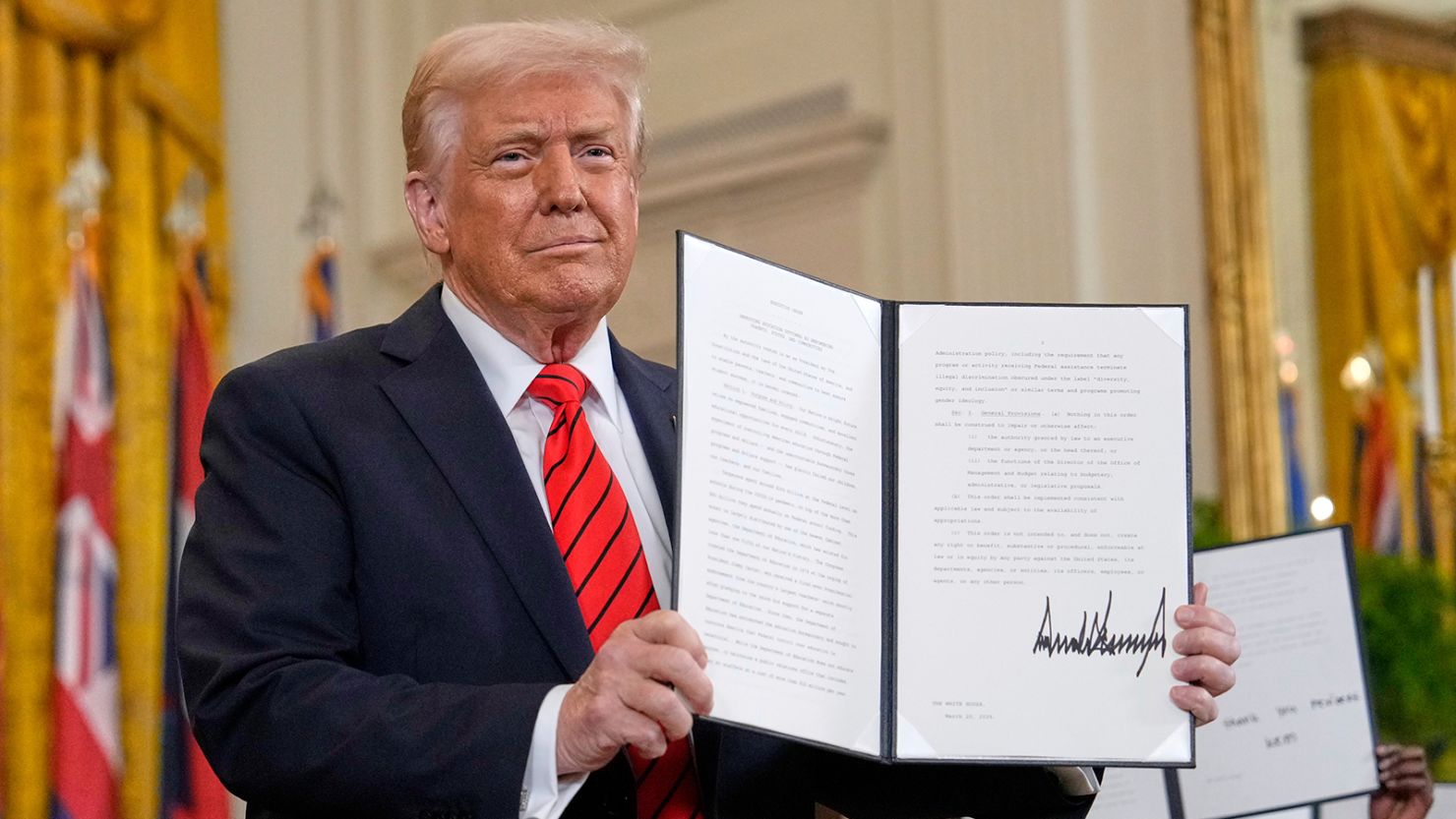
Under Trump's presidency, however, the U.S. is accelerating in the same direction — but on steroids. Any green measures or greenwash justifications are being dropped: it is now minerals-driven colonialism, period.
On Day One, Trump declared a National Energy Emergency, invoking the Defense Production Act to fast-track applications for oil and mineral extraction. In conflicts in the DRC, as well as in Ukraine, he has demanded access to minerals for aid, including military support.
From Canada to the DRC, what happens next with the volatile and authoritarian Trump presidency is hard to predict. But what is clear is that minerals — how they are extracted, how much we extract, and how quickly — will define global politics for some time to come.