
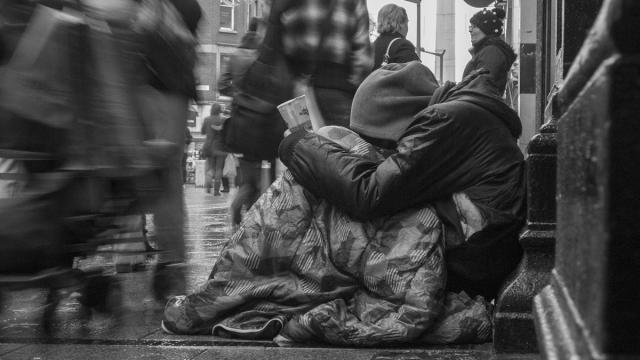
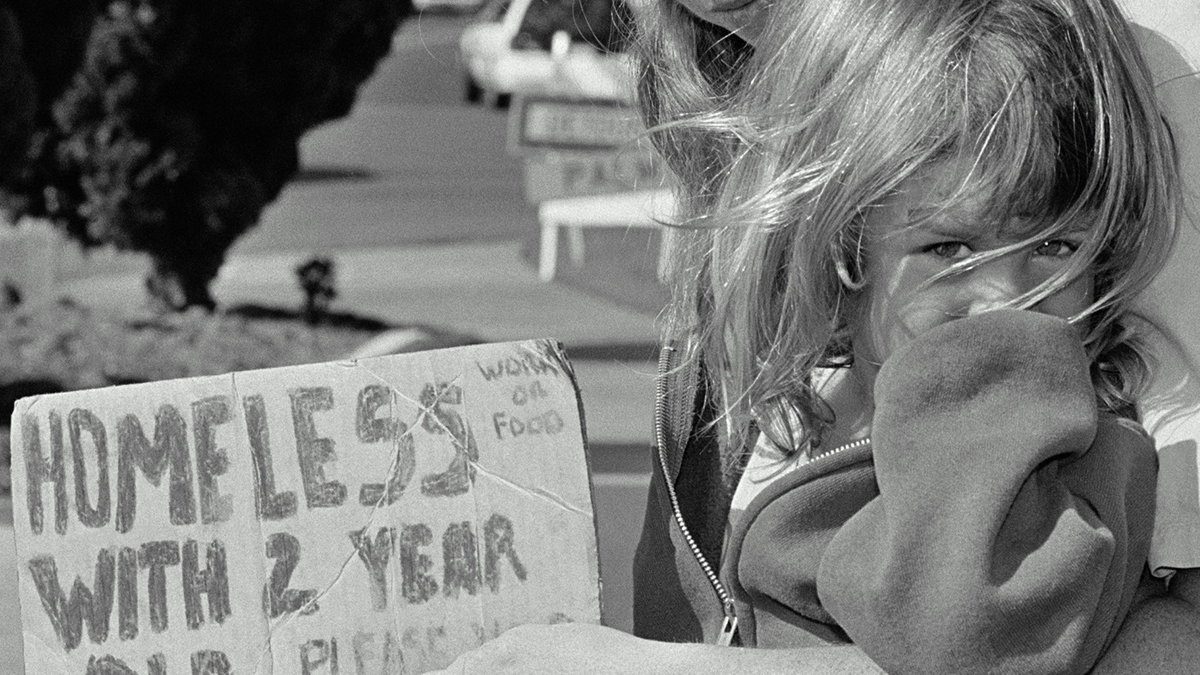
A coalition of over 125 social justice groups is working on a Homeless Bill of Rights to be introduced to state legislatures in an effort to end the criminalization of people who live on the streets.
Advocates working in Colorado, California and Oregon have argued that local laws have criminalized life-sustaining actions like sitting or sleeping in public places. They argue that these laws unfairly target those perceived as undesirable, including the homeless, in an attempt to push them out of public spaces.
“Imagine if every shopper in Times Square that sat down got a ticket. It would never happen. It’s so blatantly racist and classist,” Paul Boden, executive director of the Western Regional Advocacy Project (WRAP), told Al Jazeera, noting that those earmarked for police attention tended to be nonwhite and dressed in such a way to suggest poverty.
“We’re talking about laws that every single person is going to break, but only certain people have the police enforcing the laws against them."
The coalition has compiled over 1,300 interviews with the homeless and said it has identified six priority areas to be included in the Homeless Bill of Rights.
Those six are the right to move freely and sleep in public spaces without discrimination, to sleep in a parked vehicle, to eat and exchange food in public, to obtain legal counsel, to access hygiene facilities 24/7 and to use the necessity defense in any criminal prosecution.
In the coming months, the coalition will work with lawyers to develop the bill, based on the most common complaints in each of the three states and then find state representatives to sponsor the bills for legislative sessions beginning in January 2015.
Criminalization of the homeless is nothing new and is part of the national status quo, Boden said. It's based on the broken-windows theory that addressing anti-social behavior will drive down more serious crimes. But the policing tactic unfairly singles out some groups — especially black and Hispanic people and the poor — and results in the removing of panhandlers and the mentally disabled from public spaces.
“They’re the broken window, and if you don’t remove them, all the other windows are going to get broken. If you’re black, mentally ill and homeless, you’re going to see the inside of a jail cell in no time,” he said.
According to interviews with the homeless, the top three activities that they were being criminalized for are sleeping, sitting and standing still in public areas.
“We want to get rid of the legal authority for local governments to use racist and classist police enforcement to get rid of people they don’t want in their town,” Boden said.
In Colorado, Denver Homeless Out Loud, a homeless rights group working with WRAP on the bill of rights, has taken over 400 surveys of homeless people in cities across the state to record their experiences and find out if their rights have been violated.
“In the survey responses, we are seeing that there is an excessive amount of police harassment happening around basic acts of survival, like sleeping,” said Terese Howard, a member of Denver Homeless Out Loud.
“Another complaint we see a lot is that their belongings were taken, which is something that happens in association with being bothered by police at their sleeping spot … and sometimes the police will confiscate belongings at that time — backpacks, sleeping bags, IDs, birth certificates and even medication.”
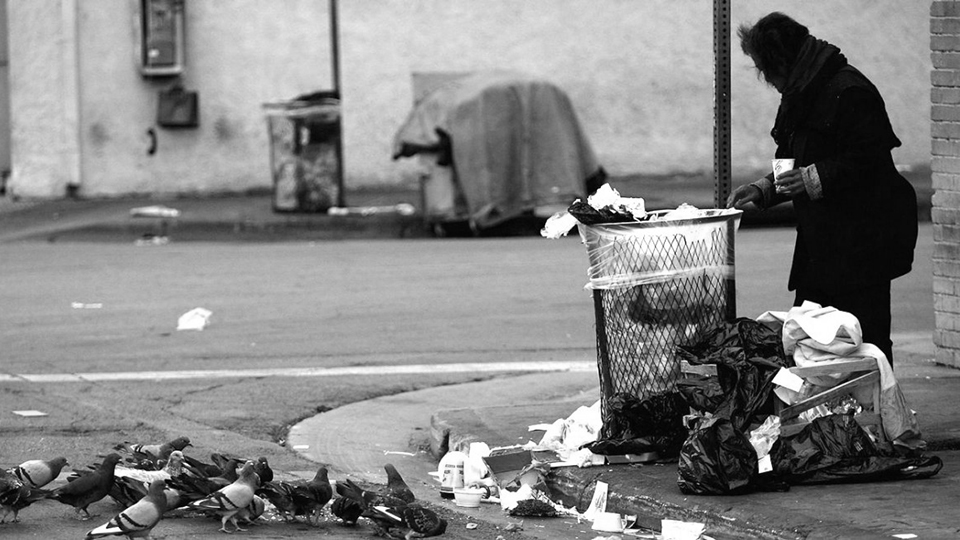
Pattern of Discrimination
Similar legislation has already been passed in Rhode Island, Illinois and Connecticut meant to protect the rights of the homeless. But the section of the legislation meant to stop the criminalization of these life-sustaining behaviors was amended out of the bills — essentially leaving it toothless, say activists.
“We were offered the same thing here last year when we were running our bill in California, and if we wanted, we could have ended up with the same thing as Rhode Island ended up with,” Boden said. “The end result with the Rhode Island bill is that the rich as well as the poor are forbidden from certain behaviors.”
Last year’s attempt to pass a bill that would put an end to the criminalization of those behaviors was unsuccessful, but Boden said they expected this process to be a long struggle and were not dismayed.
The Rhode Island, Illinois and Connecticut legislation aimed to end the discriminatory use of such laws so that all would be subject to the rules. But Boden argued that they are still enforced mainly against the poor and those deemed unseemly. As a result, he and others say, the homeless charter must take away local authorities’ ability to criminalize certain behavior.
In a signal that this movement may spread to additional states, social justice groups in Seattle invited WRAP members to a conference last week where they discussed Washington’s potential plans for its own homeless charter.
Boden said the bill of rights is about not just the homeless but also all “undesirables” in society. Reinforcing that idea is the fact that at least 125 social justice groups in five states form the coalition.
Laws targeting the homeless are a continuation of similar legislation that targeted marginalized and minority groups in the past, according to Boden.
“We see historically — whether it is Japanese-Americans or African-Americans — we see a long, entrenched history of the flavor of the month being targeted by local governments using the same enforcement procedure,” he said. “Create local laws under local government enforced by local police and private security … in order to remove people from whatever part of town or town they don’t want them in.”
Howard echoed Boden’s statements, saying these laws are fundamentally discriminatory.
“It’s important to note how this sort of criminalization follows in the footsteps of laws that have been on the books in past, with the primary goal of pushing ‘undesirables’ out of the public space,” Howard said. “Whether that’s Jim Crow, sundown laws, anti-Okie laws — these laws discriminate against only a certain type of people.”
3 WAYS TO SHOW YOUR SUPPORT



- Log in to post comments


