
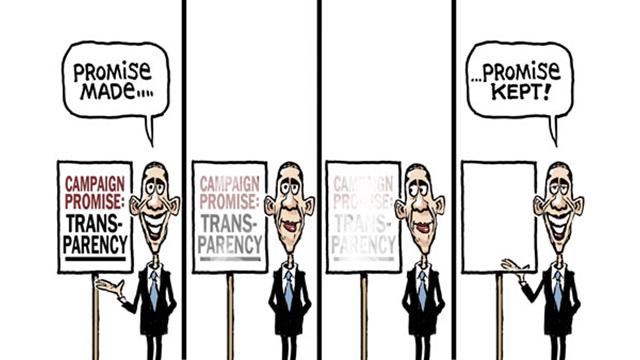
As part of the horde of promises made during his 2008 campaign, President Obama declared his commitment to a more responsible, accountable and transparent government. Lambasting the Bush age which was full of executive orders, torture, lies and deceit, Obama vowed to make appropriate changes to change the direction of the ship.
But one needs to look no further than the treatment of Private Bradley Manning to understand the U.S. government’s true views and approach to transparency and accountability.
Manning is the individual accused of leaking information to Wikileaks and its affiliates, including videos and hundreds and thousands of diplomatic cables that pertained to the Afghanistan and Iraq wars. Late in July of 2010, he was moved from Kuwait to Quantico, Virginia, where he was held in a condition similar to solitary confinement, which was condemned by a UN Special Rapporteur prompting the resignation of State Department spokesperson Phillip Crowley.
Manning was charged with the Espionage Act, which has been executed six times under the Obama administration – more than under all other American presidents combined. The other five individuals charged under this legislation include Thomas Drake, Shamai Leibowitz, Stephen Jin-Woo Kim, Jeffery Sterling and John Kiriakou. For a president that talks about improving accountability and transparency, Obama has certainly shown a strong interest in prosecuting individuals dedicated to those same ideals.
On December 7, 2010, Bank of America, VISA, MasterCard, PayPal and Western Union imposed a financial blockade on the funding of Wikileaks, the whistleblower organization responsible for releasing the classified documents to the public. Although the U.S. government has found no lawful grounds for the blockade, it has taken no measures to ensure that freedom of speech or freedom of the press stipulations outlined in our First Amendment are responsibly and thoroughly upheld. The blockade has continued unchecked and unchallenged since its imposition.
Another troubling negotiation going on behind closed doors is the drafting of the Trans-Pacific Partnership agreement, or TPP. The only information that the public has been able to access are leaked chapters of the agreement. Governments involved in the negotiations still have refused to publish even a sentence regarding the process of discussions now underway for about three years.
From the chapters that have leaked, what is evident is that the TPP represents far more than just a trade agreement. It is, more accurately, a treaty that will shift unprecedented power to transnational corporations by allowing them to overrule sovereign state jurisdictions through the use of international corporate-run tribunals.
Democracy Now! co-host Juan Gonzalez stated that the TPP chapter leaked in June of 2012 “outlined how it would allow foreign corporations operating in the United States to appeal key regulations to an international tribunal. The body would have the power to override U.S. law and issue penalties for failure to comply with its rulings.”
“It’s been branded as a trade agreement,” said Lori Wallach, the director of Global Trade Watch, “but really it is enforceable, corporate, global governance... The agreement requires that every signatory country conform all of its laws, regulations, and administrative procedures, to what are 26 chapters of very comprehensive rules, only two of which have anything to do with trade. The remaining 24 chapters…handcuff governments and limit regulation.”
Wallach went on to say that foreign investors would be able to privately enforce the treaty by “suing our government, and raiding our treasury.”
“We don’t need enforceable, corporate global governance. We need more democracy and we need more accountability. And this agreement is the antithesis,” she said.
As if the nature and content of these negotiations weren’t sinister enough, the intense secrecy surrounding them is just as unsettling. About 600 corporate advisers have security clearance to see the text and advise on the U.S. position, yet Senator Ron Wyden, who chairs the Trade Committee with jurisdiction over the TPP, has himself been denied access to the text, as has his staff.
Instead, the Trans-Pacific Partnership is being negotiated by U.S. Trade Representative Ron Kirk, who was appointed by President Obama himself. As one of Obama’s original campaign promises specifically laid out: “We will not negotiate bilateral trade agreements that stop the government from protecting the environment, food safety, or the health of its citizens, or give greater rights to foreign investors than to U.S. investors.”
If Obama and his administration genuinely cared about transparency in these negotiations and the execution of a responsible and accountable U.S. government more generally, he would issue an executive order and demand that Ron Kirk immediately hand over the TPP text to Sen. Wyden, if not opening it up to the American public completely.
But more likely, he will use the same tactics and skill that have gotten him two terms in the Oval Office: the ability to talk the talk, but not walk the walk.
3 WAYS TO SHOW YOUR SUPPORT


- Log in to post comments


