
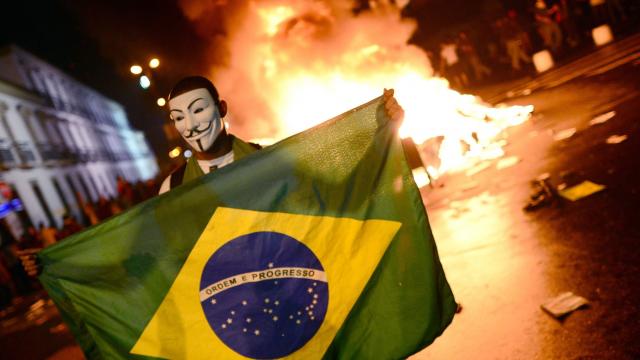
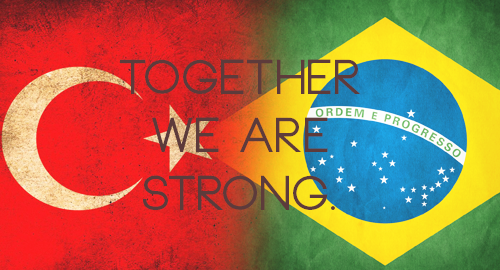
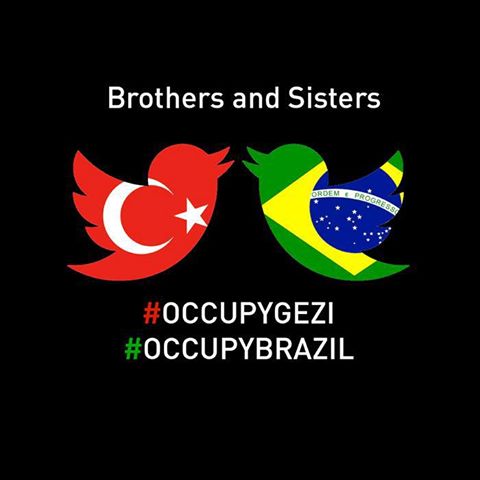
Spain's Indignados. Egypt's Tahrir Square. Occupy Wall Street. Now, Turkey's Occupy Gezi and Brazil's own distinctive movement. These local moments of a global Occupy movement represent a new stage in the history of protest.
"Horizontalist" movements like these, which emphasize direct democracy and collective decision making over specific parties, transcend the political spectrum. They claim that the financially and politically privileged have lost touch with the citizenry and with the public goods governments are supposed to provide. They challenge the corruption of local, national, and global elites.
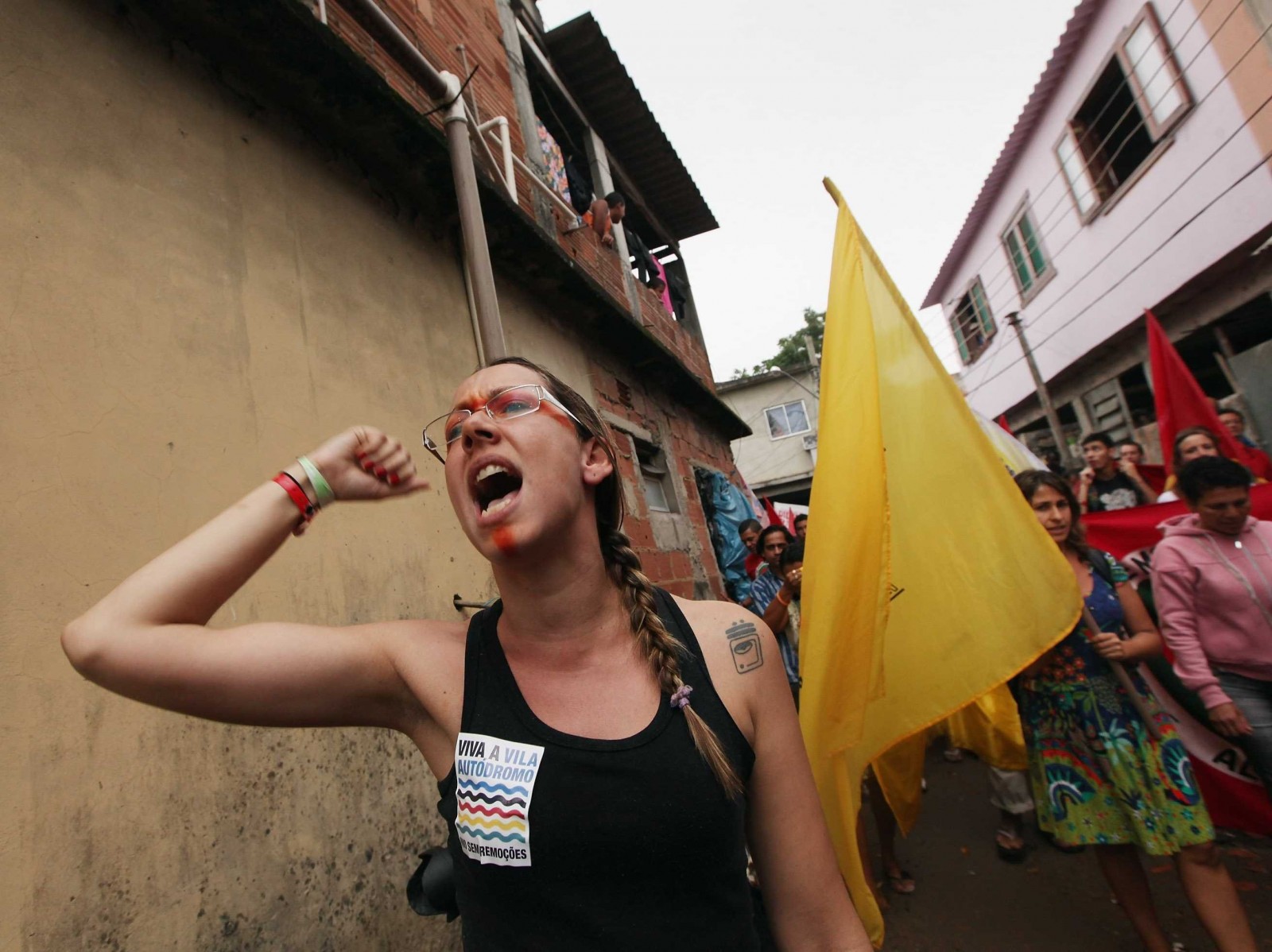
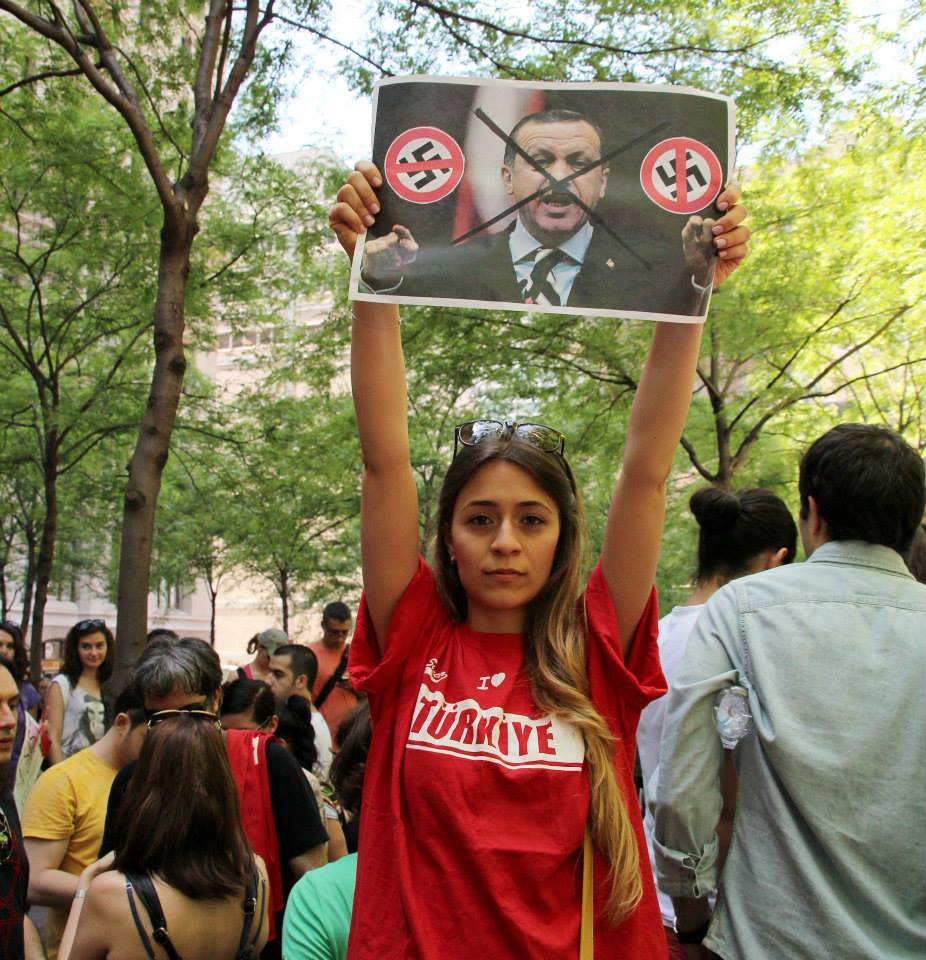
Apart from these commonalities, the movements do have differences. One of these is violence. Brazil, Turkey and Egypt have suffered more explicit and extreme violence than other "occupy" struggles. In some cases, Turkish colleagues report that the state's agents provocateurs, posing as protesters, threw molotov cocktails in order to justify police violence. In Brazil, on the other hand, after a week of police brutality, President Dilma Rousseff praised the Rio police for restraint on Monday night.
Furthermore, Brazil's ruling party is grounded in the workers' struggle for more rights; few other elites worry about "being on the wrong side of history," as Gilberto Carvalho, Rousseff's secretary general, expressed. Indeed, the youth wing of the ruling Workers Party has itself expressed solidarity with the protesters. No wing of the ruling Turkish party has come out in support of Occupy Gezi.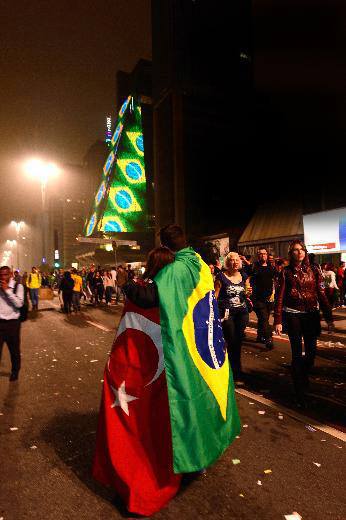
Brazil is also different because it has a civil society accustomed to struggle, learned in how popular participation can change national trajectories. Indeed, its innovations in participatory democracy have taught the world that direct public participation can make the work of government better and fairer.
Yet at the same time, Brazil's Workers Party government is seduced by the allures of a great power potlatch, as evidenced in the enormous resources being funneled toward hosting the World Cup next year and Olympics two years later. The fact that Brazilians can protest this allocation of resources as a sign of the corruption of public values is testimony to Brazil's legacy of participatory democracy.
Where will Brazil's horizontalist movement lead?
Given the novelty of these movements, we have no longstanding theory on which to base predictions. Movements have cycles and rhythms, but precisely because they are acts of creative worldmaking, they can defy expectations. Occupy movements on a world scale continue to evolve.
Their trajectory depends more on government response than the movements themselves. If the authorities negotiate with protesters, listen to the protests, and devise ways to accommodate their just concerns, the protest will fade sooner, yielding new policies and practices addressing injustice. If authorities respond with violence, the movement may lose a few faint of heart, but the core of the movement will feel even more righteous in its commitment to escalating the conflict. In such violence, nobody wins.
But these movements offer hope, including in Brazil.
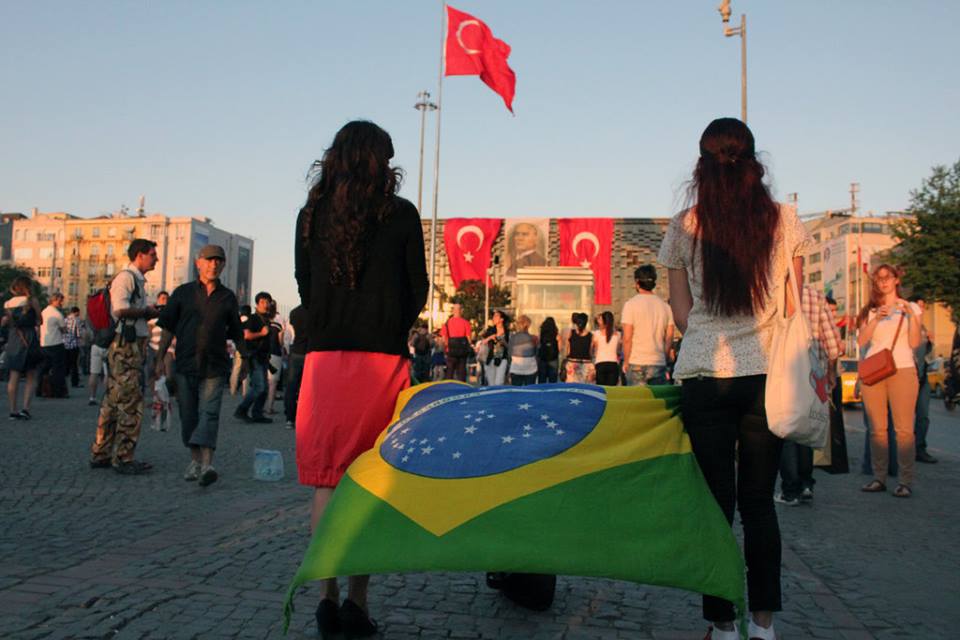
Occupy movements consist of rings of participants. Their cores are built around those who have years of movement experience and are more directly committed to mobilizing for their sense of justice. The outer ring includes those who continue to see value in organizing around electoral contest. Brazil has many not only in the core, but also in that outer ring.
How will the response to protests affect upcoming elections? Many of those in the Workers' Party came to politics through popular struggle. For them to be in the office and not in the streets is fraught with contradiction, and real emotion.
Those occupying this outer ring may decide the course of democracy's future.
To the extent it can highlight outcomes of the people's struggles in the priorities of their elected leaders, representative democracy may regain some legitimacy. To the extent the elite misses the point of protest, Brazil's democracy is itself at risk. And that's a risk the world over.
Gianpaolo Baiocchi is associate professor of sociology and international relations, and Michael D. Kennedy is professor of sociology and international relations, at the Watson Institute for International Relations, Brown University.
3 WAYS TO SHOW YOUR SUPPORT



- Log in to post comments


