
Sweden's Prime Minister, Ulf Kristersson, caused controversy admitting to newspaper Dagens Industri that he and fellow ministers regularly consult ChatGTP for advice.
“The more he relies on AI for simple things, the bigger the risk of an overconfidence in the system,” Professor Virginia Dignum, a computer scientist from Sweden Umeå University, told the newspaper Dagens Nyheter.
“It is a slippery slope. We must demand that reliability can be guaranteed. We didn’t vote for ChatGPT.”
It seems unlikely that only in Sweden are politicians guided by AI. We need to question its accelerating domination, not least against the backdrop of hubris coming from tech bros.
OpenAI CEO Sam Altman said, “The increase in quality of life that AI can deliver is extraordinary.”
Google's Head Sundar Pichai proclaimed AI's technological impact will be “more profound than fire or electricity.” His Google companion, Demis Hassabis, head of Deepmind, thinks we are about five to 10 years from AI reaching human intelligence.
And also, this future will be “10-times bigger than the Industrial Revolution.”
Meanwhile, Mark Zuckerberg's company Meta is spending billions on AI, aiming to build data-centres the size of Manhattan. He has at the same time predicted AI will create “novel safety concerns,” saying, “we’ll need to be rigorous about mitigating these risks and careful about what we choose to open source.”
This is all foreboding. In their relatively short history, the stories of tech companies like Meta are littered with overlooking and causing many social harms, including making addictive products.
Advances made by AI are undeniable, whether it’s in processing phenomenal data-sets or beating humans at complex games like chess. Used well, it can also make life better universally, for instance to cure diseases.
Yet despite the hype, AI's increased centrality in our lives comes with many threats.
The expanding power of AI
The UN Human Rights Council is not alone in asserting how AI can replicate and promote past prejudice, and there are a litany of cases of AI giving racist, or sexist or otherwise biased answers, which has impact on people's heath, employment, housing or other vital areas of their lives.
On occasions, AI can hallucinate and make things up – which is dangerous given how many people think it is infallible. More dangerously, AI technologies develop so fast that regulation cannot keep pace. This means AI can be used to influence already dysfunctional democratic processes.
In 2016, both Trump's first election victory and the UK vote for Brexit vote were assisted by Cambridge Analytica, using AI to give tailored messages to different voters, as one of the first allegations of AI manipulating a vote.
More recently, the DOGE assault on U.S. federal spending was managed through AI tools coordinated by Elon Musk. Tech bros' heralding a new golden age of humanity led by AI is an alarm, not least as it will further elevate the power of these information overlords.
Beyond tech bro's, AI also threatens to empower longer established enterprises such as finance. Hedge funds, for instance, profit without doing anything socially useful. Worse still, their impact is largely destructive, from short-selling to food speculation, and from financing big oil to fraud.
Now hedge funds are adding AI to their arsenals to make money from destructive operations.
Broadly speaking, AI has the potential to make finance move faster, so it’s no wonder that financial institutions such as the IMF and Bank of England are warning that AI will increase market volatility, making the sector harder to regulate and potentially leading to the next big crash.
Yet the fact these institutions and the majority of the media are co-opted by corporate power – and infatuated with AI – explains why these warnings are tucked away in reports, not on the front pages.
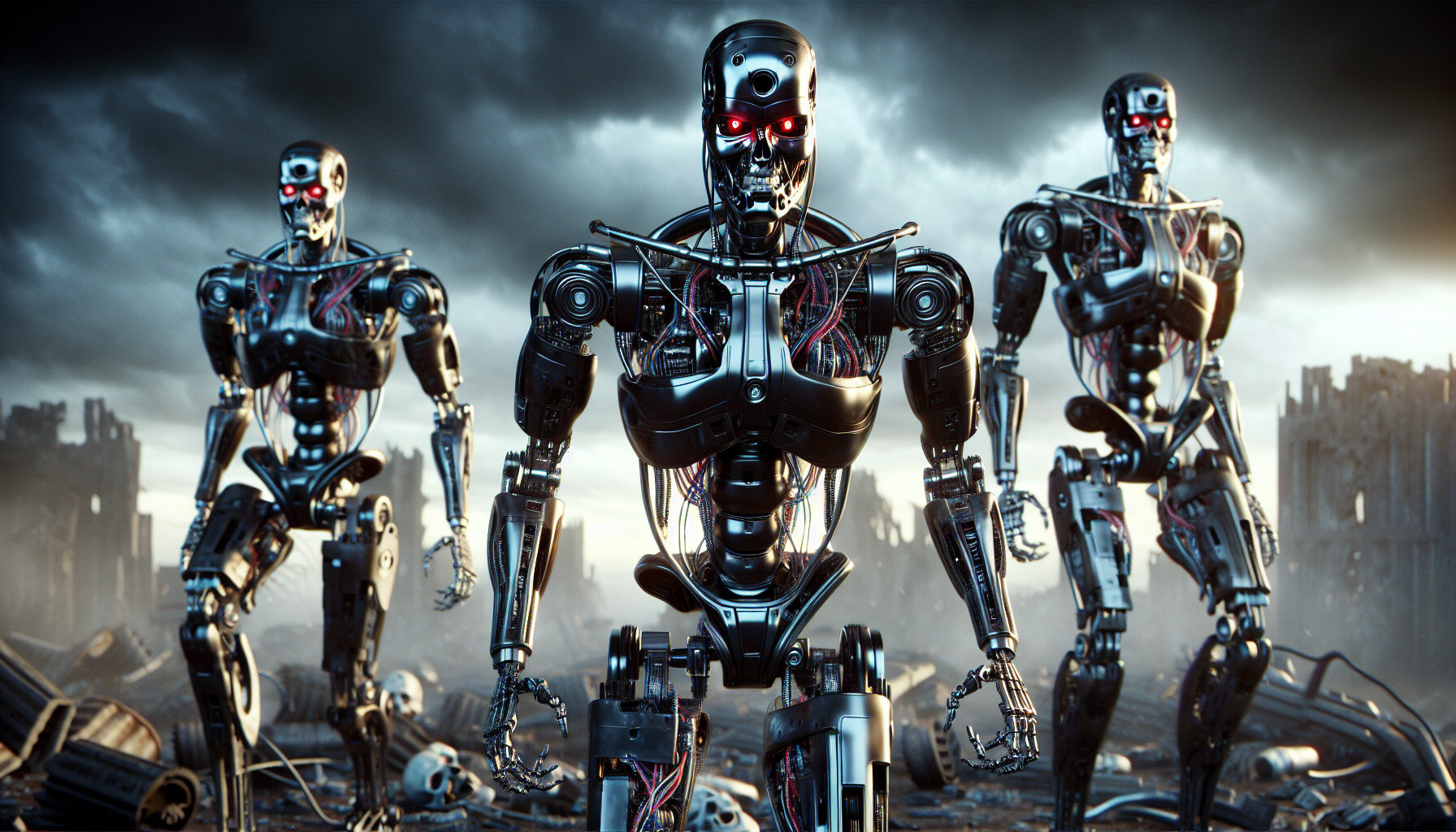
Additionally, there are many near-future dystopic situations predicted with AI, such as whether AI could become malevolent and decide to destroy humanity. With AI now taking charge of weapons systems, these once sci-fi threats are getting closer to home.
Power hungry AI
Alongside assisting power hungry corporations, AI is really power hungry. The electricity needed to power AI doubles every 100 days, reports the World Economic Forum.
This expansion means AI is also contributing towards the massive expansion of mineral usage and new mines, creating more sacrifice zones.
In the US, data centres are blamed for many old gas fuel power stations being put online. Also, these data centres and AI need massive amounts of water, and are being situated in places across the world already suffering from drought.
AI's impact on our well-being can be equally as toxic. At its worst, it stands accused of encouraging users to take their lives, whilst the physiological impact of deep-fakes and AI bots programmed to push prejudice views is an ever-growing phenomenon.
The global capitalist system drives many crises, catalysing and driving the crisis of loneliness and mental illness. AI is often held as a solution to this problem, although in therapists chatbots can endanger patients’ health and well-being, more than healing.
Another charge levelled against AI is that it threatens to automate different jobs and add to unemployment. This might be the case, although the problem might come at us the other way. Writer Jurgen Appelo argues that AI will lead us to a peak of "Bullshit Jobs"—a concept popularized by anthropologist David Graeber, who noted that many workers admit their jobs feel meaningless.
AI can worsen this by endlessly generating tasks—like data analysis and form-filling—that appear productive but serve little purpose. Since AI doesn't complain, it will churn out ever more administrative busywork, requiring humans to manage or validate it.
Graeber once pointed out that one symptom of Bullshit Jobs was the rise of cat memes: workers, too drained to pursue something more like learning a language, instead turn to distractions.
Now, AI adds to the problem by generating what some call "AI slop"—low-quality content flooding our screens.
Building on the Bullshit-AI-Jobs point, academics Stuart Mills and David Spencer, writing for the London School of Economics, warn that AI, used poorly, creates “efficient inefficiency.”
It has the potential to fill the world with more Bullshit Jobs and corporate nonsense—spam, ads, form-filling and content that consumes significant energy and resources, yet delivers almost nothing for humanity, except revenue for the corporate overlords. They grow rich from our data, they expand their power through our distraction.
What's the alternative?
The course we are on is dystopic. AI not only is starting to control individual politicians, it is starting to redefine our politics.
Yet things do not need to be this way. Artificial Intelligence is a really broad term and different AI's are as different from each other as fish from other fish. There is no reason big tech should define how the algorithms are designed.
We do not need to move towards a world where AI grows exponentially and accelerates the world's – and our own mental health's – destruction.