
Read

User menu

Search form

Supreme Court Rules Against Workers In Arbitration Case

Supreme Court Rules Against Workers In Arbitration Case
Thu, 5/24/2018 - by Nitasha Tiku
This article originally appeared on Wired

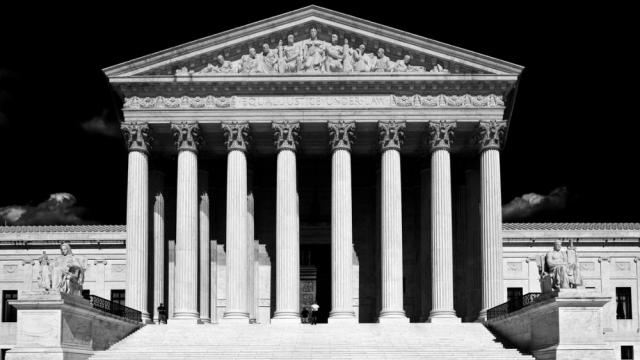
On Monday, the Supreme Court slowed recent momentum to give workers – including many in the tech sector – the right to a day in court.

The Supreme Court case centered around clauses in employment contracts that require employees to resolve disputes through arbitration, and preclude them from joining with others to file class-action lawsuits. In a 5-to-4 decision, the court ruled that those clauses are enforceable under federal law, which means companies can prohibit employees from banding together both privately or in court.

Such binding-arbitration clauses are widely used at technology companies, and critics say they helped allow sexual harassment to flourish by hiding complaints. More recently, some firms have taken steps to limit the practice. Uber last week said it would eliminate arbitration agreements for employees, riders, and drivers with sexual misconduct claims. (The company is still blocking riders from pursuing class action.) In December, Microsoft said it would stop enforcing arbitration agreements in sexual harassment cases. In March, however, Google filed a motion trying to compel a sexual harassment case from former engineer Loretta Lee to arbitration.

Tens of millions of employees are already subject to arbitration agreements. But Ron Chapman, a lawyer with Ogletree Deakins, says the Supreme Court ruling will encourage more employers to use them. “Whereas yesterday I would have said arbitration agreements are fairly common, in three months from now, six months from now, this will be the norm,” he says. “The entire business community was waiting on this decision.”

But Lina Khan, director of legal policy at the think tank Open Market Institutes, said the law “incentivizes companies to abuse” their power. Businesses that don’t employ such agreements “will now be at a competitive disadvantage," Khan said.

Most employment-related class-action cases are around wages and overtime. However, these agreements came under fire recently as part of the #MeToo movement for the role that arbitration plays in silencing sexual harassment by relegating claims to private arbitrators and reinforcing a culture of secrecy that insulates predators.

The court ruled on three cases, involving an oil company, an accounting firm, and a software company. Each revolved around an employee who signed an employment contract with an arbitration agreement and later tried to file a lawsuit in federal court. The plaintiffs argued that class-action waivers violate the National Labor Relations Act, which protects workers’ right to bargain collectively. However, Justice Neil Gorsuch, writing for the majority, said the Federal Arbitration Act of 1925, which allows for compulsory and binding arbitration, supersedes the NLRA.

In her dissenting opinion, Justice Ruth Bader Ginsburg called the decision “egregiously wrong.” She said requirements to use arbitration “does not come from Congress. It is the result of take-it-or-leave-it labor contracts harking back to the type called ‘yellow dog,’ and of the readiness of this Court to enforce those unbargained-for agreements.”

Former Uber engineer Susan Fowler, whose allegations of rampant sexual harassment at Uber helped usher in the #MeToo movement, had filed a “friend of the court” brief with the Supreme Court in support of the plaintiffs.

On Twitter, Fowler said the fight isn’t over. “The only option left is legislation. Let's take the House and Senate back this year, and make sure we let them know we want an end to forced arbitration,” she wrote, noting arbitration is an issue beyond sexual harassment and assault and beyond even employees, “but for consumers and independent contractors, too.”


Originally published by Wired

3 WAYS TO SHOW YOUR SUPPORT

ONE-TIME DONATION

Just use the simple form below to make a single direct donation.

DONATE NOW

MONTHLY DONATION

Be a sustaining sponsor. Give a reacurring monthly donation at any level.

GET SOME MERCH!

Now you can wear your support too! From T-Shirts to tote bags.

SHOP TODAY

Sign Up

Article Tabs

The country’s new prime minister, Andy Burnham, has promised a break from the politics of the last 40 years—realizing more broadly that Labour must stand up for the 99% against big business, or the party will become irrelevant.

The tragic shooting of Lorenzo Salgado Araujo is just the latest example of ICE having a fundamental disrespect for human life — further proving why the agency should be stripped of funding and shut down, and its rank-and-file agents and leadership prosecuted.

While the U.S., EU and their allies are enabling Rojava—the strongest force against Islamic State— to fall, it is vital for internationalists to continue to support this beacon of democracy and liberation.

June 23, 2026 may be remembered as the beginning of the end of the Democratic Party establishment.

Their tactics to force construction of data centers even against significant opposition from local communities have become increasingly forceful and hostile.

We can still celebrate success while simultaneously putting a cap on net worth.

The country’s new prime minister, Andy Burnham, has promised a break from the politics of the last 40 years—realizing more broadly that Labour must stand up for the 99% against big business, or the party will become irrelevant.

Much like the resistance to AI data centers, the opposition to Flock surveillance cameras has brought the left and the right together against billionaires who are trying to force America into becoming even more of a police state.

The tragic shooting of Lorenzo Salgado Araujo is just the latest example of ICE having a fundamental disrespect for human life — further proving why the agency should be stripped of funding and shut down, and its rank-and-file agents and leadership prosecuted.

While the U.S., EU and their allies are enabling Rojava—the strongest force against Islamic State— to fall, it is vital for internationalists to continue to support this beacon of democracy and liberation.

June 23, 2026 may be remembered as the beginning of the end of the Democratic Party establishment.

Posted 1 month 2 weeks ago

Much like the resistance to AI data centers, the opposition to Flock surveillance cameras has brought the left and the right together against billionaires who are trying to force America into becoming even more of a police state.

Posted 3 weeks 4 days ago

The tragic shooting of Lorenzo Salgado Araujo is just the latest example of ICE having a fundamental disrespect for human life — further proving why the agency should be stripped of funding and shut down, and its rank-and-file agents and leadership prosecuted.

Posted 1 month 1 week ago

While the U.S., EU and their allies are enabling Rojava—the strongest force against Islamic State— to fall, it is vital for internationalists to continue to support this beacon of democracy and liberation.

Posted 1 month 2 weeks ago

The country’s new prime minister, Andy Burnham, has promised a break from the politics of the last 40 years—realizing more broadly that Labour must stand up for the 99% against big business, or the party will become irrelevant.

Posted 3 weeks 4 days ago

The country’s new prime minister, Andy Burnham, has promised a break from the politics of the last 40 years—realizing more broadly that Labour must stand up for the 99% against big business, or the party will become irrelevant.

Much like the resistance to AI data centers, the opposition to Flock surveillance cameras has brought the left and the right together against billionaires who are trying to force America into becoming even more of a police state.