
The release of video showing black teen Laquan McDonald being shot dead by a white police officer in Chicago last year has sparked fresh protests. Officer Jason Van Dyke, who has a long history of abusive behavior, is now the first on-duty Chicago police officer in decades to face first-degree murder charges. He was released from jail last week after posting 10 percent of his $1.5 million bail.
But until recently, the case appeared destined for the same procedural quagmire that obscures countless incidents of police violence across the country. It underscores the urgent need for radical reform of how evidence of police violence is stored and made public.
The murder of McDonald, 17, seemed to follow an all-too-familiar storyline: First, authorities placate the public by announcing a supposedly fair and thorough investigation into police shootings while maintaining the killing was justified. A year or so later, investigators release a vague and self-serving statement reaffirming the police’s original story. The details of the incident have long been forgotten. No charges are filed, a family mourns, and the media move on to the next story.
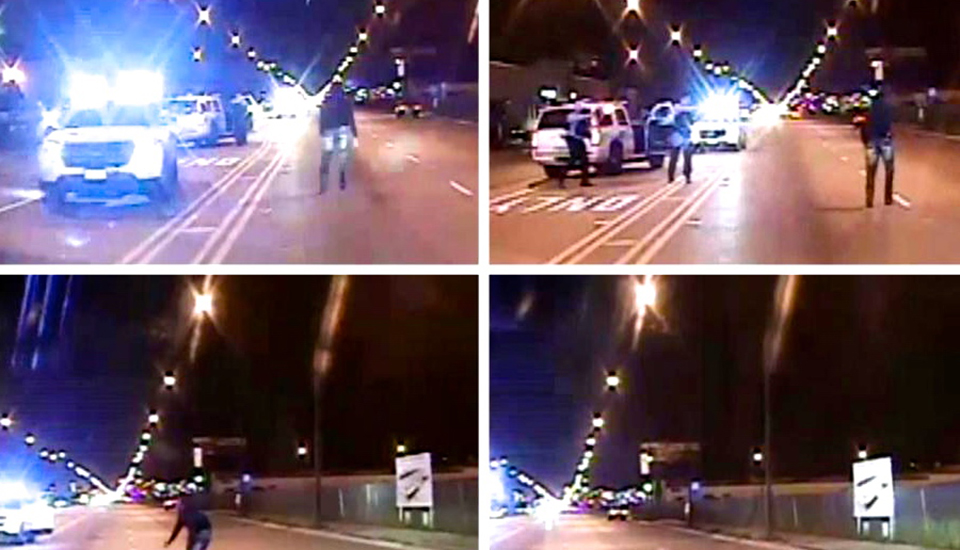
McDonald’s story ended differently only because reporter Brandon Smith sued the city for the release of dashcam videos from the officers’ squad cars, after police-reform activist Jamie Kalven received a tip from a whistleblower. After more than a year of delay, the video was made available online for only an hour on Nov. 24, suspiciously because of what city officials claimed was limited bandwidth. It shows that McDonald was shot 16 times less than 30 seconds after Van Dyke arrived on the scene. The shots began as the teen sauntered away from police cars, contradicting the initial claim that McDonald was shot only once and that he lunged at officers with a knife. Thirteen of the shots were fired after McDonald fell to the ground.
It was a stunning turn of events, but more shocking was how the Chicago police and city government desperately tried to cover it up. Within a few hours of the shooting, officers marched into a nearby Burger King, accessed the restaurant’s security system and deleted 86 minutes of video from an exterior security camera that captured the incident. And at the city’s request, the dashboard video from the officers’ cars was barred from release as a condition of a $5 million settlement with McDonald’s family.
Chicago Mayor Rahm Emanuel has tried to deflect attention, calling the shooting “hideous” and saying “one individual needs to be held accountable.” On Tuesday last week, police chief Garry McCarthy stepped down after the mayor called for his resignation. But it’s clear that many others are culpable, including Emanuel and other city officials who conspired with the police from the beginning to deny the justice they now celebrate being served. As Smith noted this week, the city has yet to release all the dashcam videos and emails related to the incident.
“From everything we’ve learned, compulsively at every level, from the cops on the scene to the highest levels of government, they responded by circling the wagons and by fabricating a narrative that they knew was completely false,” Kalven told The Chicago Reporter last week, calling for changes to “the underlying conditions that allow abuse and shield abuse.”
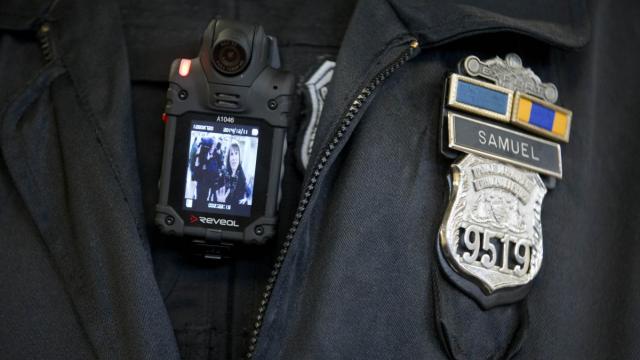
Those conditions are numerous, but there’s one that is rarely addressed in conversations about police accountability. Despite the promise of transparency from new tools such as body cameras, cops continue to exercise full control over video evidence whenever an officer kills.
This would be unthinkable in any other context. There is a reason we don’t give bank robbers exclusive access to footage of their alleged bank robberies. Similarly, we should not give officers control over video of police brutality and expect justice or fairness. Yet, as McDonald’s case shows, police are still trusted with video evidence of these incidents, even though it has been shown again and again that they often lie, cheat, deceive and delay as a matter of policy.
In theory, freedom of information laws were devised to speed up the release of government records in the public interest. But the process has frequently proved insufficient for obtaining videos of police violence, especially during the initial period, when the footage is most essential to inform public debate. File locker services such as Taser’s Evidence.com are supposed to keep audit logs of every video clip uploaded, ostensibly ensuring that any modifications or deletions can easily be detected. But these systems run on proprietary software and are maintained by private corporations and the police, meaning there is no way for the public to know whether they are being deployed and used as advertised. As with the opaque police forces they are designed to serve, information goes in but rarely comes out.
Some cities and states already have transparency laws allowing limited public access to footage from police dashboard and body cameras. But all of them exempt videos from disclosure when an investigation is active, when public interest surrounding a police shooting is at its peak. In many places, the transparency laws are so riddled with exemptions that compelling release through freedom of information requests can take months or years — if it can be obtained at all.
Even then, it’s rare that an incident generates enough attention to justify grueling legal battles. Without the whistleblower who alerted Kalven to the dashcam video in McDonald’s case, the incriminating footage almost definitely would have been obscured forever. At the end of the day, absent a citizen bystander recording an encounter, police are almost always the ones holding all the cards.
There’s only one effective way to protect footage of police-involved shootings: prevent police from ever gaining control of it. Instead of cops and corporations, independent civilian-run committees or courts could maintain video recording systems, with footage set to be automatically published after a given amount of time. Unlike Chicago’s Independent Police Review Board, which consists mostly of former cops, these independent bodies could be made up of community members who coordinate with families of victims to weigh their wishes alongside the public interest. Crucially, the police would be a party to the process instead of gatekeepers, denying them the ability to delay, withhold or tamper with the evidence.
McDonald’s case isn’t proof that the system worked; it’s an anomaly in which accountability persevered in spite of the system. Limiting police access to video evidence of shootings is the only sure way to ensure future police crimes don’t fall into obscurity. To do that, we need to radically rethink how digital evidence should be handled when cops kill and to punish those who lie and cheat to obscure the truth.
3 WAYS TO SHOW YOUR SUPPORT



- Log in to post comments


