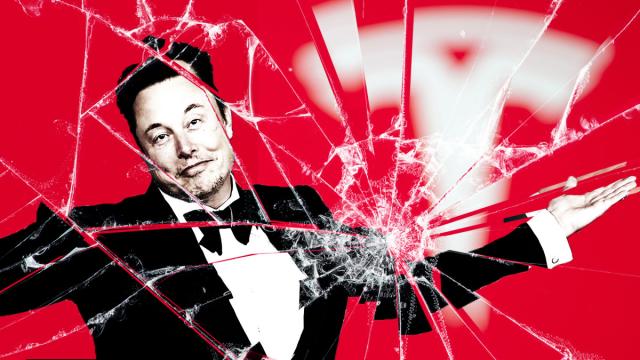
Elon Musk is taking a chainsaw to democracy and acting evermore like a corporate overlord. This is happening in the U.S. and worldwide. In resistance, people are throwing molotov cocktails and challenging Musk's businesses, most visibly Tesla.
Building on in-depth coverage of Musk's power-grab in the U.S., Occupy.com now delves into Musk's increasing global supremacy. We will explore, in two parts, the growing resistance against his ambitions, as well as possible obstacles and weak spots in his trajectory to becoming even more powerful, and perhaps the world's first trillionaire.
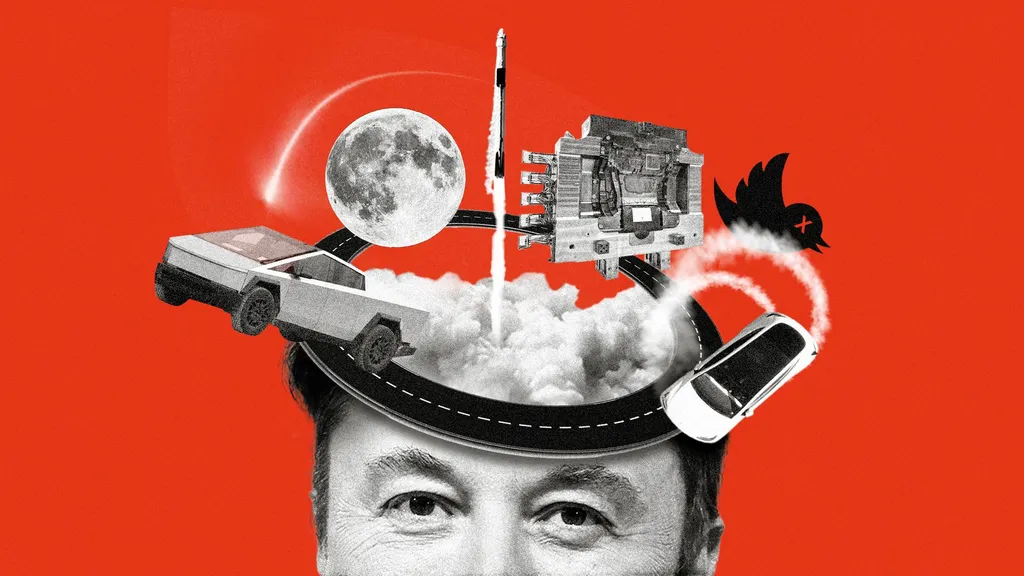
Musk's global reach and beyond
The Italian state has held advanced negotiations with Elon Musk's SpaceX in a reported $1.6 billion deal to use its Starlink satellite services. These offer encrypted communication for military, national and civilian purposes.
Negotiations that commenced earlier with year have recently stalled, with the European Union blocking Musk from increasing his hold on telecommunications. Whether SpaceX gets this deal with Italy, this potential partnership is very telling about Musk's trajectory towards global domination.
SpaceX is Musk's largest asset. In March 2025, Bloomberg valued Musk's stake at $136 billion, worth $43 billion more than his Tesla stocks – his second largest asset.
In terms of Musk's increasing wealth and power, SpaceX is dimmer on most people's radar compared to his ownership of X and Tesla, or his role in Donald Trump's regime, where he effectively orchestrated a coup d'etat slashing U.S. federal budgets as part of DOGE (Department of Government Efficiency).
SpaceX's potential $1.6 billion Italian contract is telling about Musk's global power grab in three other ways. Musk makes billions from government contracts in the U.S. and beyond, which is cynical when you consider his Federal DOGE role (and even more cynical considering DOGE hasn’t cut any of Musk's many U.S. federal contracts worth billions).
Secondly, the budding relationship between Italy's far-right Prime Minister Giorgia Meloni and Musk shows how he is connecting with MAGA allies beyond the U.S., and reaping potential rewards. Thirdly, Musk is not only providing telecommunications or trips into space, but increasing his business into the military industrial complex.
Musk's newly found power with military technology – and ultimately geopolitics – is shown by Ukaine's reliance on his Starlink satellites. In March, Musk took to his platform X (aka Twitter) to threaten that Ukraine's frontline would collapse if his company turns off its technical support for Ukraine's army.
Currently, neither European allies nor any other company or organisation has a similar capacity of satellites to support Ukraine fighting Russia's invasion.
SpaceX has a reported 7,000 satellites orbiting the earth, far more than any rivals. For instance, Eutelsat, its main competitor, has just over 600 satellites. Unlike Tesla, SpaceX is growing fast in stock value with new countries coming on line almost weekly. It is reported that countries including Vietnam are accepting deals to gain favour with Trump's White House.
Musk's official U.S. government role is facilitating official meetings with heads of state. Overall Starlink's services are available in over 100 countries.
Global information baron
Musk's unelected role at the forefront of the US government, and his company's near monopolisation of satellite internet communications, adds to his other global political and economic power grabs and attacks on democracy. Not least, his ownership of X since October 2022.
The exact number of active monthly X users is debated, with figures between 300-600 million worldwide. These figures are fewer than when Musk took over the platform in 2022. The way Musk has hollowed out X, cutting swathes of employees – including content moderators – is reported as a blueprint for how he is hollowing out the U.S. federal government in his role at DOGE, not least using AI to decide which jobs are cut.
Focusing on this one platform alone, Musk has the ability to influence power and knowledge that older generations of media barons – for instance, Rupert Murdoch – took decades of media empire building to achieve. Continuing the comparison, Musk is estimated as the richest person in the world with $342 billion, while Murdoch and family are just 87th with $23 billion.
The power of X enables Musk to personally amplify and back MAGA friends and far-right causes around the world. He gets attention, not least as his tweets – and likeminded ones – are pushed front and centre by algorithms.
Through this control of the narrative, he is a key global driver of the far-right momentum gaining traction the world over. This includes his personal endorsements for neo-Nazis knocking on the doors of power in Germany, to authoritarians already in power from Italy to Argentina and also those with similar ambitions elsewhere.
Musk, in his close alliance with Trump and his anti-woke messages on X, is leading the charge as social media platforms remove any guardrails against people expressing hate speech, under the ironic banner of free speech. This shift in direction is already well underway with Facebook, Instagram (both owned by Mark Zuckerberg's Meta) and Youtube (owned by Google).
Many social media companies are complicit in the toxic culture wars that feed the rise of the far-right. Musk is perhaps the most central and explicit here. In effect, the shift in social media makes the internet an ever more toxic space to enable and inflame bigoted views.
Of course, this could be argued to suit social media platform owners or other billionaires. Culture wars shift away the blame from the failing, dysfunctional capitalist system that they have done so much to create, and has made them super-rich in the process.
Musk and the other so-called tech bros' influence on the world is a new chapter, yet part of the same story initiated by media moguls like Murdoch. It is hard to imagine the culture wars getting so far had it not been for Fox News and other Murdoch-owned (and similar billionaire-owned) media pushing messages demonising migrants and other targets of the right. Likewise, the market domination of media moguls foreshadowed the power now held by those owning social media.
Yet Musk's power may be far more wide reaching. Despite often lacking any integrity, many of Murdoch's papers at least had to ascribe to uphold journalistic values, whereas social media does not. It can push its ever growing audience towards a post-truth world.
Social media now shapes the way many people think, in bite-sized chunks, on phones that are attached to people's hands most of the day. Social media can get into people's heads far deeper than newspapers, or even rolling news can. We paradoxically live in a very atomised world, where the gatekeepers of information, and what is even considered truth, is increasingly centralised.
In purely monetary terms, Musk and his coinvestors have lost a reported $24 billion buying X. Yet perhaps this misses the point of what Musk has gained in terms of increasing his power. Musk is often called a tech bro, but now it seems he is developing from media baron into an information overlord.
Media barons can direct the content of news organisations and shape knowledge — how some people see the world — and that means they have a lot of power. In comparison, with a potential monopoly over how information is transmitted through satellites — alongside his leading unelected U.S. role and platforms such as X, not to mention his AI companies building algorithms — Musk has risen high above the feudal power of a baron. Controlling the information itself goes far deeper than shaping knowledge.
The second installment of this series will explore the growing resistance worldwide to Musk, targeting both Tesla and SpaceX, looking at where and how protesters across the globe are venting their anger. It will also delve into countries that are going against the flow and resisting SpaceX's moves towards monopolising telecommunications.