
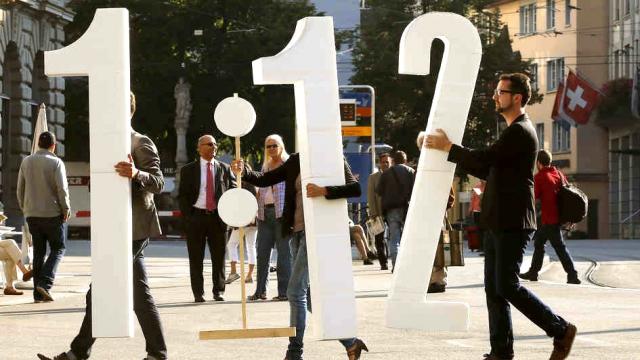
Swiss voters rejected a proposal on Sunday to cap the salaries of top executives at 12 times that of a company's lowest wage, heeding warnings from industry leaders that the measure could harm the country's economy.
The wealthy nation, which is home to some of the world's biggest companies including food group Nestle and commodities giant Glencore Xstrata, voted 66 percent against imposing the limit, according to a projection from Swiss television.
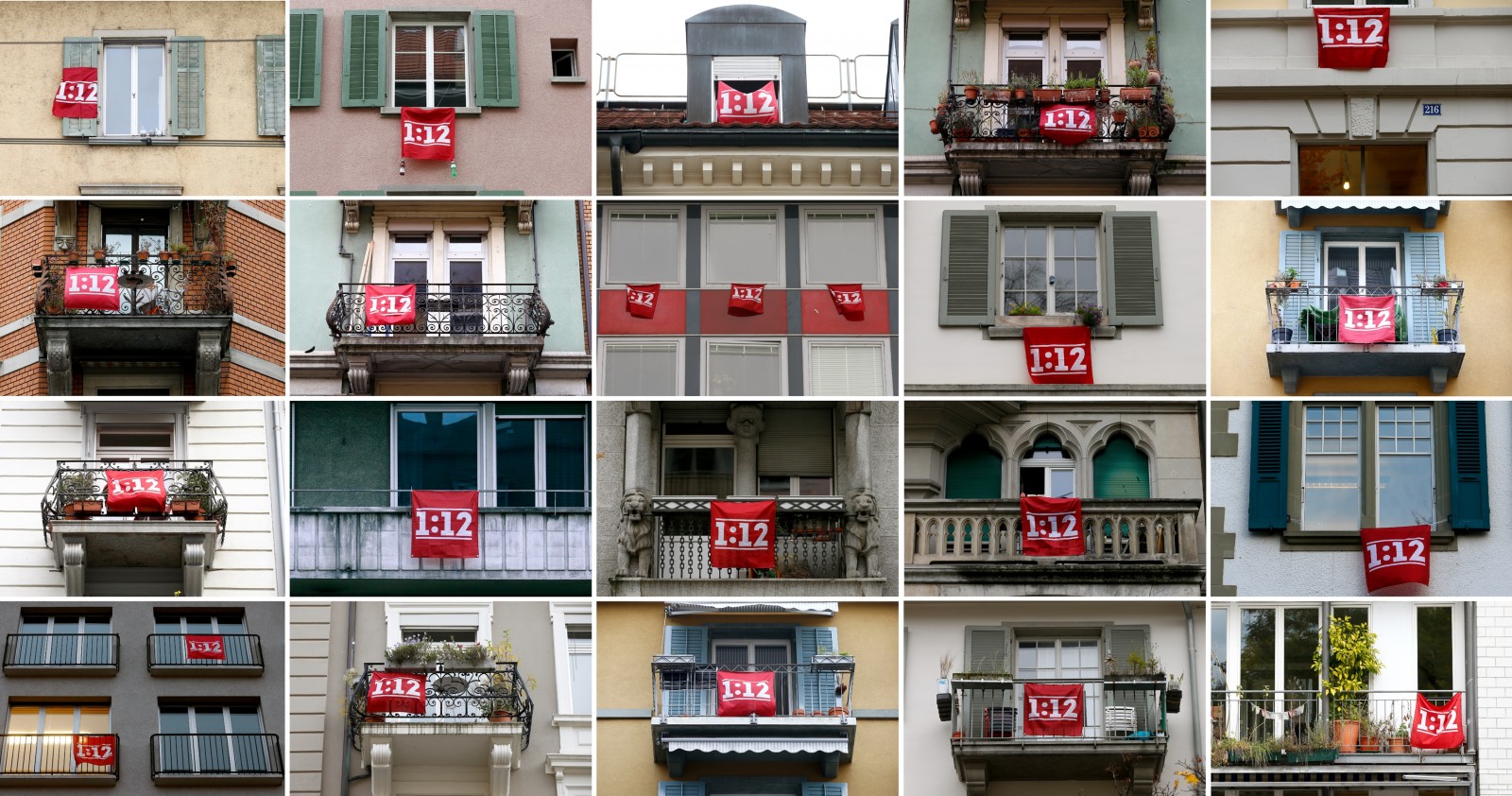
The so-called "1:12 initiative for fair pay," was brought about by the youth wing of the Social Democrats (JUSO). The idea behind the proposal was that nobody should earn more in a month than others earn in a year.
"Of course we are disappointed. But I also believe that we have an achievement nonetheless," JUSO President David Roth told Reuters. "A year ago, opponents were defending high salaries. Today no-one is doing that. No-one in Swiss politics would dare say that million salaries are justified."
Sunday's vote is just one of several initiatives being put to Swiss voters to try to address the widening income gap in the country. Switzerland will also hold a vote on whether to introduce a basic living wage of $2,800 per month from the state, though a date has not yet been set.
While anger at multimillion payouts for executives is not limited to Switzerland, the Swiss system of direct democracy - which allows for up to four national referenda per year - means popular outrage can more easily be translated into action.
Deborah Warburton, a partner at executive search consultants Hedley May said the issue has resonated in other parts of Europe.
"Even though it was a 'no' vote, the question of how to make executive pay fairer is still very much a live issue," she said, adding Britain has implemented a law to give shareholders a binding vote on executive pay while France and Germany are weighing similar measures.
Competitive Threat
Opponents to the proposal had warned it would harm Switzerland by restricting the ability of firms to hire skilled staff, forcing firms to decamp abroad, resulting in a shortfall in social security contributions and higher taxes.
"It's an important decision for the Swiss business location," Valentin Vogt, president of the Swiss Association of Employers told Swiss television SRF. "The Swiss people have clearly decided that it's not up to the state to have a say on pay."
The Swiss have a history of voting against proposals they feel could hurt the country's economic success story or threaten competitiveness.
Initiatives to increase workers' annual paid holiday allowance to six weeks from four and to cut the working week to 36 hours from 42 both have failed at the ballot box in the past.
Yet anger over pay had tapped a nerve in Switzerland, a generally egalitarian country, where citizens have grown increasingly unhappy with rising wealth inequality as wages of executives balloon while those of low-skilled workers lag.
A referendum in March this year to give shareholders a binding say over executive pay and ban golden handshakes and parachutes was overwhelmingly backed by voters.
Some Swiss firms have acknowledged the public anger. Last month, Credit Suisse said it made a "mistake" by paying Chief Executive Brady Dougan 19.2 million francs ($21 million) in cash and stock in 2009, plus 70 million francs ($76.75 million) worth of stock under a bonus plan for 2004. That meant his total pay was 1,182 times that of the bank's lowest paid employee, according to Travail.Suisse.
3 WAYS TO SHOW YOUR SUPPORT
- Log in to post comments


