
At the end of 2013, only 12 percent of Americans held a positive view of Congress – three points above the all-time low set earlier in the year, according to Gallup. Two out of three respondents to a CNN/ORC poll said this was the worst functioning Congress they’d seen in their lifetimes.
And these dismal views weren’t just the product of subjective impressions – in its first year, the 113th Congress managed to pass only 66 bills, the fewest in the 40 years for which reliable data exists.
But a study published last November in The Journal of Politics suggests that this sorry state of affairs is good news for a small group of Americans at the top of the economic pile. “Washington gridlock helps the super-rich stay rich, and get richer,” says Thomas Volscho, a sociologist at the City University of New York and one of the authors of the study.
“And the richer they get, the more the gridlock actually helps them.”
The researchers looked back over 70 years of data, and found that the more dysfunctional Washington is, the bigger the share of the pie the top one percent tends to grab.
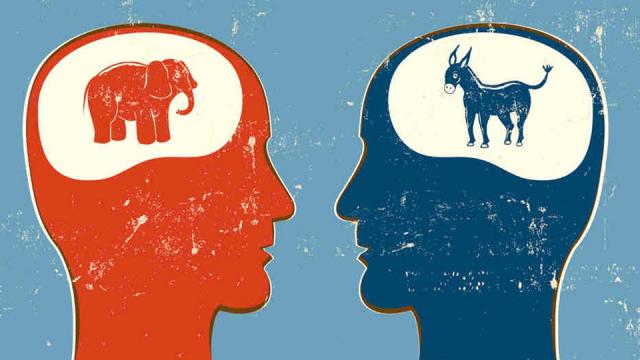
And most importantly, they also found that when economic inequality is high, the kind of polarization and gridlock that have been the hallmark of Washington since Barack Obama’s election make legislative efforts to change course all-but-impossible.
The study’s authors looked at how three variables influenced the share of the nation’s income grabbed by the top one percent of households between 1940 and 2006.
First, they considered how much gridlock existed in the Senate. Then, they studied the distance in political preferences between the president and the House and Senate. And then they looked at how much each Congress got done.
Their findings suggests that Congress, and especially the Senate – where a minority can gum up the works – has a strong bias toward maintaining the status quo, and when there’s already a lot of inequality, a self-reinforcing cycle emerges.
Volscho explained to Moyers & Company that, ”in the United States, the institutional design of the government was designed to be inherently conservative – to make it hard to get things done. Inequality is self-reinforcing, so as the rich become richer, Congress’s inability to pass legislation that could change that situation gets worse.”
Essentially, a do-nothing Congress does nothing to prevent the wealthiest from taking an ever-larger share of the nation’s income at the expense of the rest of us. It’s worth noting that the study used pretax incomes, so the effects weren’t a result of changes in the tax code.
Rather, it shows that Washington sets up the rules of the market – determines the level of the playing field – and they, in turn, influence how much low-skilled workers, top CEOs and everyone in between takes in.
The data is consistent except for a few years in the late 1950s and early 1960s, when the level of inequality in the United States was relatively low. So why doesn’t the bias toward maintaining the status quo work when prosperity is more broadly shared?
“When the economic pie is more evenly distributed, then political power is more evenly distributed as well,” explains Volscho. “So those at the bottom can have their voice be heard more than it is” when wealth is highly concentrated at the top.
The study is part of a growing body of research into how politics and inequality are intertwined.
Other recent studies looked at partisanship. A paper published last year by Volscho and Nathan Kelly, a political scientist at the University of Tennessee and a co-author of the gridlock study, found that, between 1949 and 2008, a one percent increase in congressional seats held by Republicans (about five seats), correlated with the top one percent of households seeing their share of the nation’s income go up by about four-fifths of a percent, regardless of which party occupied the White House.
Others have looked at how the ideological positions of the two major parties play a role. And a number of studies have concluded that the average voting patterns of senators from both parties tend to align with the interests of the wealthy first and foremost, of the middle class occasionally and almost never those of the poor.
Joshua Holland is senior digital producer for BillMoyers.com, host of "Politics and Reality Radio," and the author of "The Fifteen Biggest Lies About the Economy (and Everything Else the Right Doesn’t Want You to Know about Taxes, Jobs and Corporate America)."
3 WAYS TO SHOW YOUR SUPPORT



- Log in to post comments


