
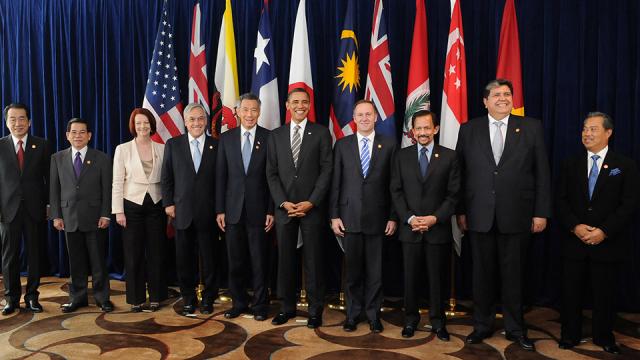
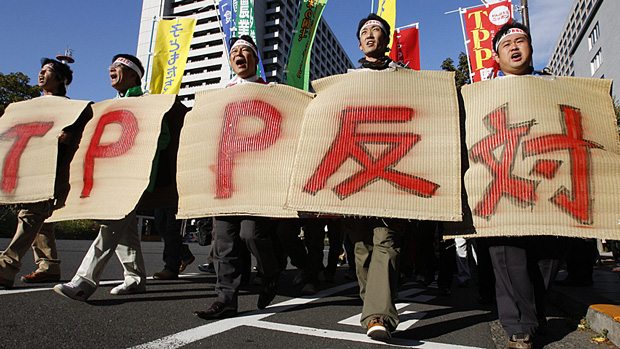
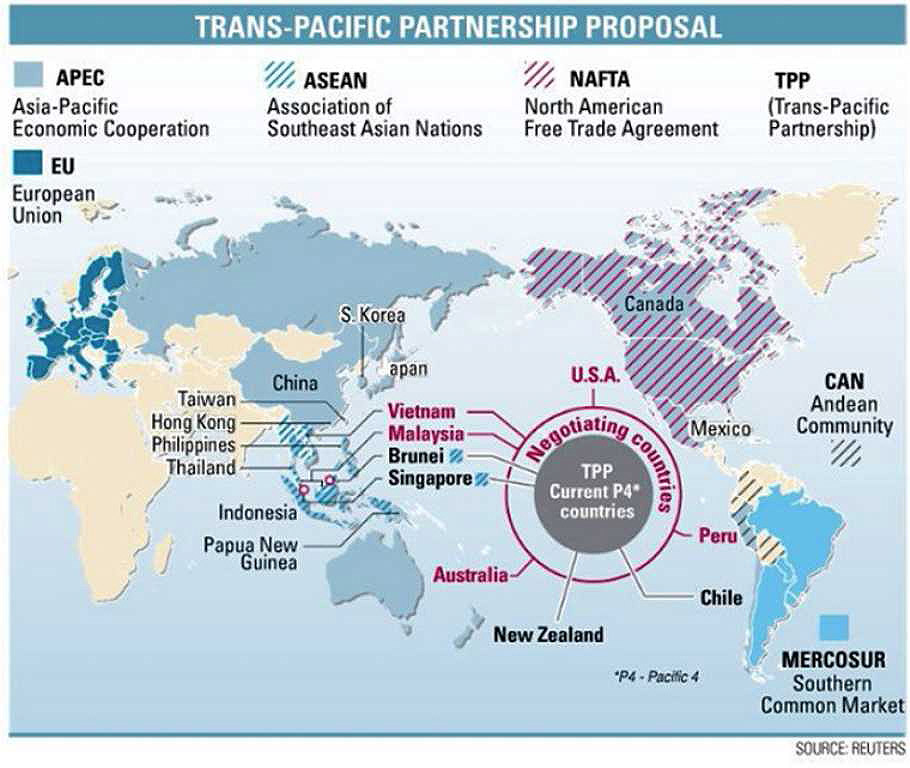
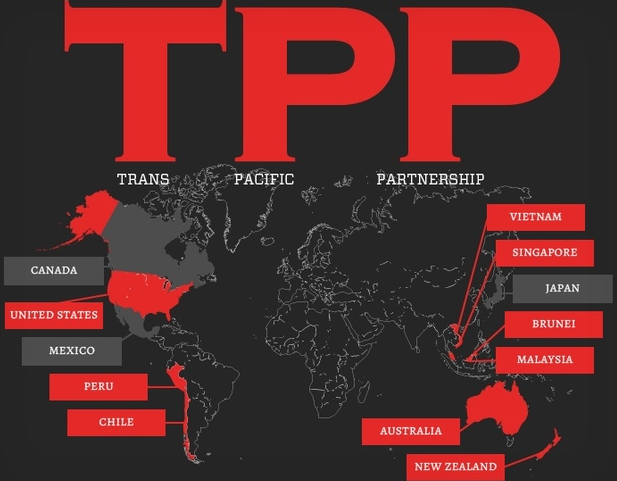
Representatives from 11 countries are gathering this week to hammer out the Trans-Pacific Partnership, the latest entry in the ongoing battle between copyright holders and the open web. Already, the treaty has been compared to SOPA and ACTA, with the Electronic Frontier Foundation describing it as the biggest threat to the global web in years. As in previous years, they're raising the alarm, and hoping that the global outcry will be enough to shoot down the treaty.
The biggest red flags in the TPP are familiar from previous agreements — the inflated penalties, the prohibition on even temporary copies of protected intellectual property (IP), all the worst parts of the Digital Millenium Copyright Act — but the larger concerns are how little we actually know. The negotiations are all secret, with only a small advisory committee kept in the loop on what's proposed. The public is only aware of the ACTA-like provisions because of a leak last summer thatunveiled an early draft, but otherwise we'd still be in the dark.
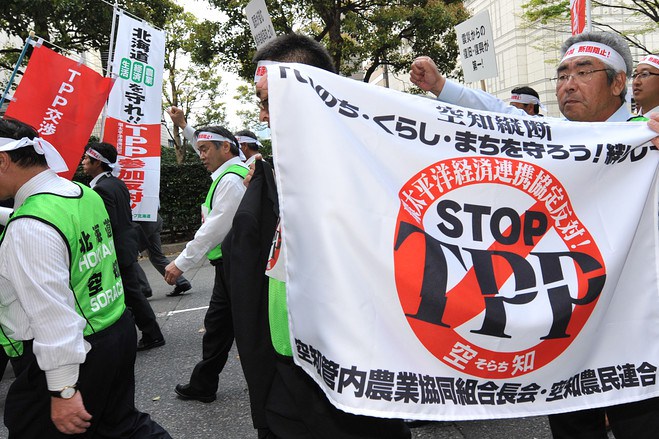
Like a growing number of international trade agreements, the TPP is being negotiated behind closed doors, with nothing made public until all parties are agreed on the final result. It's a good method for hammering out tariffs and grappling with national interests, but it's a troubling way to manage web freedom. As EFF's Maira Sutton put it, "There just isn't a reason why copyright should be in a trade agreement like this." But increasingly, this is how the rules of the global internet are being written.
The effects of the partnership are complex but far-reaching. In U.S. terms, the largest target is the Digital Millenium Copyright Act (DMCA), and its provisions dictating how legally responsible ISPs are for what happens on their networks. The TPP would enshrine the DMCA rules on the international stage. Any country that found itself in violation could face sanctions, as decided by an international adjudication panel — potentially a dealbreaker for future far reaching IP reform. Other possible provisions would strengthen legal penalties for breaking DRM, and potentially add a new set of laws governing the jailbreaking of phones.
But the biggest concern for reformists is just getting a seat at the table. For the intellectual property section, the only non-government interests allowed are the members of the Industry Trade Advisory Committee, 15 representatives from legacy interests like the RIAA and pharmaceutical industry groups. AT&T and Verizon both sent representatives, but web-native companies like Google and Facebook are nowhere to be found. The closest thing to an internet defender is Mark Chandler, general counsel of Cisco, but even he takes a backseat to representatives from Zippo and GE.
That's infuriating for web freedom advocates, but it's not uncommon given the process. International trade agreements tend to follow the logic of mercantilism, with each country protecting its own national interests. When they're negotiating commodity tariffs, that means protecting a specific resource, whether it's Italian olive oil or Argentine beef, and arranging trade rules to benefit it. It's not an egalitarian logic, but it's the way international trade has proceeded for hundreds of years. The TPP just extends it to intellectual property. It would mean protecting Hollywood content the same way we protect dairy farmers or car manufacturers.
But for many experts, like Sean Flynn, who examines international agreements at American University's Washington College of Law, it's not clear if this worldview still makes sense. "Where do pharmaceutical companies really reside?" Flynn points out. "The companies themselves exist everywhere. It's the same with internet companies, with every modern company. There is a representation of interests, but it's not clear that it's national interests." In the current model, Hollywood copyrights are treated as a national interest and the value of the open web is left as an abstraction.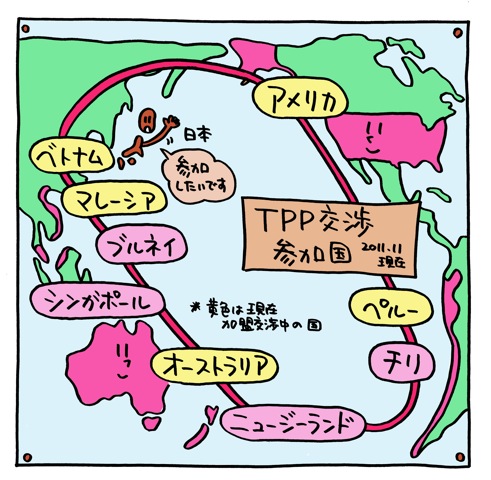
It doesn't have to be this way. Before 2006, most international IP talks used a different system, a multilateral process that publicized proposals and let NGOs weigh in — but after high-profile defeats like SOPA, the copyright lobby has shifted its efforts to closed, bilateral talks. ACTA was the first attempt, instituting DMCA-style copyright rules through the U.S., Europe and Australia. After the European Parliament rejected ACTA last summer, lobbyists turned to the TPP as a way to export the rules without Europe's approval. The leaked version contains many of the same proposals — but this time they're being pitched to pacific rim countries like Malaysia and Singapore instead of the more libertarian E.U.
If the TPP passes, the effect could be largely the same. The U.S. and partner countries would be shackled into our current copyright rules through international treaties, potentially pulled into international tribunals any time we want to change our digital copyright laws. But more than that, it would establish this kind of closed-door agreement as the most powerful standard for web governance. As Flynn puts it, "Is this agenda going to be interrupted or was ACTA going down just a little blip?"
3 WAYS TO SHOW YOUR SUPPORT



- Log in to post comments


